
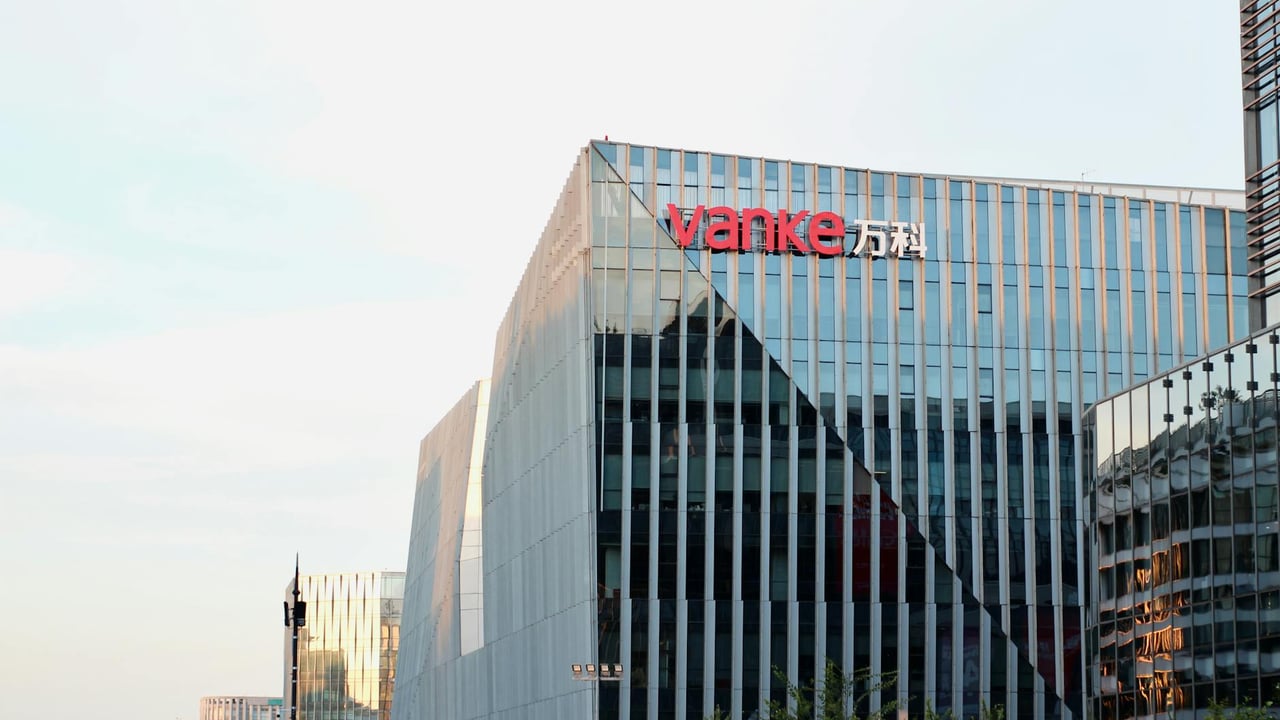

In a move that signals a fragile stabilization for one of China’s most watched developers, China Vanke has secured its first residential land acquisition in Shanghai in over three years. A joint venture led by Vanke recently won a 1.94 billion RMB ($270 million) bid for an 'urban village' redevelopment project in the Baoshan District. While the price tag is modest compared to the company’s peak expansion era, the symbolic value of the transaction is immense, marking a shift from frantic risk mitigation toward a return to normalized operations.
For the past two years, Vanke’s narrative has been dominated by a struggle for solvency. The company’s 2025 annual report painted a grim picture, with revenue plunging 32% to 233.4 billion RMB and a staggering net loss of 88.6 billion RMB. Amidst a broader downturn in the Chinese property sector, Vanke’s focus remained laser-focused on 'living'—the industry’s euphemism for avoiding default—by optimizing its debt structure and halting new land acquisitions in competitive tier-one markets.
This comeback has been paved with significant state-backed support. Shenzhen Metro, Vanke’s largest shareholder and a state-owned entity, has acted as a critical lender of last resort. Since early 2025, Shenzhen Metro has funneled more than 33 billion RMB in direct loans into the developer, often at highly favorable interest rates. This financial cushion has provided Vanke the liquidity needed to satisfy creditors and finally re-enter the land market without triggering immediate liquidity alarms.
The specific nature of the Shanghai project suggests a calculated, lower-risk strategy rather than a return to aggressive bidding. The Yangxing Old Town project is an urban renewal initiative that Vanke has been involved with for some time. By securing the rights to this development, Vanke is essentially capitalizing on its existing local expertise and 'urban village' renovation experience, which offers more predictable development cycles and lower entry costs than high-priced open auctions.
The broader Chinese real estate landscape has undergone a fundamental transformation. The era of high leverage and high turnover that fueled the growth of giants like Evergrande and Country Garden has vanished. In its place is a market where survival is the ultimate metric of success. For Vanke, the ability to remain at the table in a Tier-1 city like Shanghai serves as a signal to the market that the developer has successfully navigated the worst of its credit crisis and is regaining its 'blood-making' capacity.
Ultimately, this acquisition should not be interpreted as a sign that Vanke is ready to resume its former pace of expansion. Instead, it represents a calibrated restart under the watchful eye and financial support of the state. As the Chinese property market enters a long period of consolidation, Vanke’s survival and its pivot toward state-aligned urban renewal projects may provide a blueprint for the industry’s remaining survivors.