The Rise of Physical AI: Nvidia and LG Group Partner to Build ‘AI Factories’

Nvidia and LG Group have launched a comprehensive partnership to build 'AI Factories' that will power LG's robotics, autonomous driving, and industrial platforms. The collaboration leverages Nvidia's Blackwell GPUs and GR00T models to accelerate LG’s transition into a leader of 'Physical AI' and software-defined manufacturing.

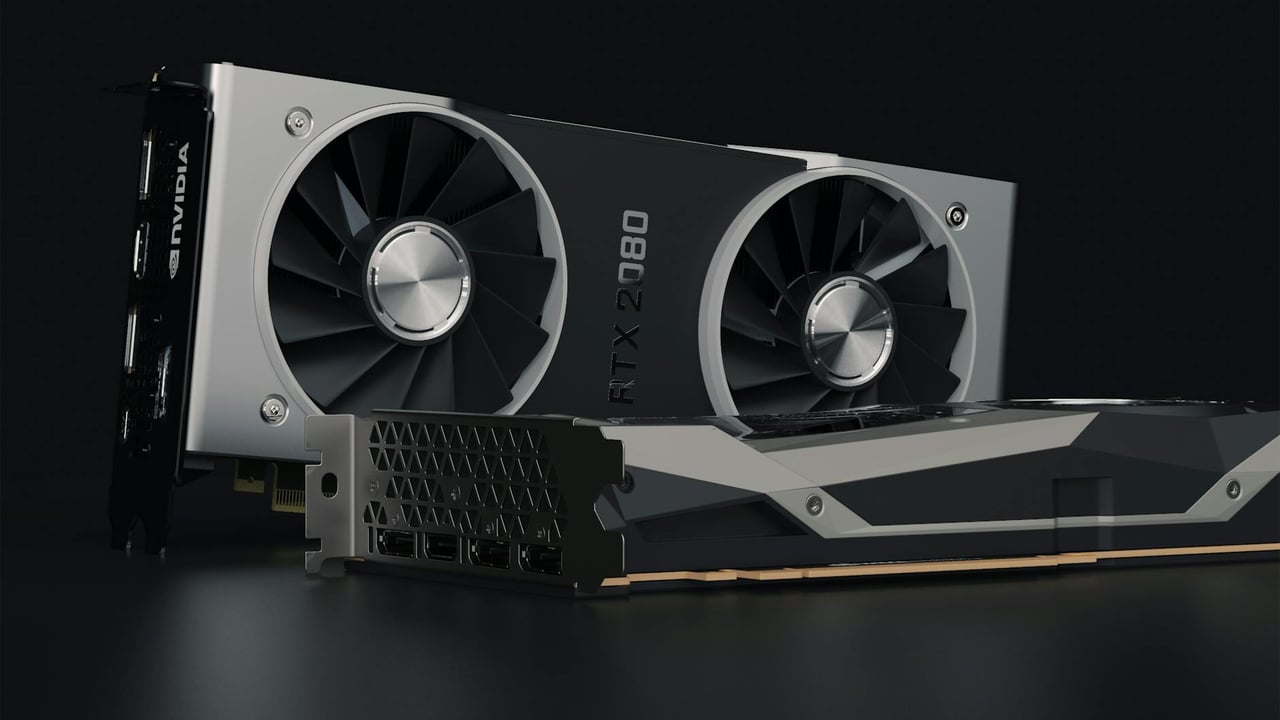
Detailed close-up image of NVIDIA RTX 2080 graphics card showcasing hardware components.

Key Takeaways

  • 1Nvidia and LG will build 'AI Factories' to provide infrastructure for robotics, autonomous driving, and cloud services.
  • 2LG Electronics will use Nvidia’s Isaac Sim and GR00T to develop home robots and will sell training data to third parties.
  • 3LG Energy Solution is developing high-voltage energy storage systems specifically for AI data centers to handle the power load of Blackwell GPUs.
  • 4The partnership integrates Nvidia DRIVE Hyperion for LG’s automotive electronics and software-defined vehicle initiatives.
  • 5LG AI Research is optimizing its 'EXAONE' model using Nvidia’s latest Blackwell architecture for internal and external enterprise use.

Editor's
Desk

Strategic Analysis

This partnership represents a strategic convergence between Nvidia’s dominant compute stack and LG’s vast industrial footprint. For Nvidia, the alliance is a blueprint for its 'AI Factory' concept, moving beyond selling chips to providing the entire operating system for the industrial world. For LG, the collaboration is a survival imperative; by embedding Nvidia’s 'Physical AI' frameworks like GR00T into its home appliances and automotive components, LG ensures its hardware remains relevant in an era where software intelligence is the primary differentiator. The inclusion of energy storage solutions by LG Energy Solution is particularly astute, as it addresses the primary bottleneck of the AI boom: the massive power infrastructure required to keep next-generation GPUs running.

China Daily Brief Editorial
Strategic Insight
China Daily Brief

In a move that signals the deepening integration of high-performance computing and industrial manufacturing, Nvidia and South Korea’s LG Group have announced a sweeping partnership to develop 'AI Factories.' This collaboration aims to provide the foundational infrastructure for LG’s core business units, ranging from domestic robotics and autonomous driving to state-of-the-art data centers and GPU cloud services. By leveraging Nvidia’s accelerated computing, LG seeks to transition from a traditional hardware giant into a leader of the 'physical AI' era.

The partnership places a heavy emphasis on embodied AI, where software interacts directly with the physical world. LG Electronics will utilize Nvidia’s Isaac Sim and the GR00T foundation model to train its 'CLoiD' home robots. Beyond internal use, LG is establishing a dedicated physical AI data factory to supply robot training data to external markets, effectively commodifying the digital twin environments necessary for the next generation of automation.

Industrial and infrastructural synergy forms the backbone of the deal. LG CNS is integrating Nvidia’s robotics technology into its PhysicalWorks platform, while LG Uplus and LG CNS will build scalable AI factories based on the Nvidia DSX platform. Crucially, LG Energy Solution is exploring specialized 800-volt DC energy storage systems tailored for data centers, addressing the massive power demands of the Blackwell GPU clusters that will fuel these facilities.

In the automotive sector, the alliance aligns LG’s Advanced Driver Assistance Systems (ADAS) and software-defined vehicle (SDV) products with Nvidia’s DRIVE Hyperion architecture. Simultaneously, the LG AI Research institute is utilizing Nvidia’s Blackwell GPUs to advance its proprietary 'EXAONE' large-scale AI model. This multifaceted approach ensures that the Nvidia-LG ecosystem spans the entire value chain—from the power supply of the data center to the brain of the household robot.

Share Article

Related Articles

📰
No related articles found