
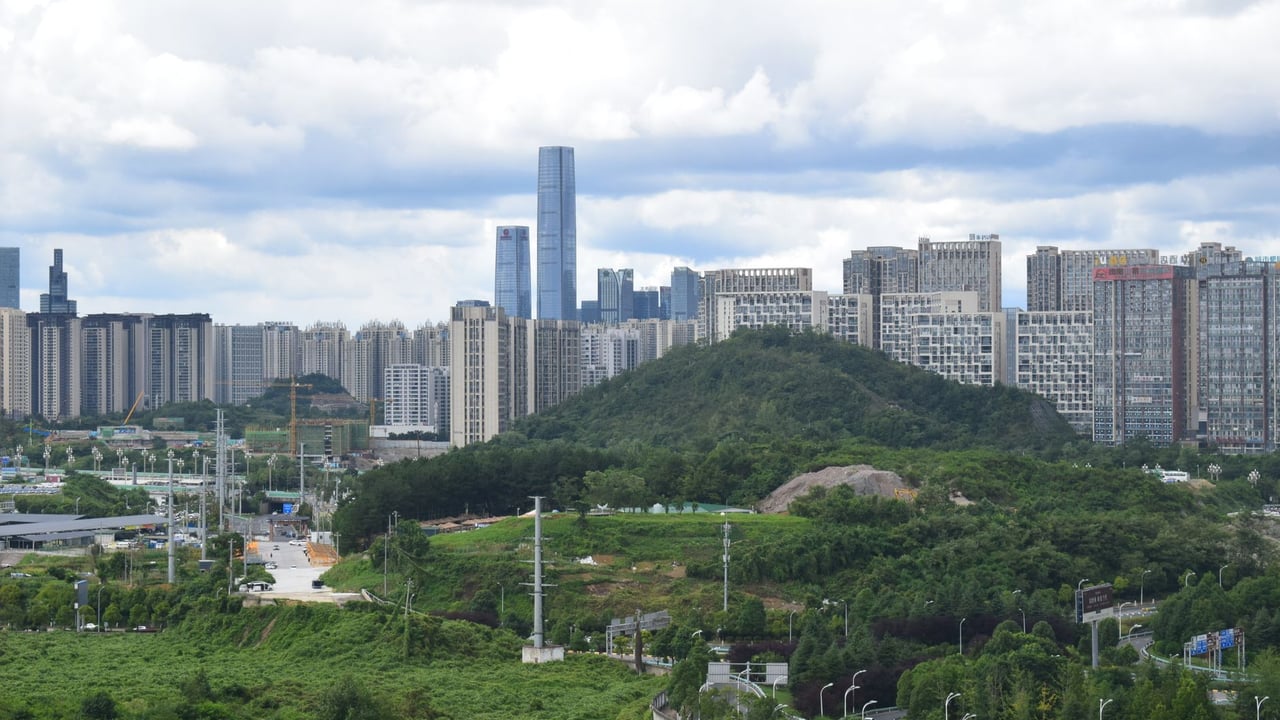

In the high-stakes world of Chinese real estate, the narrative of a perpetual downturn is being challenged by a sudden, aggressive resurgence in the nation’s most elite districts. A recent land auction in Shenzhen’s Nanshan District saw six state-owned giants engage in a grueling 291-round bidding war, eventually setting a national record with a floor price of 108,680 RMB per square meter. This staggering figure represents a nearly 30% jump over previous local records and signals a fierce conviction among developers that the ceiling for luxury assets in Tier-1 cities has yet to be reached.
This phenomenon is not isolated to Shenzhen's tech hubs. From the inner rings of Shanghai to the scenic lakefronts of Hangzhou, 'land kings' are reclaiming their thrones as developers pay premiums exceeding 50% for prime residential plots. In Shanghai, recent auctions for low-density plots in the Jing'an and Minhang districts have shattered previous price ceilings, often hitting price caps that force bidders into additional commitments for high-end interior finishing. The intensity of these auctions suggests a strategic retreat by capital into 'safe-haven' core locations where demand remains resilient despite the broader economic climate.
Supporting this land-buying frenzy is a notable shift in transaction data, where price and volume are finally moving in tandem. Shenzhen’s new home prices have climbed for three consecutive months, with luxury districts like Xiangmihu seeing prices rebound to levels not seen in years. In May alone, combined residential sales in Shenzhen exceeded 10,000 units, a milestone that reflects the impact of recent policy relaxations, including the lifting of purchase restrictions in core districts and the introduction of aggressive 'trade-in' programs for homeowners.
However, this recovery is deeply bifurcated, characterized by a 'flight to quality' rather than a broad-based market healing. Data indicates that while demand for 'old and small' secondary units remains tepid, the market for high-end improvement—homes ranging from 90 to 144 square meters and ultra-luxury villas—is booming. Wealthy buyers, fueled by 'old money' or new wealth from the AI and tech sectors, are liquidating smaller assets to consolidate their holdings in premium developments. In Hangzhou, some luxury projects have seen entry requirements for potential buyers jump to 80 million RMB in liquid assets just to view the property.
Demographics and policy coordination are the underlying drivers of this localized heat. Guangdong Province, now home to 165 million people, provides a massive, youthful demographic base that continues to gravitate toward centers of innovation. As local governments facilitate the 'replacement chain' by buying back older inventory and offering generous compensation for urban redevelopment, they are successfully injecting liquidity back into the top of the market. The emergence of the new 'land king' in Shenzhen is less a sign of a national property boom and more a testament to the enduring magnetism of China’s premier urban nodes.