
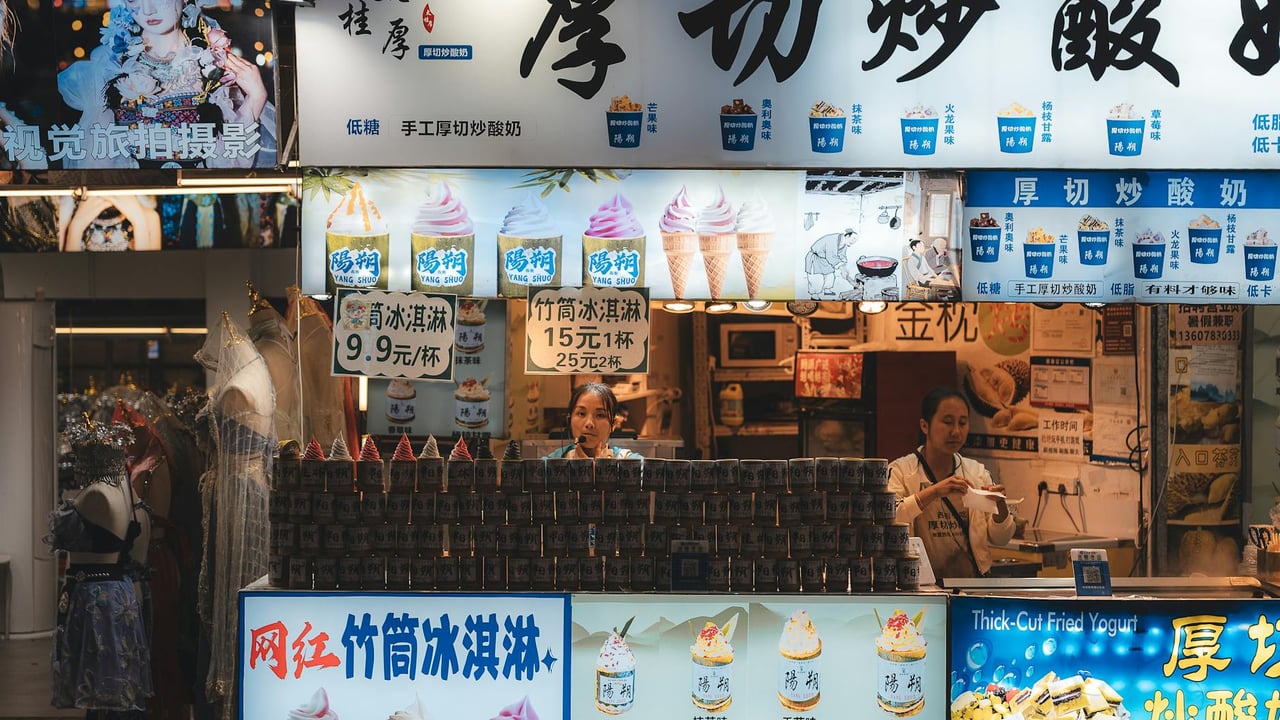

As the summer of 2026 begins, a structural shift is reshaping China’s cold beverage market. Once relegated to the side of milk tea menus as a simple topping, ice cream is declaring independence. Major 'new tea' brands are spinning off standalone artisanal gelato shops and acquiring legacy foreign players, signaling a fundamental realignment in the country’s high-stakes beverage industry.
The most striking marker of this shift is the recent acquisition of Häagen-Dazs’ mainland China operations by the lemon-tea specialist Linlee. This move coincides with Heytea’s launch of its independent 'Slightly Gelato' brand and Chagee’s aggressive rollout of 'Geelato' zones within its flagship stores. While local giants expand, traditional Western brands like Häagen-Dazs and Baskin-Robbins have seen their footprints shrink by more than half over the past five years.
This aggressive push into the frozen sector is born of necessity. The 'new tea' market, which saw nearly 20% growth in 2023, has cooled to a modest 6.45% expansion as the industry nears a saturation point. With over 30,000 tea shops closing annually, brands are desperate for high-margin categories that can leverage their existing infrastructure without the blood-soaked price wars currently defining China’s coffee sector.
Strategically, ice cream offers a seamless transition. The supply chains for dairy, fruit, and sweeteners are nearly identical to those used in tea production, allowing for significant procurement savings. Furthermore, data reveals an 85% overlap between Gen Z milk tea drinkers and ice cream consumers, meaning brands can acquire customers for their new ventures at a fraction of the traditional marketing cost.
However, the move into independent ice cream shops is not without peril. The sector is notoriously seasonal, with over 60% of revenue typically generated in just four months. Additionally, the artisanal gelato (Gelato) model involves high wastage rates and significant overhead in premium malls, which could lead to a 'race to the bottom' in pricing if the tea industry’s habit of hyper-competitive discounting follows them into the freezer.
The final landscape will likely bifurcate into two distinct winning models. Mass-market players like Mixue Bingcheng will rely on their massive scale to dominate the low-end, while premium brands like Heytea will lean on brand equity to maintain high price points. Smaller, less-differentiated players who are simply chasing the trend risk being flushed out during the first quiet winter season.