

As the 2026 FIFA World Cup prepares to kick off across North America, the real competitive edge is being forged thousands of miles away in the industrial hubs of Zhejiang and Guangdong. Chinese factory owners, who have long served as the backbone of global sporting merchandise, are reporting a frenzy of activity that dwarfs previous tournament cycles. This surge is fueled not only by the tournament's expansion to 48 teams but also by a fundamental shift in how Chinese firms approach the global stage.
In the manufacturing center of Yongkang, entrepreneurs like Jin Yikui are witnessing order volumes nearly four times higher than those seen during the Qatar or Russia cycles. His factory, which specializes in cheering horns and fan accessories, has seen a late-stage surge from an unexpected source: Chinese domestic brands. Seeking to capitalize on the tournament's massive reach, these companies are placing bulk orders for branded merchandise to fuel local marketing campaigns, adding a significant domestic layer to the traditional export boom.
China’s grip on the World Cup economy remains formidable, with the city of Yiwu alone estimated to provide nearly 70% of the tournament’s peripheral goods. From the flags of the 48 competing nations to the iconic trophies and jerseys, the "Yiwu manufacturing" label is ubiquitous. Customs data reinforces this dominance, showing a 12% year-on-year increase in sports equipment exports during the first quarter of the year, even before the peak shipping season for the North American market.
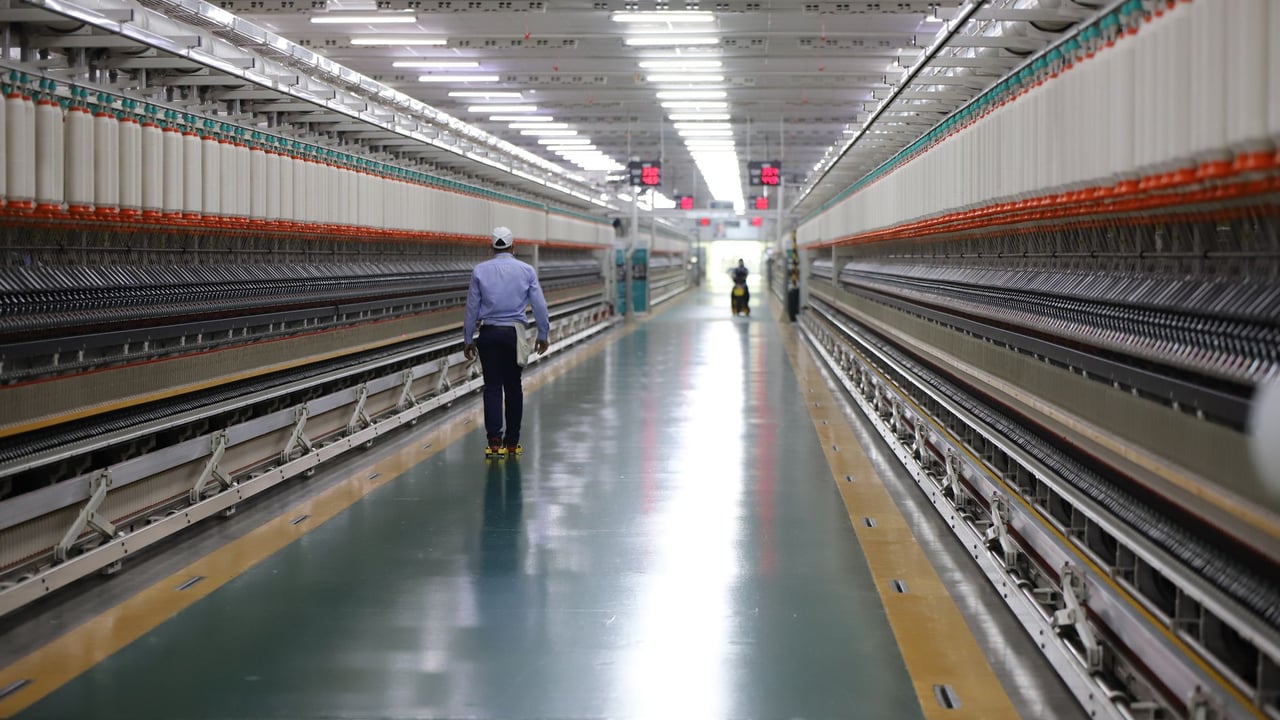
Yet, the 2026 cycle reveals a deeper narrative of industrial transformation rather than just simple volume growth. Facing rising labor costs and international competition, veteran manufacturers are pivoting toward high-end automation. In Guangzhou, textile factories are deploying robotic embroidery machines that use digital programming to ensure surgical precision. This allows them to meet the exacting quality standards of the U.S. and Mexican markets, where consistency in color saturation and fabric weight is a non-negotiable requirement.
This technological leap is coupled with a strategic move up the value chain through intellectual property (IP) and original design. No longer content with thin margins from low-end OEM contracts, firms are now securing official licenses for national team mascots and star-player branded goods. One such firm, All Star Partner, reported over 100 million RMB in initial orders for high-margin "emotional value" products, including plush mascots and boutique pet apparel designed for the global fan base.
Ultimately, the 2026 World Cup highlights the resilience and adaptability of the Chinese supply chain. By integrating flexible production lines that can handle both massive bulk orders and rapid-response "emergency" batches for breakout teams, these factories have moved beyond being mere suppliers. They are now sophisticated partners capable of managing complex global IP and high-tech manufacturing, ensuring that while the players compete on the field, China remains the undisputed winner of the commercial game.