
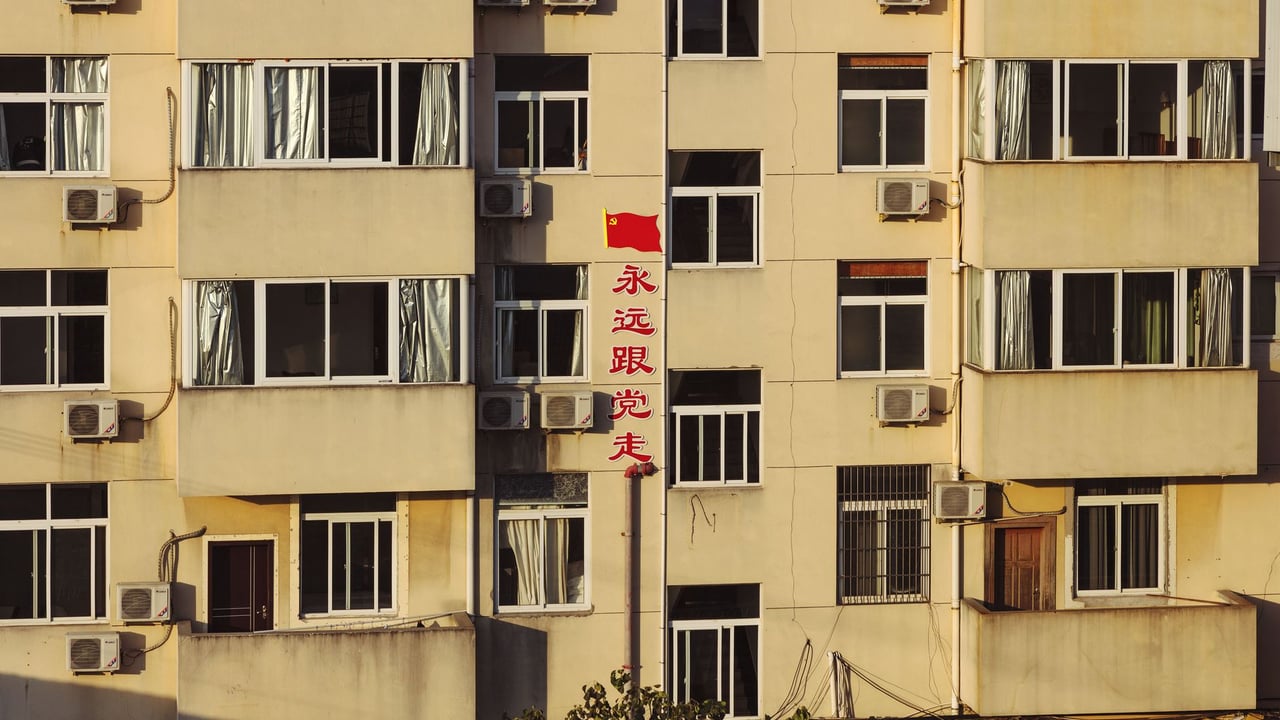

For years, the 'Lao-Po-Xiao'—shorthand for China’s aging, cramped, and often unsightly inner-city apartments—were the pariahs of the real estate market. Potential buyers favored the gleaming glass towers of the suburban periphery, viewing these mid-century relics as relics of a bygone era. However, by mid-2026, the narrative has flipped. These once-discarded units have emerged as the market’s unlikely champions, outperforming high-end new builds in both liquidity and yield.
The driving force behind this resurgence is a fundamental shift in China’s macroeconomic landscape. In an era of persistently low interest rates, the rental yields of central urban apartments have surged past 2%, with some hitting as high as 5%. This comfortably eclipses the returns on five-year bank deposits and ten-year treasury bonds, which have languished at 1.3% and 1.8% respectively. For the first time in decades, Chinese property is being valued not as a speculative bet, but as a stable 'cash flow asset' akin to a high-yield bond.
Institutional and private investors are taking note. Market data shows a growing trend of bulk acquisitions, where buyers snap up multiple units in a single district to build rental portfolios. In cities like Chengdu and Wuhan, investors are achieving positive carry, where monthly rental income exceeds mortgage obligations. This shift reflects a broader 'Japanification' of investor sentiment, where the reliability of monthly dividends now outweighs the fading dream of rapid capital appreciation.
For the younger generation, these apartments represent the only viable path to urban stability. After years of price corrections, the 'bubble' has effectively been purged from this segment, returning prices to 2015 levels. Combined with a historic low for down payments—now at 15%—and record-low mortgage rates, the barrier to entry for living in central Beijing or Shanghai has dropped to its lowest point in a generation. Young professionals are choosing the convenience of a 20-minute commute and established neighborhood amenities over the isolation of the far-flung suburbs.
State policy is also providing a crucial floor for these aging assets. Under the 'Fifteenth Five-Year Plan,' China is funneling an estimated 15 trillion yuan into urban renewal projects. These initiatives focus on retrofitting older complexes with elevators, modernized piping, and green spaces, effectively neutralizing the 'dilapidated' aspect of the Lao-Po-Xiao. Furthermore, local governments have begun purchasing these units to convert them into subsidized rental housing, providing a guaranteed exit strategy for sellers.
However, this is a market of extreme bifurcation rather than a tide that lifts all boats. The current rally is strictly confined to properties with prime locations, elite school zoning, or confirmed renovation schedules. Units in the periphery or those lacking transit connectivity remain stagnant. For the modern Chinese investor, the era of 'blind buying' is over; the focus has shifted entirely to the cold calculus of location and yield.