
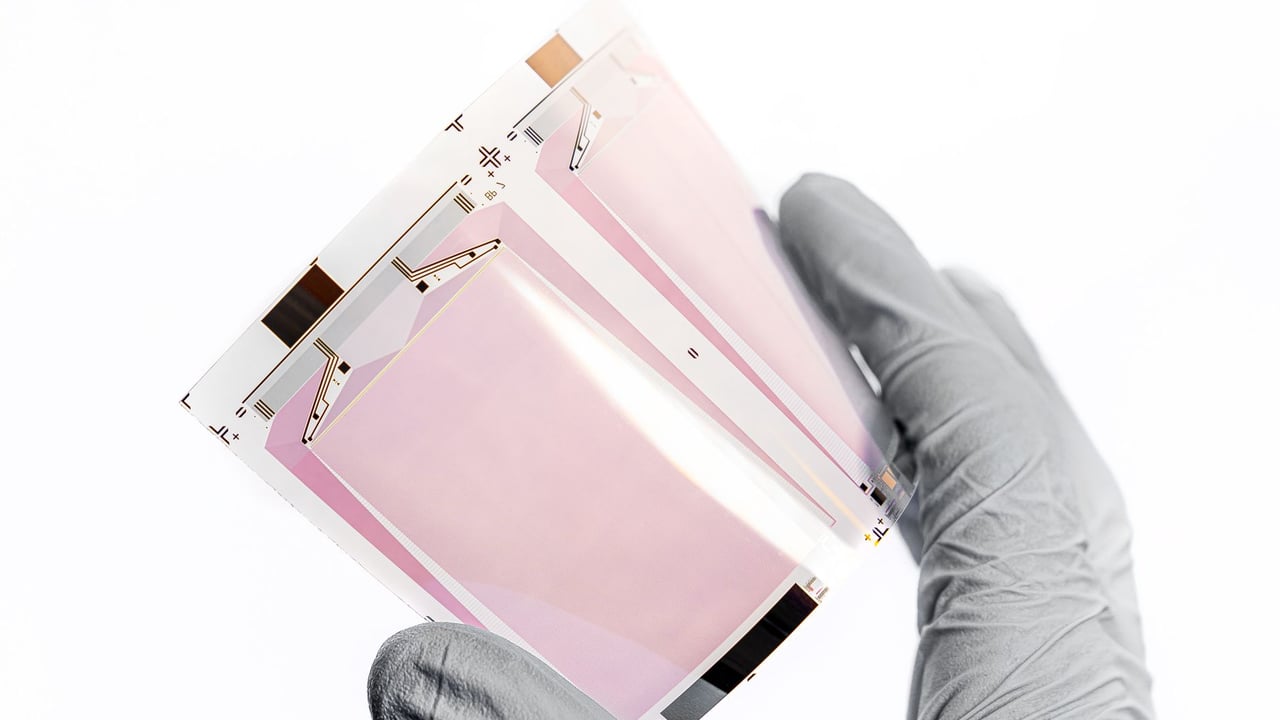

Researchers at Seoul National University’s College of Engineering have achieved a significant milestone in display technology, developing a high-performance Organic Light-Emitting Diode (OLED) that achieves a record-breaking transparency rate of over 93 percent. This breakthrough, recently featured on the cover of the prestigious journal Materials Horizons, integrates highly conductive transparent metal electrodes into the device architecture to overcome long-standing efficiency hurdles.
While transparent displays have long been a staple of science fiction, practical application has been hampered by a fundamental trade-off between electrical conductivity and optical clarity. Most current transparent screens rely on Indium Tin Oxide (ITO), which, while functional, faces challenges regarding supply chain stability and physical brittleness. By re-engineering the electrode layer, the South Korean team has managed to maintain high electrical flow without the typical opacity associated with metal components.
The implications for this technology extend far beyond the next generation of smartphones or televisions. Achieving a transparency level of 93 percent—essentially matching the clarity of standard glass—moves the industry closer to truly 'invisible' electronics. This could transform urban environments by turning ordinary office windows into interactive information hubs or automotive windshields into seamless heads-up displays without obstructing the driver's view.
Furthermore, the high conductivity of these new electrodes suggests a leap in energy efficiency for next-generation devices. This makes the technology particularly attractive for the burgeoning Augmented Reality (AR) market, where lightweight, clear, and power-efficient displays are the primary hardware challenge. As the industry shifts from standalone gadgets to integrated 'smart surfaces,' this material innovation provides the necessary foundation for the next decade of ambient computing.