
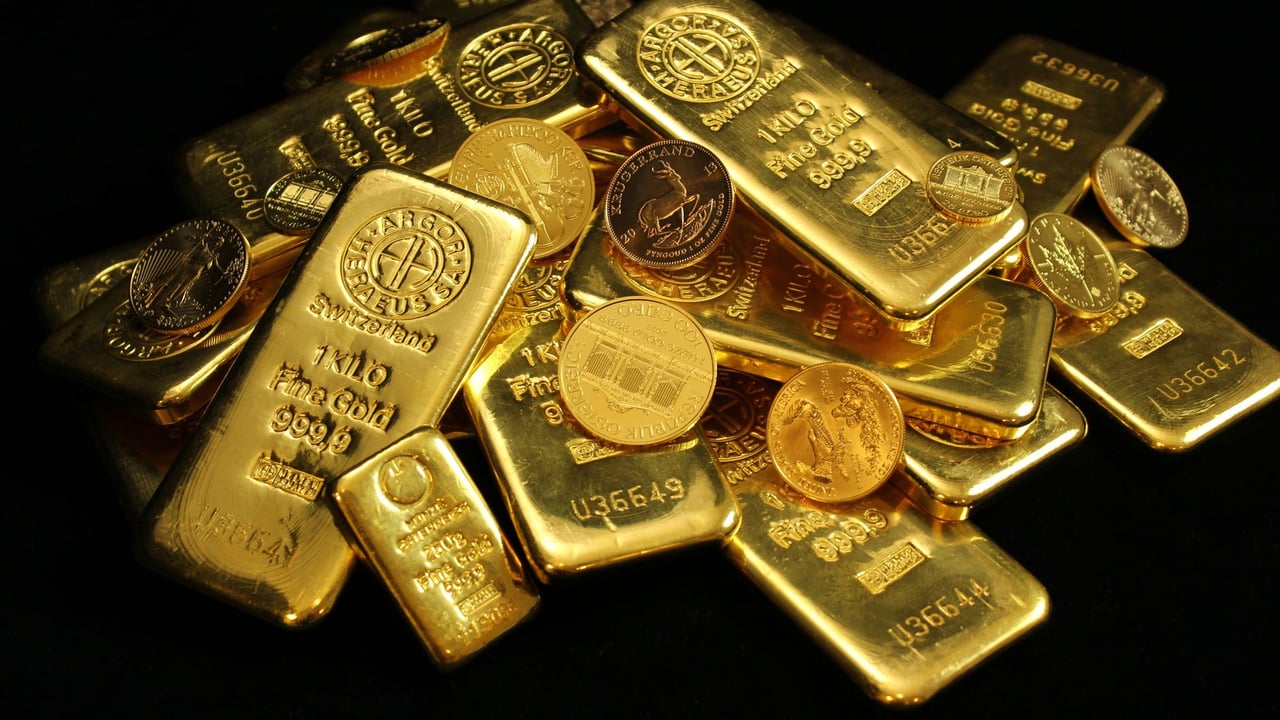

For decades, gold and crude oil moved in lockstep, twin barometers of geopolitical tension and inflationary fear. When tanks rolled across borders, both typically surged. However, the recent announcement of a ceasefire between the United States and Iran, followed by the reopening of the Strait of Hormuz, has laid bare a fundamental shift in the global financial architecture. While Brent crude plummeted toward $81 a barrel on the news, gold staged a contrarian rally, reclaiming the $4,300 per ounce threshold.
This inversion—a ‘seesaw’ effect where one rises as the other falls—is more than a momentary market quirk; it represents the breakdown of a half-century of correlation. Historically, crises from the 1979 Iranian Revolution to the 2022 invasion of Ukraine saw gold and oil hit peaks in tandem. Today, they are driven by diverging logics: oil is behaving increasingly like a cyclical commodity sensitive to supply-demand mechanics, while gold has detached from traditional interest rate models to become a strategic vessel for sovereign reserves.
The sky-high gold-to-oil ratio, which has frequently breached the 70-fold mark recently, suggests that the market is pricing in a future where gold’s value is decoupled from the cost of energy. This divergence is partly explained by ‘liquidity absorption.’ In moments of extreme volatility, such as the initial Israel-Iran escalations earlier this year, investors often liquidated gold holdings to cover margin calls on energy derivatives, creating an artificial negative correlation that has since hardened into a structural trend.
Central banks are the invisible hand behind gold’s newfound resilience. Unlike previous cycles where gold was a hedge against consumer inflation, it is now being utilized as an insurance policy against the weaponization of the dollar and the potential fragmentation of the global monetary system. As central banks in emerging markets shift from US Treasuries to bullion, gold’s ‘monetary attribute’ is overshadowing its traditional role as a mere safe-haven asset.
Looking ahead, the traditional expectation that the gold-oil ratio must eventually revert to its historical mean may no longer hold. The world has entered an era of slowing globalization, persistent high interest rates, and a fraying dollar hegemony. While a eventual convergence remains possible, analysts suggest it is more likely to occur through a ‘catch-up’ rally in oil prices driven by supply constraints rather than a significant correction in the price of gold.