
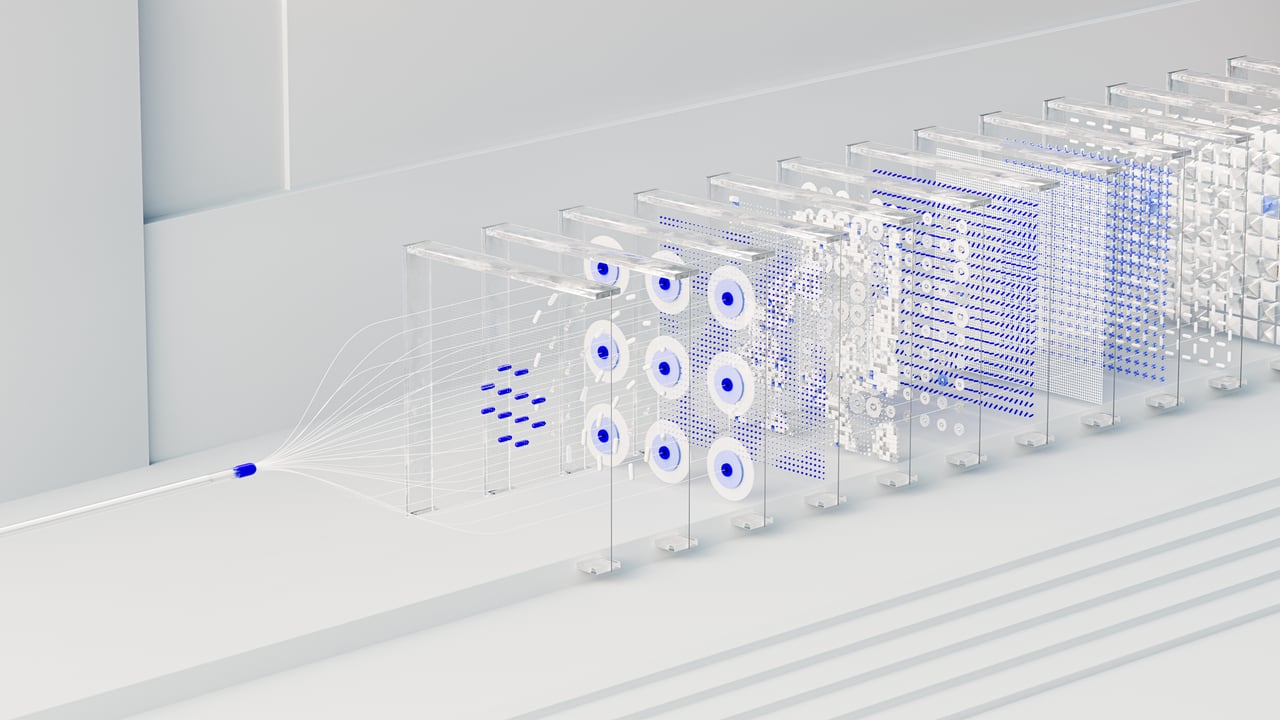

The global race for artificial intelligence supremacy reached a new inflection point this week with the release of GLM-5.2 by Zhipu AI, a leading Chinese startup often dubbed the country’s answer to OpenAI. Built on a Mixture-of-Experts (MoE) architecture with 744 billion parameters, the open-source model has signaled that the technical distance between Silicon Valley’s frontier models and Beijing’s top-tier challengers is narrowing to a matter of months rather than years.
The launch has ignited a high-stakes debate on social media involving industry titans and researchers. Independent analyst Teortaxes suggested that Chinese models could reach the capabilities of Anthropic’s restricted 'Fable' class by the end of this year. While Tesla CEO Elon Musk offered a more conservative estimate of the first quarter of 2025, Zhipu founder Tang Jie countered with a brief but confident rebuttal, stating the milestone 'won’t take that long.'
Beyond raw performance, the strategic significance of GLM-5.2 lies in its economic disruption. Performance benchmarks show the model rivaling Claude 3 Opus in coding and long-context processing but at roughly one-sixth of the operational cost. This 'intelligence-to-cost' ratio is becoming China’s primary weapon in the global AI market, as developers and enterprises increasingly pivot toward high-efficiency, lower-priced Chinese alternatives via platforms like OpenRouter and Vercel.
This shift comes as the United States tightens export controls on high-end models, recently restricting foreign access to Anthropic’s Mythos and Fable 5 systems on national security grounds. Rather than stifling growth, these sanctions appear to be accelerating domestic breakthroughs in China. Expert observers note that while a '10% intelligence gap' may still exist in deep mathematical reasoning, it is frequently offset by a '90% cost advantage' in real-world application.
As the industry moves from theoretical scaling to practical deployment, the emergence of Zhipu, DeepSeek, and other Chinese players suggests a move toward a tri-polar AI world. The competition is no longer just about who can build the largest model, but who can deliver production-ready intelligence at a price point that makes the $5 trillion in global AI capital allocation sustainable.