
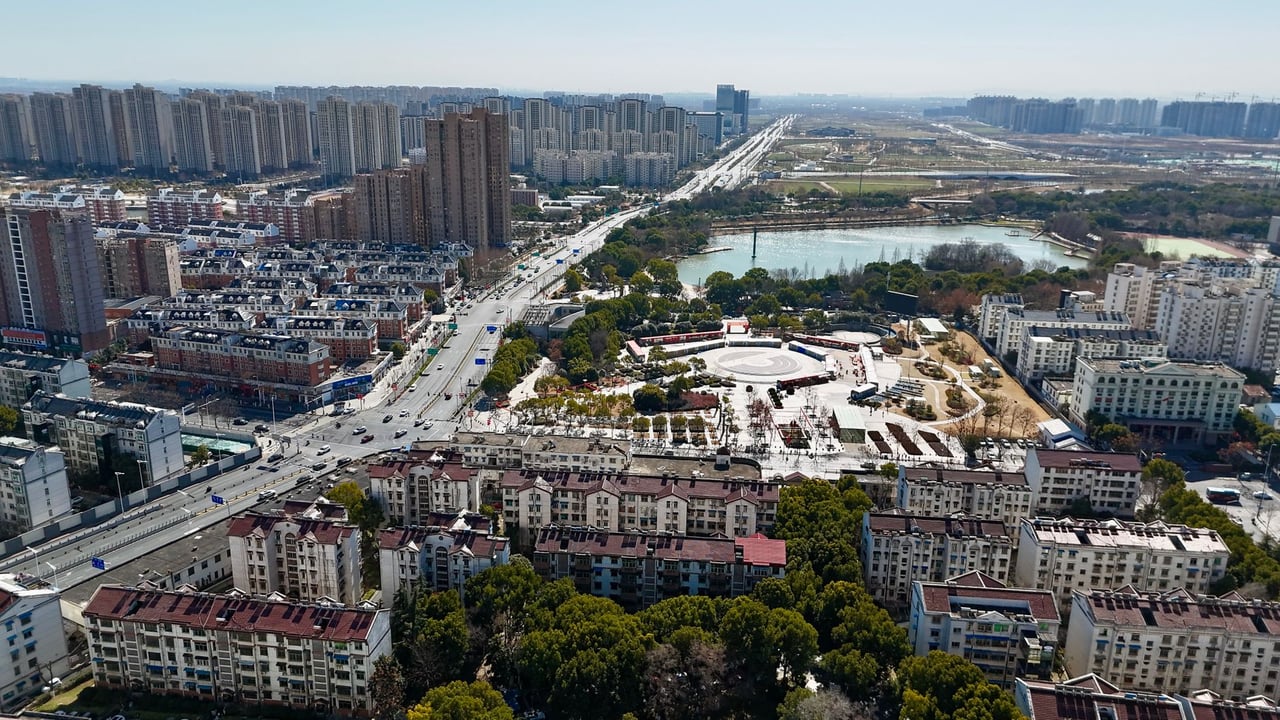

Hefei has long been celebrated as China’s premier 'venture capital city,' a former provincial backwater that transformed itself into a high-tech hub by placing massive state-led bets on semiconductors, electric vehicles, and quantum computing. For years, this industrial prowess translated directly into demographic dividends, as the city rocketed past the 10-million-resident threshold. However, newly released data for 2025 suggests that the city’s winning streak may be hitting a structural wall, as population growth has slowed to a near-halt.
According to the municipal statistics bureau, Hefei’s permanent resident population grew by a meager 3,000 people in 2025, reaching a total of 10.005 million. This figure represents a staggering deceleration from the previous five years, during which the city added over 630,000 residents. The sudden chill comes as a shock to planners who expected the city’s industrial momentum—evidenced by a 17.6% surge in industrial value-added output—to continue acting as a vacuum for provincial and national talent.
The disconnect between economic output and human capital retention points to a fundamental flaw in the 'Hefei Model.' While the city has successfully cultivated titans like NIO and BOE, the urban environment itself has struggled to keep pace. Local officials admit that the city remains a 'rough shell' lacking 'fine decoration.' Public dissatisfaction is high, with residents citing chronic traffic congestion, a lack of parking, and a dearth of modern cultural and sports facilities as primary reasons for their discontent.
Furthermore, Hefei is struggling with a significant brain drain to more established neighbors in the Yangtze River Delta. Reports indicate that over 30% of local university graduates, including those from the prestigious University of Science and Technology of China (USTC), choose to leave the city upon graduation. Half of those departures are bound for Tier-1 hubs or more sophisticated provincial capitals like Nanjing and Hangzhou, where the 'soft' infrastructure of lifestyle, retail, and public services is more mature.
In response, Hefei is pivoting its strategic focus for the upcoming 15th Five-Year Plan. The goal is to transition from 'attracting people with industry' to 'retaining people with the city.' This includes a massive urban renewal project targeting the older central districts and an aggressive push to foster a 'first-store economy' to improve the city's lackluster retail scene. Whether these top-down urban improvements can foster the organic vibrancy needed to keep China’s youth from fleeing remains the city’s most pressing gamble yet.