
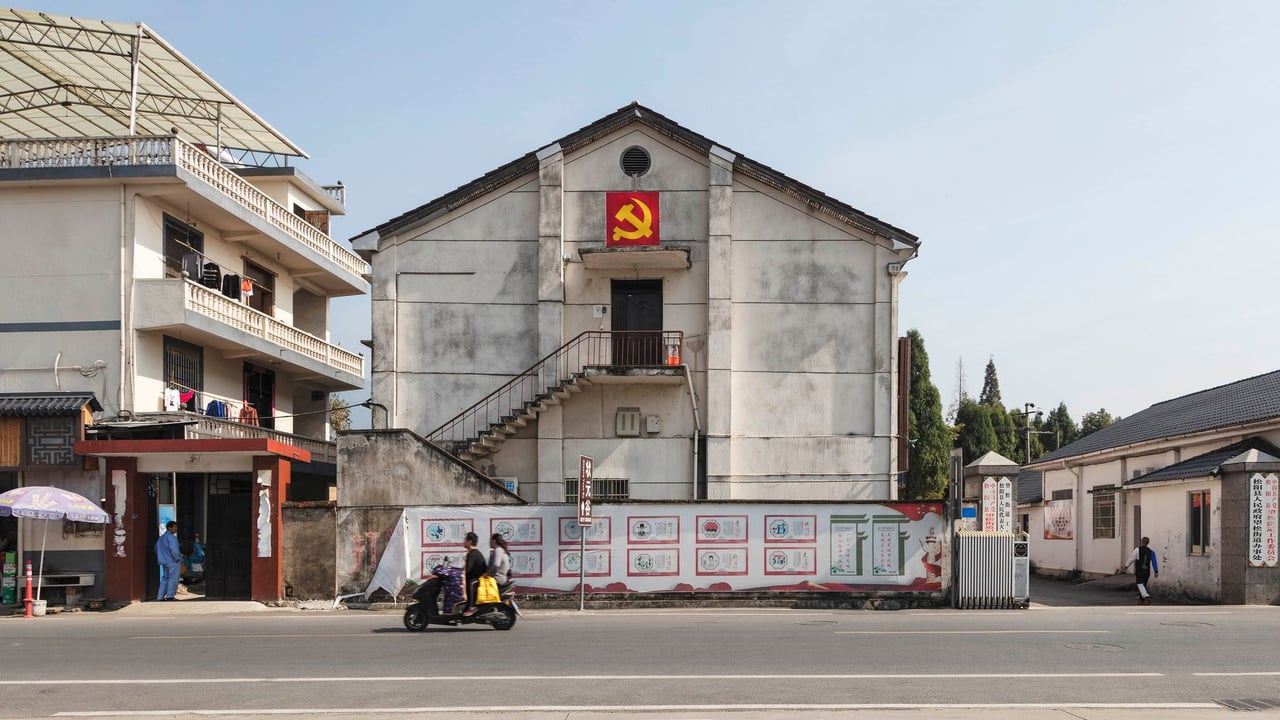

In the misty mountains of Guizhou province, the city of Zunyi holds a hallowed place in the history of the Communist Party of China (CPC). Known as the 'City of the Turning Point,' it was here in January 1935 that a depleted Red Army, fleeing annihilation, held the meeting that eventually propelled Mao Zedong to leadership. Today, this historical pivot is not merely a memory but a foundational element of local governance and economic strategy.
At the Zunyi Red Army Martyrs' Cemetery, a bronze statue of a nameless medic—locally revered as the 'Red Army Bodhisattva'—remains a focal point of public devotion. The figure represents Long Siquan, an 18-year-old medic who was killed by local militia while treating sick villagers. His story illustrates the CPC’s long-standing narrative of 'fish and water' relations between the military and the peasantry, a bond the Party still leverages to maintain grassroots legitimacy.
The preservation of this legacy has transitioned across generations, exemplified by the work of Kong Xia, the granddaughter of the first curator of the Zunyi Meeting Memorial Hall. For over three decades, Kong has served as an ideological messenger, verifying historical details and recounting her grandfather’s harrowing efforts to recover archives from the rugged southwestern wilderness. This continuity ensures that the revolutionary spirit remains a tangible, personal narrative rather than a distant academic subject.
Modern Zunyi is now retooling this 'Red' identity to tackle the challenges of the 21st century, particularly rural revitalization. In the remote villages of Wuchuan County, local officials have swapped traditional propaganda for digital commerce. Young cadres now use livestreaming platforms to sell local agricultural products like cured meats and tea, explicitly framing this economic support as a modern extension of the Party's original mission to serve the people.
This fusion of ideology and industry is evident in the 'Ten Thanks to the Communist Party' folk songs performed by tea farmers in Meitan County. Once a poverty-stricken valley, the area has been transformed into a sprawling tea production hub. By aligning economic progress with revolutionary gratitude, the local government reinforces a political consensus that links current prosperity directly to the ideological choices made nearly a century ago.
The evolution of Zunyi’s narrative—from survival in the 1930s to digital entrepreneurship in the 2020s—reflects the CPC’s broader strategy of 'Red Tourism' and ideological education. By embedding revolutionary history into the fabric of modern consumerism and social media, the Party ensures that its 'original mission' remains relevant to a generation of '00s-born' youth who view the past through the lens of current economic success.