
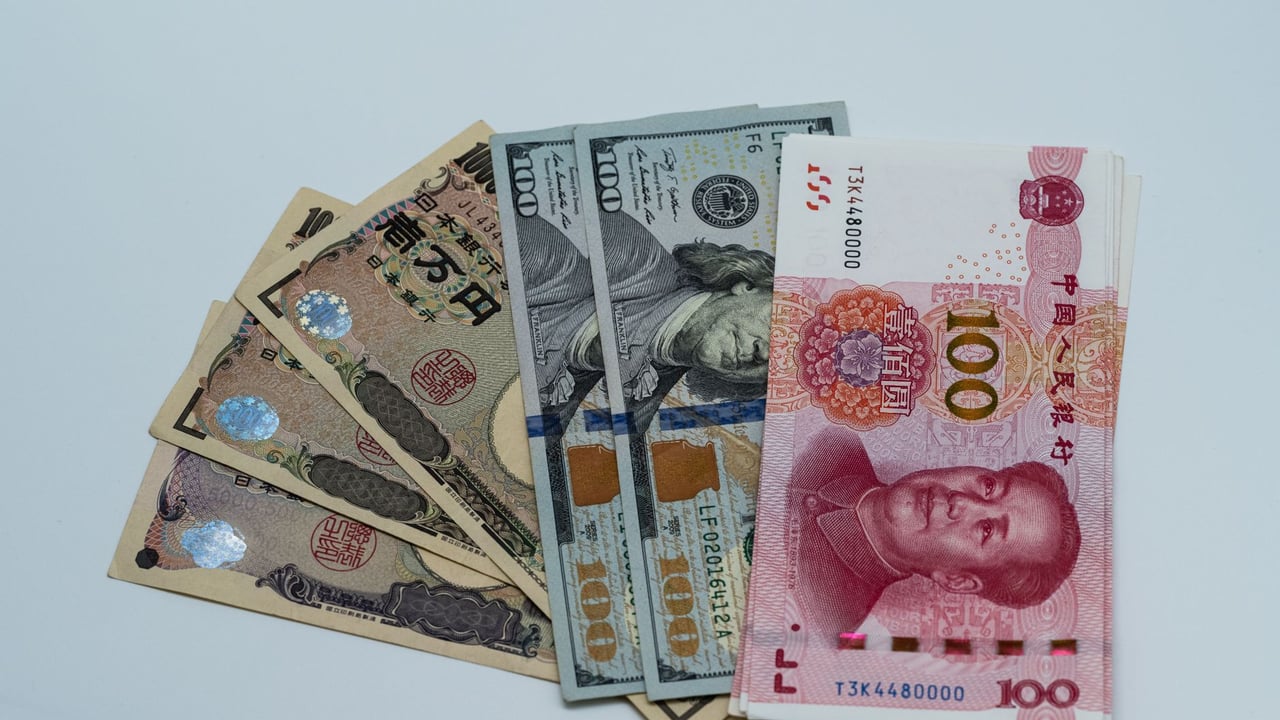

The global financial landscape is undergoing a sharp recalibration as the U.S. Dollar Index (DXY) surges to a 13-month high, breaking the 101.8 threshold. This momentum, driven by a hawkish Federal Reserve and rising U.S. Treasury yields, has triggered a massive contraction in the offshore Chinese dollar bond market. In the first half of 2026, the net financing for these instruments plummeted to negative $52.8 billion, a significantly deeper outflow than the $34.7 billion recorded during the same period in the previous year.
The surge in the dollar has effectively shut the door on many Chinese issuers who now find the cost of servicing and issuing greenback-denominated debt prohibitive. Market sentiment shifted dramatically in early 2026 as expectations for multiple Fed rate cuts evaporated, replaced by fears of persistent inflation and potential further hikes. This environment has pushed U.S. Treasury yields to 16-month highs, directly suppressing the valuations of existing Chinese offshore bonds.
Faced with a 'triple whammy' of high interest rates, widening中美 (China-US) yield inversions, and high currency hedging costs, Chinese corporations are pivoting toward 'Dim Sum bonds'—offshore debt denominated in Chinese Yuan. With a cost differential of approximately 180 basis points and an additional 2.5% required for currency swaps, the financial logic of dollar-denominated borrowing has largely collapsed for all but the most desperate or well-capitalized entities.
Sectoral resilience within the market remains uneven. While the real estate sector continues to languish, with high-yield property bond indices hitting record lows, state-linked Local Government Financing Vehicles (LGFVs) have shown remarkable durability. These entities are increasingly utilizing 'coupon defense' strategies, focusing on short-term high-quality assets to weather the volatility while waiting for a more favorable global interest rate cycle.