
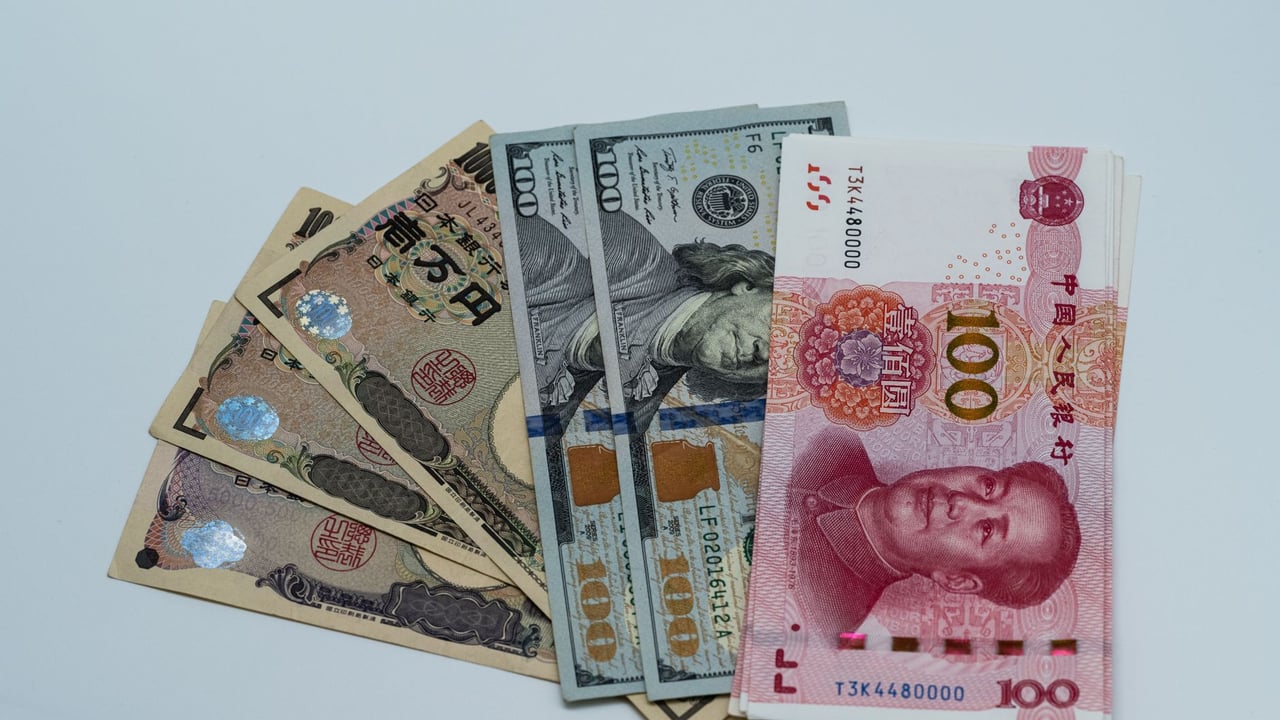

The global financial community is watching with bated breath as the Japanese yen approaches a critical historical threshold. Following a hawkish turn by the Federal Reserve under its new leadership, the yen has tumbled toward 161.95 against the dollar, hovering just a fraction away from the 162.25 mark—a level not breached since 1986. This figure is more than a historical curiosity; it represents a psychological and technical 'lifeline' that has anchored market expectations for four decades.
Market participants largely believe that the Bank of Japan (BoJ) views 162.25 as its ultimate line of defense. If this level is breached, the prevailing fear is that market confidence will evaporate, signaling a capitulation by Japanese monetary authorities. Such a break could trigger a cascade of panic selling and a stampede of capital flight, potentially devaluing the currency at a speed and scale that no single central bank could arrest through intervention alone.
While Japan recently moved to end its era of negative interest rates, the transition has been fraught with uncertainty. The current inflationary pressure in Japan is largely imported, driven by the weak currency and rising global commodity costs, rather than the healthy, wage-driven demand that the BoJ desires. This leaves the Japanese economy in a precarious 'no man's land,' caught between the threat of stagflation and the need to maintain an accommodative environment to support fragile domestic growth.
Crucially, the wide interest rate gap between the U.S. and Japan remains the primary engine of the yen's decline. Despite Japan’s modest rate hikes, the Federal Reserve’s commitment to high rates creates a massive arbitrage opportunity, incentivizing investors to dump yen in favor of dollar-denominated assets. This 'carry trade' dynamics means that as long as the Fed remains hawkish, the BoJ is fighting a tide of global capital that is far larger than its own currency reserves.
However, a collapse of the yen is a nightmare scenario that Washington and Tokyo are desperate to avoid. Japan remains the largest foreign holder of U.S. Treasuries, with over $1 trillion in holdings. If the BoJ is forced to defend its currency at any cost, it will have little choice but to liquidate these U.S. debt holdings. Such a massive sell-off would send U.S. bond yields skyrocketing, effectively exporting Japan’s financial instability to the heart of the American credit market.