China’s Neural Frontier: Homegrown BCI Restores Mobility for Paralyzed Patient

China’s self-developed "Beijing Brain No. 1" BCI system has successfully restored mobility to a long-term paralyzed patient through a semi-invasive cortical implant. With nearly 30 human implants completed and long-term safety data emerging, the project marks a significant step in China's ambition to lead the global neural technology market.

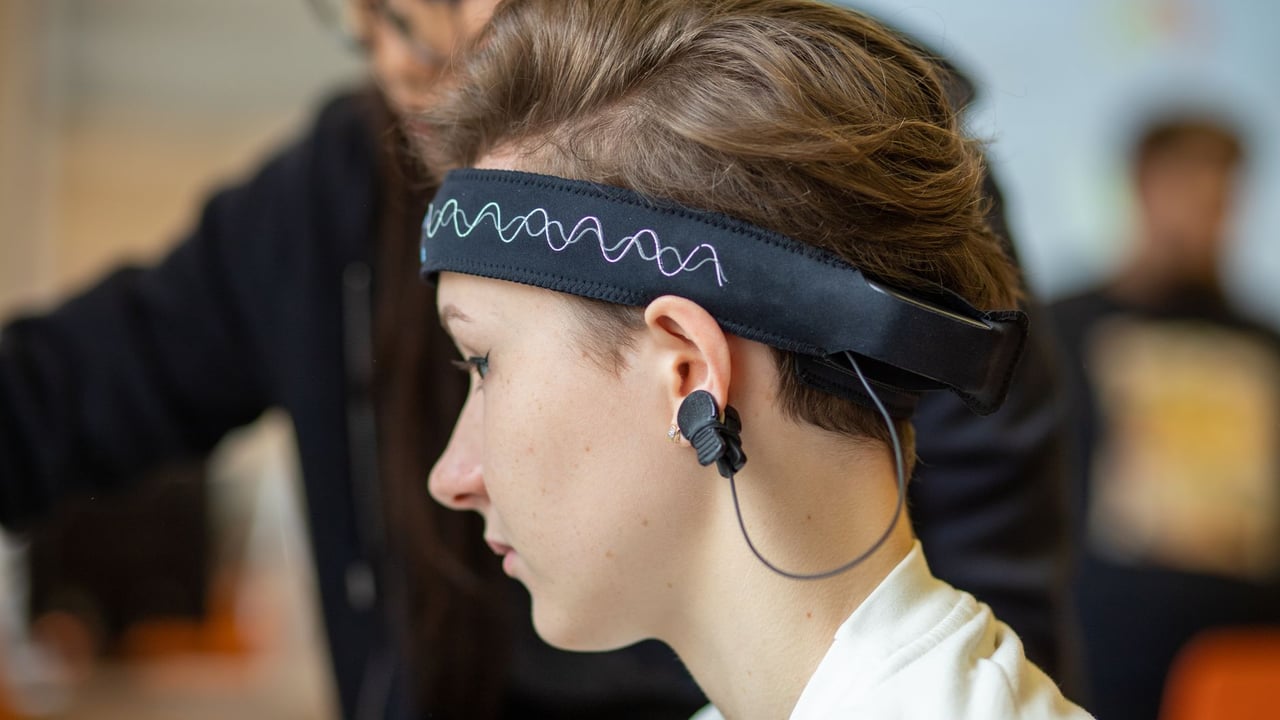
Close-up of a young woman wearing an EEG headband, showcasing modern technology indoors.

Key Takeaways

  • 1Beijing Brain No. 1 utilizes a semi-invasive design with a coin-sized unit and flexible electrodes to decode brain signals.
  • 2A patient paralyzed for five years successfully regained the ability to walk with crutches using the system.
  • 3The clinical trial program has expanded rapidly, reaching nearly 30 human implants within a year of the first surgery.
  • 4The system represents a push for 'neural sovereignty,' reducing China's reliance on foreign-developed medical technology.
  • 5Long-term stability has been demonstrated, with some trial participants carrying the implant for over 12 months.

Editor's
Desk

Strategic Analysis

The success of Beijing Brain No. 1 highlights a distinct Chinese strategy in the BCI sector: the prioritization of the 'semi-invasive' middle ground. While Western firms like Neuralink often focus on high-bandwidth, fully invasive procedures or purely external wearables, Chinese researchers are leveraging a hybrid approach that balances signal quality with surgical safety. By moving quickly into a relatively large-scale human trial phase (30 subjects), China is exploiting its streamlined regulatory pathways and vast clinical resources to generate a competitive data advantage. This suggests that the next decade of BCI development will be a regulatory and data-gathering race, where the ability to prove long-term efficacy in humans will dictate which nation sets the global standards for human-machine integration.

China Daily Brief Editorial
Strategic Insight
China Daily Brief

China has reached a significant milestone in the global race for neural technology with the successful clinical application of "Beijing Brain No. 1." This domestically developed semi-invasive brain-computer interface (BCI) has enabled a patient paralyzed for five years to stand and walk using crutches. The breakthrough signals China's growing capability to compete with Western pioneers like Elon Musk’s Neuralink in the high-stakes field of neuro-rehabilitation.

The system utilizes a coin-sized processing unit paired with ultra-thin flexible electrodes implanted directly into the cerebral cortex. This configuration allows for high-fidelity neural signal collection, wireless transmission, and real-time decoding into motor commands. By bridging the gap between intention and action, the technology bypasses spinal cord injuries that previously rendered physical movement impossible.

Since entering formal clinical trials in early 2026, the "Beijing Brain No. 1" system has been implanted in nearly 30 human subjects. The program began its initial human surgical phase in February 2025, and several participants have now maintained their implants for over a year without significant adverse effects. This rapid scaling of human data suggests that Chinese researchers are moving aggressively toward mass commercialization and clinical standardization.

Beyond the immediate medical triumph, the success of this system reflects China's broader strategic push for technological self-reliance in the “Deep Tech” sector. By developing proprietary hardware and localized decoding algorithms, Beijing is ensuring that its healthcare infrastructure remains independent of foreign intellectual property. As BCI technology transitions from experimental labs to the medical mainstream, the competition is increasingly focused on the speed of clinical validation.

Share Article

Related Articles

📰
No related articles found