Huawei’s Post-Moore Manifesto: Inside the ‘Tao Law’ for 3D Chip Supremacy

Huawei’s chip lead Teresa He has released an updated technical paper outlining the 'Tao Law,' a post-Moore’s Law scaling theory that uses 3D stacking and 'LogicFolding' to bypass traditional lithography limits. The paper includes mass-production data for the Kirin 2026, suggesting Huawei has found a viable path to high-performance silicon through architectural innovation rather than just transistor shrinking.

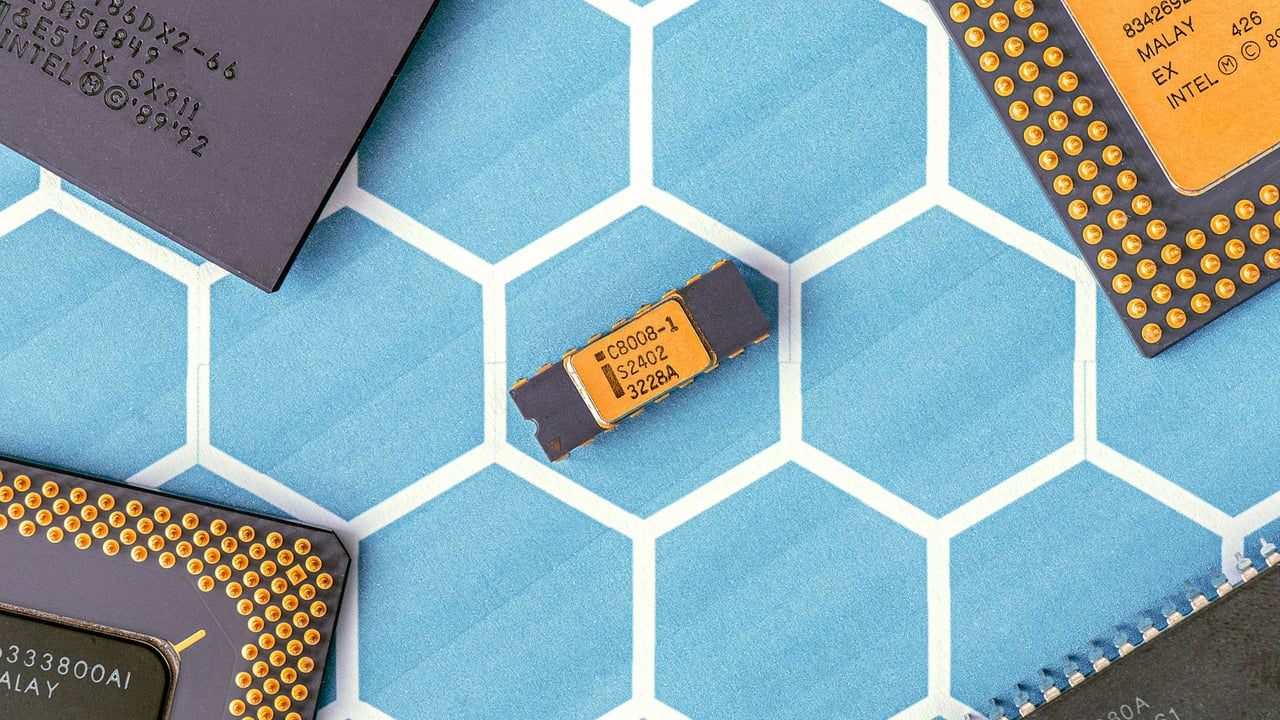
Close-up of various microprocessor chips on a blue hexagonal patterned surface, highlighting electronic technology.

Key Takeaways

  • 1Huawei released Version 2 of the 'Tao Law' paper, focusing on a time-constant-centric scaling theory for semiconductors.
  • 2The new version introduces 'LogicFolding' technology, enabling unit-level 3D design optimization instead of traditional block-level stacking.
  • 3Empirical data for the Kirin 2026 processor was revealed, showing significant gains in power density and normalized power consumption over the Kirin 9030 Pro.
  • 4The shift toward 3D IC (Integrated Circuit) architecture is a strategic pivot to maintain performance competitiveness under EUV lithography sanctions.

Editor's
Desk

Strategic Analysis

Huawei’s 'Tao Law' is more than a technical paper; it is a declaration of technological sovereignty. By focusing on 'LogicFolding' and 3D optimization, HiSilicon is effectively trying to change the scoreboard of the semiconductor race. If they cannot compete on the 'horizontal' axis of transistor density (nm), they will compete on the 'vertical' axis of 3D integration. The inclusion of Kirin 2026 data suggests that the hardware is already in the late stages of the development cycle. This vertical integration strategy, if scalable, could potentially neutralize the impact of Western export controls by delivering flagship-level performance via sophisticated packaging and architectural design rather than the latest lithography nodes.

China Daily Brief Editorial
Strategic Insight
China Daily Brief

Huawei’s semiconductor arm, HiSilicon, has signaled a decisive shift in its strategy to overcome global lithography constraints. Teresa He, the veteran head of Huawei’s chip design division, has released the second iteration of her 'Tao Law' (韬定律) paper on ChinaXiv. This updated version moves beyond theoretical frameworks to provide concrete engineering blueprints for the next generation of domestic silicon, specifically targeting the 'post-Moore’s Law' era where physical scaling of transistors has hit a wall.

The core of the 'Tao Law' revolves around a scaling theory based on the time constant (τ), rather than just physical dimensions. Version 2 of the paper introduces 'LogicFolding,' a revolutionary technique that employs a specific 'gear ratio' to optimize chip design. By aligning hybrid bonding pitches with top-layer metal wiring, Huawei claims it can move from traditional discrete macro-block optimization to continuous unit-level optimization in a three-dimensional space.

Perhaps the most significant revelation in the update is the inclusion of empirical performance data for the upcoming Kirin 2026 processor. By comparing it to the benchmark Kirin 9030 Pro, Huawei has detailed specific improvements in voltage, frequency, and power density. This indicates that the theoretical vertical logic partitioning is no longer just a laboratory concept but a verified architecture ready for mass production, allowing for superior power efficiency and area utilization without relying solely on shrinking transistor nodes.

This architectural pivot represents Huawei’s strategic response to being denied access to the most advanced extreme ultraviolet (EUV) lithography tools. By mastering 3D stacking and vertical logic integration, the company is attempting to manufacture chips that perform at 'leading-edge' levels while using slightly older, more accessible fabrication processes. If successful, this 'LogicFolding' approach could allow China’s semiconductor industry to remain competitive in the high-performance computing and smartphone markets despite ongoing trade restrictions.

Share Article

Related Articles

📰
No related articles found