

Beijing has shifted its economic statecraft from broad-brush retaliations to a scalpel-like precision that has rattled Tokyo’s defense establishment. By placing 40 Japanese entities—specifically targeting top-tier research institutes—under strict export controls, China is no longer just hitting the manufacturers. It is aiming for the intellectual foundations of Japan’s future military capabilities, signaling that cooperation on defense will carry a heavy industrial price.
The inclusion of the National Institute for Defense Studies and various equipment research labs marks a qualitative leap in Beijing’s strategy. These institutions act as the "brain" for Japan’s Self-Defense Forces, steering long-term strategy and hardware development. By choking the flow of critical materials like rare earths and specialized electronics to these hubs, China seeks to degrade Japan's ability to innovate at the R&D stage.
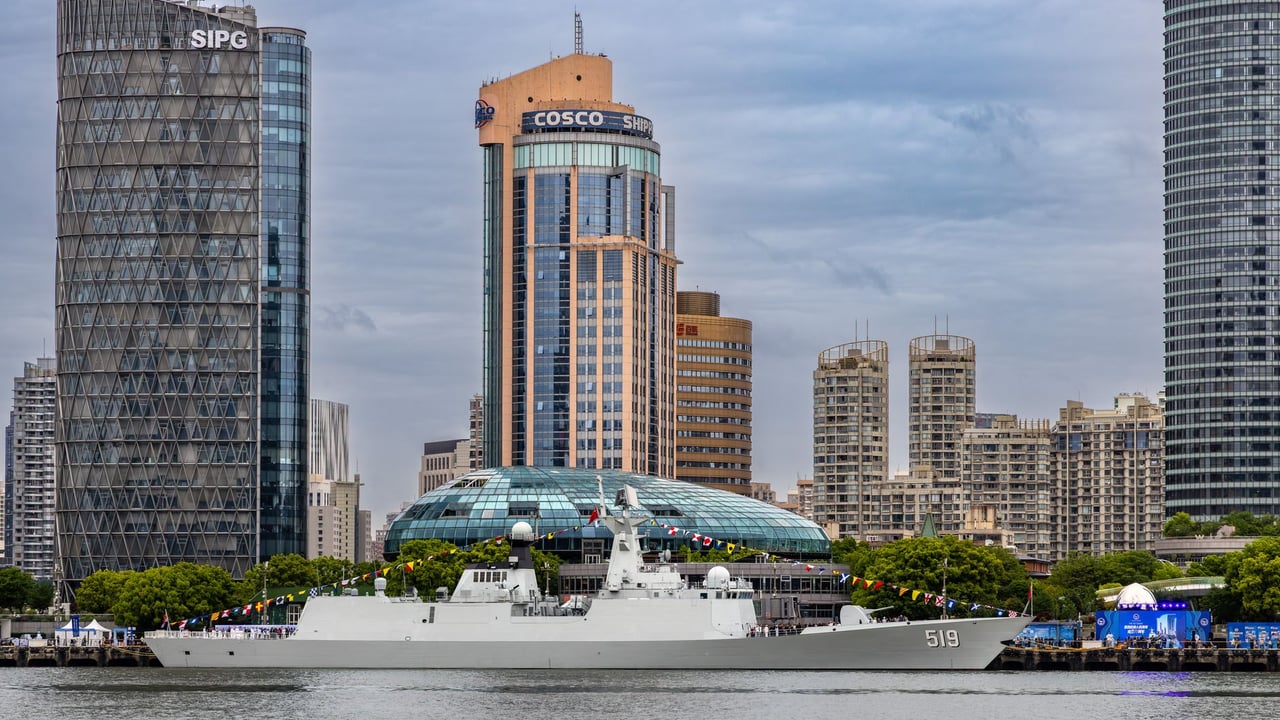
This economic pressure coincided with a massive display of maritime reach, as a multi-vessel Chinese fleet transited four strategic waterways surrounding Japan simultaneously. The maneuver, involving the Type 055 destroyer Nanchang and the newly commissioned Dongguan, demonstrated a high level of operational coordination. It served as a direct response to the "Resolute Dragon" and RIMPAC exercises led by the United States, effectively showing that the first island chain is no longer a barrier.
The speed with which the Dongguan entered active service—just three months after commissioning—has caught regional analysts off guard. Typically, a warship requires over a year of sea trials to reach full combat readiness. This accelerated timeline suggests that the People's Liberation Army Navy has streamlined its training pipelines, allowing new tonnage to be projected into the Pacific at an unprecedented rate.
Diplomatically, the rhetoric has reached a fever pitch, with Beijing now explicitly accusing Tokyo of fostering "new militarism." This terminology signals a shift from mere diplomatic friction to a fundamental re-categorization of Japan as a systemic threat. As China links supply chain access to Japan’s stance on Taiwan, the era of separating economics from security in the East China Sea appears to have come to an end.