The Great Storage Squeeze: Why AI’s Hunger for Memory is Upending China’s Silicon Markets

Surging demand for AI-related high-bandwidth memory is causing severe supply shortages in the general storage market, leading to intraday price volatility in Chinese tech hubs. Analysts suggest that the structural shift toward AI chips will maintain upward pressure on prices for years as new manufacturing capacity remains a long-term prospect.

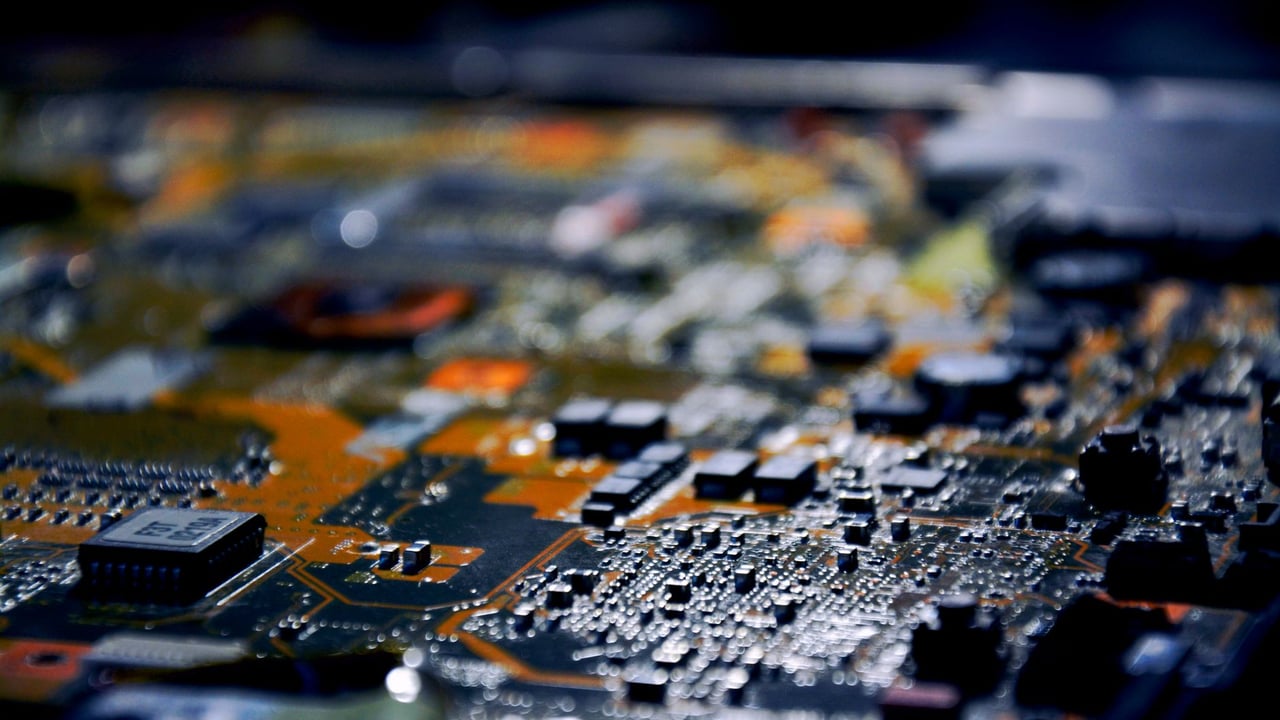
Detailed close-up view of electronic circuit board, showcasing modern technology.

Key Takeaways

  • 1Storage prices in major Chinese markets like Huaqiangbei are fluctuating multiple times per day due to severe supply shortages.
  • 2The AI boom is driving demand for High Bandwidth Memory (HBM), which is reducing the production capacity available for standard SSDs and RAM.
  • 3Nomura Securities asserts that market fears of oversupply are premature, noting that major investment projects in South Korea will take up to a decade to reach full production.
  • 4Domestic Chinese semiconductor firms, including Deep Technology, are currently operating at 100% capacity to meet rising demand.

Editor's
Desk

Strategic Analysis

The current volatility in China's storage market signals a fundamental shift from cyclical to structural growth in the semiconductor industry. Historically, the memory market was defined by boom-and-bust cycles driven by consumer electronics; however, the AI revolution has introduced a floor of high-performance demand that the current manufacturing base is not equipped to handle. By prioritizing high-margin HBM for AI data centers, giants like Samsung and SK Hynix are inadvertently creating a 'starvation' effect in the consumer SSD and DRAM markets. For global investors and hardware manufacturers, this suggests that the era of cheap, abundant storage is ending, replaced by a strategic landscape where memory is as much of a bottleneck as GPU compute power.

China Daily Brief Editorial
Strategic Insight
China Daily Brief

In the bustling electronics hubs of Huaqiangbei and Shanghai, the digital pulse of the global supply chain is racing. Retailers report that prices for solid-state drives (SSDs) and memory modules are no longer stable for even a single business day. A high-end Samsung or SanDisk drive quoted in the morning can see its price tag jump by 5% by sunset, reflecting a volatility rarely seen since the height of the pandemic-era chip shortages.

This domestic frenzy is mirrored by a significant shift in global semiconductor dynamics. Nomura Securities recently highlighted that the primary catalyst is a severe structural supply shortage. While some investors have voiced concerns regarding potential oversupply, analysts argue these fears are vastly exaggerated. The reality is that the artificial intelligence boom has created a voracious demand for High Bandwidth Memory (HBM), which is systematically cannibalizing the production capacity originally reserved for general-purpose storage.

The timeline for relief appears distant. South Korea’s ambitious 4,800 trillion won investment into semiconductor infrastructure is a long-term play that will take five to ten years to translate into actual market capacity. In the interim, the pivot toward high-margin AI chips means that the manufacturing of standard NAND and DRAM components is being sidelined, leading to the current price spikes and supply-side bottlenecks.

Within China, the impact is felt most acutely by domestic packaging and testing giants. Companies like Deep Technology (Shen Tech) report that their facilities are operating at maximum capacity, struggling to keep up with the deluge of orders. As AI continues to redefine the structural growth of the tech sector, the 'morning price, evening price' phenomenon in China’s retail markets serves as a canary in the coal mine for a global industry that has yet to see its demand peak.

Share Article

Related Articles

📰
No related articles found