
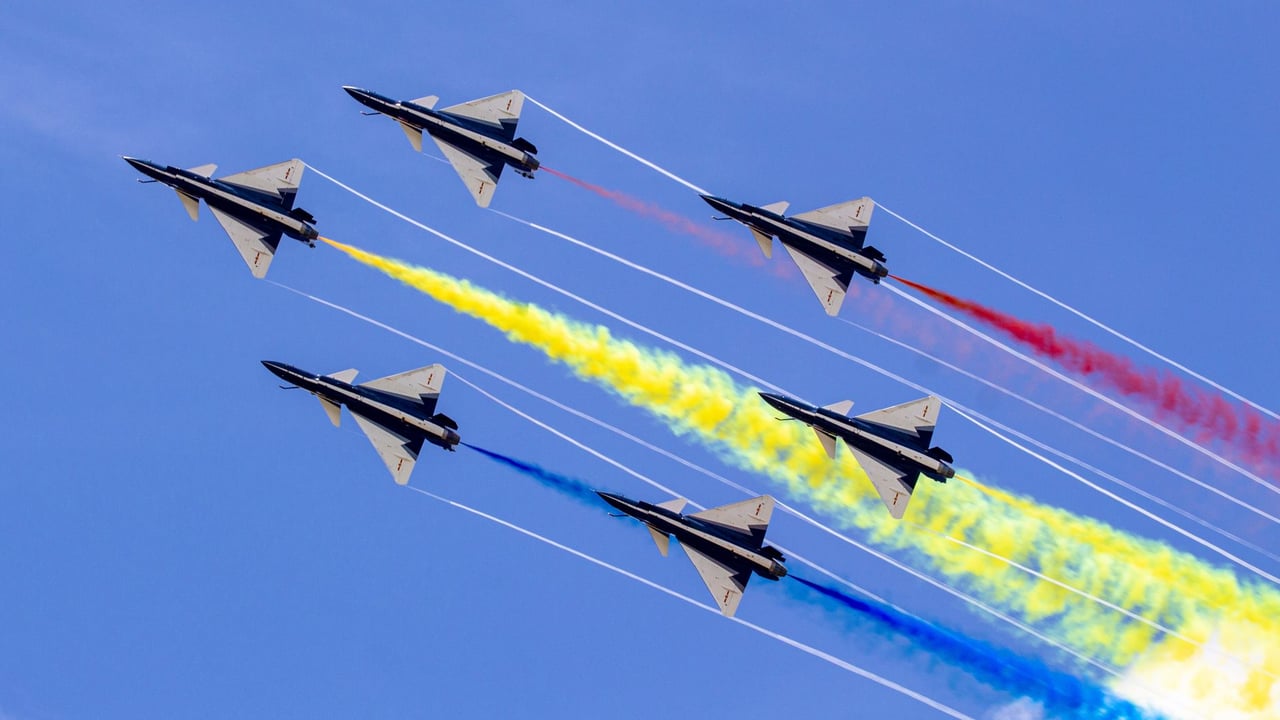

On July 5, 1969, a sleek, twin-engine interceptor took to the skies over Shenyang, marking a pivotal moment in China's military history. The maiden flight of the J-8 fighter represented more than just a new airframe; it signaled the transition of the People’s Republic from a nation dependent on Soviet blueprints to one capable of indigenous design.
Known as the "Cradle of Chinese Fighters," the Shenyang Aircraft Corporation (SAC) had spent its first two decades repairing and manufacturing clones of the MiG-17, MiG-19, and MiG-21. However, by the early 1960s, the need for a high-altitude, high-speed interceptor to counter Western reconnaissance aircraft became a matter of national survival. Faced with a widening technological gap, Chinese engineers were tasked with creating a Mach 2-capable aircraft without the benefit of foreign assistance.
The development of the J-8 was fraught with technical hurdles and personal tragedy, most notably the death of its original chief designer, Huang Zhiqian, in a 1965 plane crash in Egypt. Despite the loss of leadership and the lack of external reference materials, a dedicated technical team was forced to rely on trial and error to bridge the gap with the world's leading air forces. This period of isolation fostered a culture of self-reliance that remains a core tenet of the Chinese defense industry today.
One of the most storied moments in the program's history involved chief designer Gu Songfen, who personally took to the air to observe aerodynamic vibrations. By trailing the J-8 in a trainer jet and observing tufts of yarn attached to the fuselage, Gu diagnosed critical "buffeting" issues that threatened the aircraft's stability at high speeds. His willingness to undertake such dangerous test flights underscored the high-stakes environment of China's early aerospace program.
Today, the lineage of the J-8 continues to influence the People's Liberation Army Air Force (PLAAF) through sophisticated successors like the multi-role J-16 and the carrier-based J-15 "Flying Shark." As China prepares to operationalize the J-35A stealth fighter, the J-8 remains a foundational symbol of the country's pursuit of strategic autonomy in the sky. The evolution from the subsonic J-5 to the fifth-generation J-35 reflects a broader national journey from imitation to global competition.