
Business & Industry News
Latest business & industry news and updates

China's New Energy Storage Capacity Reaches 153 GW Amid Market Shift
Installed capacity rose 61% year-on-year by mid-2026 as grid utilization hours climbed and the sector prepared for market-based operation.

China Records 10.38 Trillion Yuan in New RMB Loans in First Seven Months
Central bank data shows steady corporate borrowing offsetting a contraction in household credit as aggregate financing growth moderates.

Shanghai Electric Issues China's First Corporate FTZ Offshore Bond
The 1.5 billion yuan green issuance marks the first corporate FTZ offshore bond and the first to list on the Hong Kong Stock Exchange.

China Foreign Trade Expands 17.3% in First Seven Months of the Year
Strong exports of tech equipment and green goods anchor trade growth amid rising global supply chain friction.

China's Electric Vehicle Charging Infrastructure Surges 43.2% to 23 Million Units
Expansion in private home chargers and rural county coverage drives rapid charging network growth in the first half of the year.

China Previews 26th CIFIT with Finland and Saudi Arabia as Guest Nations
The investment fair introduces dual guest nations, expanded financial zones, and bilateral dialogues to boost two-way investment.

Chinese Commercial Satellite Maker GalaxySpace Delivers First Spacecraft to Southeast Asia
GalaxySpace launched an Earth-observation CubeSat and ground telemetry package for Thailand's space agency GISTDA.

China EV Charging Infrastructure Reaches 23.68 Million Units
Official data shows a 41.9 percent annual increase through July, driven by rapid expansion in both private and public installations.

China's Freight and Port Traffic Post Moderate Growth in First Seven Months
Steady expansion in foreign trade throughput and container volume accompanies new shipping routes to emerging markets.

China's New RMB Loans Rose 10.38 Trillion Yuan in First Seven Months
Central bank data shows steady corporate borrowing balanced by a contraction in household loans and slower total social financing growth.

China Posts $379.4 Billion Current Account Surplus in First Half of 2026
A robust goods trade surplus of $526.3 billion offset the services deficit during the first six months of the year, according to official foreign exchange data.
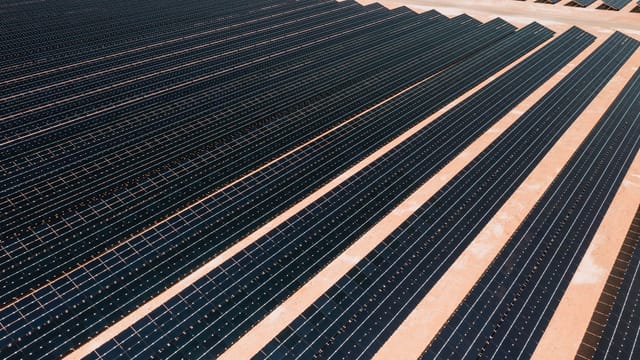
China Eyes 15 Gigawatts of Solar Thermal Capacity by 2030 at Qinghai Summit
Over 800 industry representatives gathered in Xining to address cost reduction and scaling challenges ahead of the 15th Five-Year Plan.