
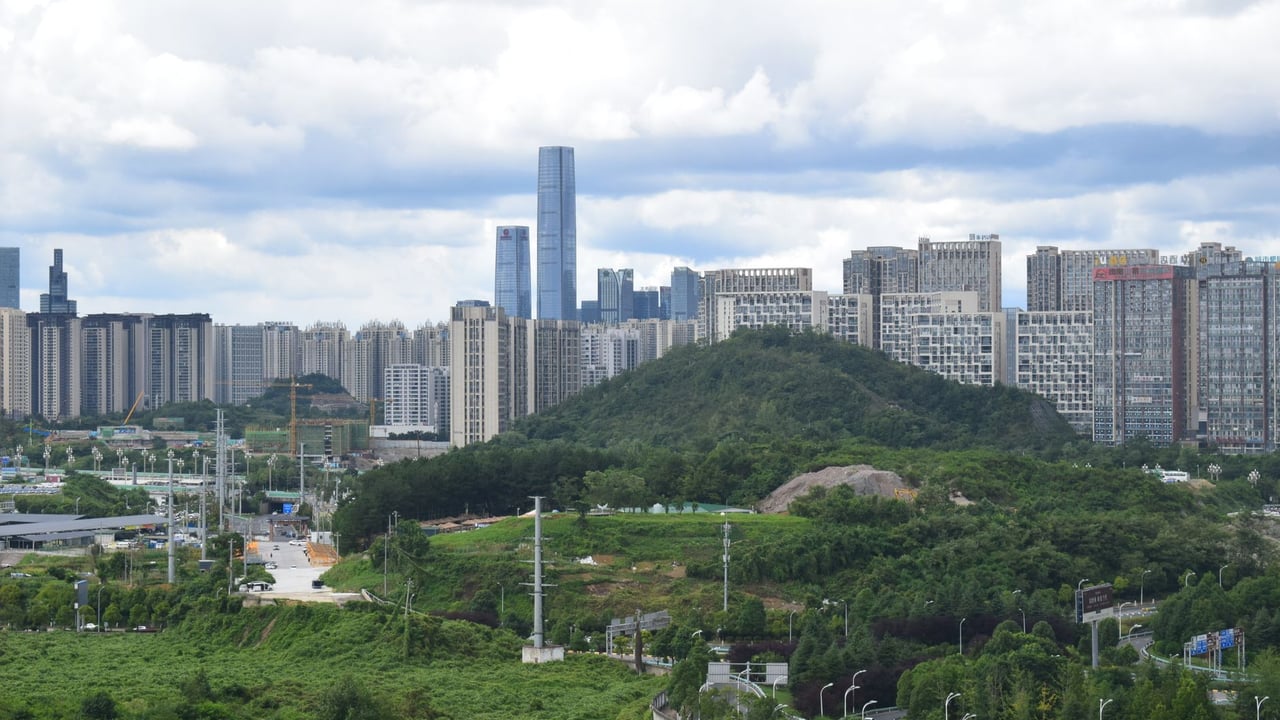

While much of China’s real estate sector remains mired in a multi-year deleveraging crisis, a distinct 'independent market' has emerged in Shenzhen’s most prestigious postcodes. In the first half of 2024, the tech hub’s luxury market witnessed a series of 'sold out on opening day' events, particularly in core districts like Shenzhen Bay and Qianhai. This localized boom is being fueled not by traditional real estate moguls or manufacturing barons, but by a rising class of 'tech nouveaux riches' emerging from the country’s strategic semiconductor and artificial intelligence sectors.
These buyers represent a generational and behavioral shift in Chinese high-net-worth consumption. According to market data, approximately 80% of buyers for units priced above 10 million RMB now hail from the chip, AI, and smart manufacturing industries. Unlike their predecessors, these tech elites—many of whom are '90s-born founders or senior executives—prioritize 'tech-plus-ecology' lifestyles and extreme efficiency. For them, a 30-million-yuan apartment near the office is not just an investment; it is a 'necessity' that facilitates a grueling work-life integration.
The purchasing power of this cohort is characterized by rapid decision cycles and a marked preference for all-cash transactions. Industry observers note that while traditional luxury buyers might spend months consulting feng shui masters and family members, these tech professionals often close deals within weeks. Many are leveraging sudden liquidity from equity liquidations and IPO payouts, opting to pay in full to bypass mortgage complexities that their variable, equity-heavy compensation packages might otherwise complicate.
This concentrated demand has revitalized Shenzhen’s land market, creating a feedback loop of confidence for major developers. In June alone, three core residential plots were snapped up at significant premiums, including a Nanshan district site that set a record for floor price. Developers like Poly Development are betting billions that the proximity to corporate campuses—such as Tencent’s massive 'Penguin Island'—provides a 'certainty of demand' that is largely insulated from the broader economic headwinds facing the Chinese middle class.
The phenomenon suggests that China’s state-led pivot toward 'New Quality Productive Forces' is beginning to manifest in the nation's wealth distribution. As Beijing funnels capital into self-reliance for chips and AI, the resulting wealth is concentrating in specific geographies. Shenzhen’s luxury real estate has effectively become a secondary derivative of the global tech arms race, where the value of a penthouse is increasingly tied to the valuation of the silicon designed in the office tower next door.