
Business News
Latest business news and updates
Total: 2944
Squeezed: Li Auto’s Margin Meltdown Signals a Bitter Winter for China’s EV Darlings
Li Auto has reported a massive 452% drop in net profit for the first quarter, resulting in a 2.29 billion RMB loss as vehicle margins collapsed to just 6.1%. Despite maintaining a strong cash reserve, the company faces a difficult recovery with second-quarter guidance suggesting continued declines in revenue and deliveries.

The Hefei Model: How a Chinese Provincial Capital Gambled on Silicon and Won the Future
Changxin Technology's upcoming IPO marks a massive victory for Hefei's state-led investment strategy, potentially yielding a $50 billion profit. This success cements the 'Hefei Model' as a blueprint for Chinese cities seeking to transition from property-based growth to high-tech industrial development.

Antibiotic Overdose: Why China’s Largest Meat Processor Can’t Control Its Supply Chain
Shuanghui Development is under fire after its subsidiary was found selling pork with antibiotic levels 38 times the legal limit. The scandal exposes the failures of the company’s 'asset-light' sourcing model and its inability to fulfill long-standing promises of supply chain integration.

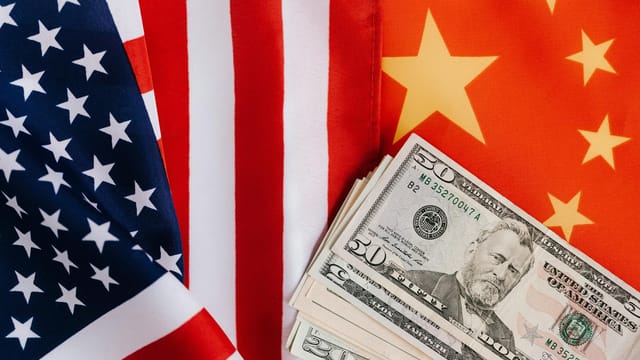
A Thaw in Suzhou: China and the U.S. Signal a Strategic De-escalation of the Tariff War
China and the U.S. have reached a preliminary agreement to reciprocally reduce tariffs on over $30 billion worth of goods, signaling a potential de-escalation in their long-standing trade conflict. This breakthrough, highlighted during the APEC trade ministers' meeting in Suzhou, underscores a broader strategic push for supply chain connectivity and regional economic stability.

The Tipsy Pivot: Why China’s Tea and Alcohol Giants are Swapping Playbooks
China's beverage industry is undergoing a structural shift as saturated tea brands and aging Baijiu distillers converge on the 'slight intoxication' market. Faced with slowing growth and demographic shifts, companies are blurring product lines to capture Gen Z consumers through lifestyle-driven, low-alcohol experiences.
China’s Equity Rally Stumbles as Tech Sector Retreats Amid Trillion-Yuan Liquidity
China’s ChiNext Index led a market-wide retreat as investors locked in profits from the semiconductor sector despite massive trading volumes exceeding 2 trillion RMB. While tech slumped, real estate and power sectors showed resilience, highlighting a tactical rotation within a highly volatile liquidity-driven environment.

Welding the Backdoor: China’s Crackdown on Offshore Trading Ends an Era for Retail Investors
China has effectively ended retail access to global stock markets by imposing massive fines on cross-border brokers and mandating a two-year exit for mainland users. This move is a strategic attempt to curb capital flight and redirect investment into domestic markets, leaving only high-threshold, state-sanctioned channels available for the wealthy.

Solar Dynasty in Eclipse: Family Feud at Topray Exposes the Frailty of Chinese Corporate Governance
A public power struggle has erupted at Topray Solar as the founding family splits over succession, leading to mutual board dismissal motions and allegations of financial misconduct. The feud, which has wiped out nearly a quarter of the company's market value, highlights the systemic governance risks facing China's family-controlled listed firms.

The Fall of the Profitability King: Li Auto’s Q1 Collapse Signals a Crisis in the EREV Moat
Li Auto has reported a historic Q1 2026 loss of 2.28 billion RMB, marking a dramatic fall for the former leader of China's EV profitability. A combination of intensified competition in the EREV segment and a shift toward low-margin models has crashed vehicle margins to just 6.1%, forcing the company to rely on its cash reserves as it pivots toward AI.

Pinduoduo Tightens the Screws on Cross-Border Trade to Shake Off Its 'Wild West' Reputation
Pinduoduo has launched a comprehensive governance initiative requiring cross-border merchants to provide video and documentary proof of product authenticity. The move aims to eliminate counterfeit goods and strengthen the platform's 'Haitao' import ecosystem through rigorous traceability requirements.

Beyond the Silicon: AI’s Infrastructure Boom Drags the Transportation Sector into the Limelight
As semiconductor valuations reach historic peaks, investors are pivoting toward the transportation sector as a secondary beneficiary of the AI infrastructure boom. Driven by the logistical demands of massive data center construction and technical 'cup and handle' breakouts, this rotation indicates a broadening of the AI-driven bull market into cyclical industries.
The Algorithmic Axe: How AI is Redrawing the Human Map of Global Finance
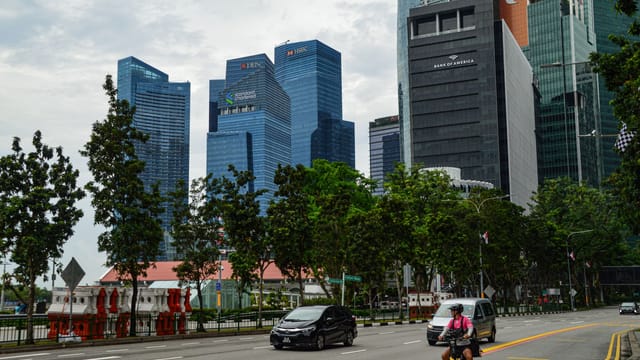
Standard Chartered’s plan to cut 8,000 jobs highlights a global banking trend where generative AI is replacing back-office functions. While Western banks focus on structural optimization, Chinese state banks are aggressively hiring AI talent, reflecting a broader shift from labor-intensive operations to algorithm-driven finance.