
# China%20tech
Latest news and articles about China%20tech
Total: 69 articles found

China’s Qianwen launches G1 AI glasses in stock — domestic subsidy pushes price under ¥2,000
Qianwen’s G1 AI glasses went on sale in China on March 8, offering dual flagship chips, a dual operating system and 64GB storage, with subsidised pricing starting at ¥1,997. The launch highlights Beijing‑friendly subsidy dynamics and a domestic push to field affordable AI wearables that rely less on foreign components and more on local ecosystems.

Meituan and Lenovo Team Up to Roll Out 'OpenClaw' Remote Deployment Service Across China
Meituan and Lenovo have launched a nationwide remote deployment service for OpenClaw, offering a one-stop solution to install and manage software across device fleets. The move accelerates the commercialization of agent-driven deployment in China while raising operational and security questions for users and regulators.

JD’s Big Bet on Food Delivery: Revenue Gains, Profit Pain and a High‑stakes Gamble for Market Share
JD.com grew revenue to ¥1.3 trillion in 2025 but saw operating profit collapse and free cash flow shrink sharply as losses from new businesses, especially food delivery, ballooned. Management says investment intensity could ease in 2026 if competition stabilises, but the company must show that its retail margins and newly listed subsidiaries can deliver independent, durable profits.

From Hobbyists to Hustles: How OpenClaw Agents Are Rewiring Workflows — and Raising New Risks
OpenClaw, an open‑source AI agent framework, has sparked a wave of adoption in China that ranges from schoolchildren building simple apps to entrepreneurs automating quant trading and firms packaging their own agent products. The technology promises large productivity gains but brings persistent technical, privacy and governance risks; its rapid diffusion highlights urgent choices about orchestration, regulation and workforce adaptation.

Alibaba Rejects Claims of AI Team Exodus after Executive Departure, Says Services Unaffected
Alibaba has denied that its large-model AI team collectively resigned, stressing team stability, normal service operation, and that it has not imposed commercial KPIs. The clarification followed the resignation of a senior figure and reflects broader tensions in China’s AI talent market between research freedom and pressure to monetise.
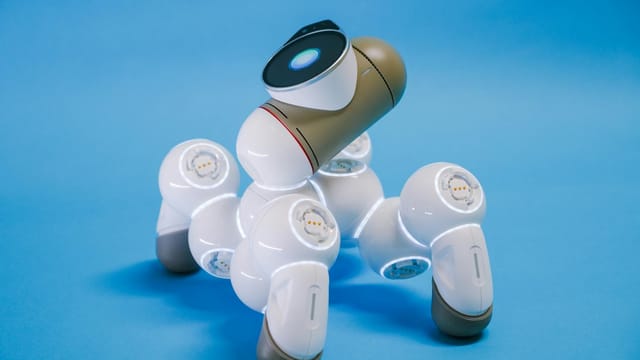
Google Pivots to Robotics as a Long‑Term Bet — Chinese Robot ETF and Suppliers Rally
Google has elevated robotics to one of three long‑term growth engines, prompting a rally in China’s Robot ETF (159770) and several supplier stocks. The ETF has seen meaningful asset and share growth over the past year, reflecting investor interest in a sector moving from research to industrial deployment.

Alibaba Plays Down AI Exodus as Senior Engineer Departs — ‘Team Stable, Services Normal’
Alibaba publicly downplayed reports of collective departures from its large-model AI team, saying teams are stable and services remain unaffected after a senior figure, Lin Junyang, resigned. The episode highlights the strategic importance of engineering talent in China’s AI race and the reputational and operational sensitivity that follows high-profile exits.

Jack Ma Reappears as Alibaba Scrambles to Close an AI Gap
Jack Ma has increased his public presence as Alibaba mounts an aggressive campaign to catch up in the AI race, convening senior leaders while the company pours over RMB 3 billion into marketing and releases the Qwen3.5 model. The effort confronts persistent gaps against rivals in user metrics and has been complicated by the sudden resignation of lead model developer Lin Junyang, exposing tensions between product science and growth targets.
CITIC Flags AI 'Sentiment Shock' in China’s Software Stocks — Data-Rich Specialists Seen as Long-Term Winners
CITIC Securities warns that AI large models have sparked a sentiment-driven adjustment in China’s software application sector, but identifies a clear pattern: companies with industry expertise and proprietary data are best placed to benefit from the AI Agent era. The note advises focusing on model developers, enterprise and vertical Agent software, and AI infrastructure, while cautioning that headline‑led market moves may not reflect long‑term fundamentals.

MWC 2026: China’s Tech Armada Meets the ‘AI Traffic Tsunami’ — From Networks to Robots, a Full‑Stack Response
At MWC 2026 Chinese firms showcased a full‑stack strategy to confront industry challenges flagged by GSMA: finish 5G standalone, protect networks from an AI‑driven traffic surge, and secure data flows. Huawei emphasised AI‑centric networking and large SuperPoD compute clusters as an alternative to existing GPU suppliers, while device makers and robotics firms pushed AI into everyday, affordable products.

From Megvii's Ashes to a Geely-Backed Empire: Yin Qi's Bet on an AI+Car Closed Loop
Yin Qi has reconfigured his post‑Megvii career around a tightly integrated AI+automotive strategy, combining StepFun’s large models with Qianli/Geely’s hardware and distribution to create a commercial ‘‘closed loop.’’ Backed by state capital and big tech, StepFun has raised over RMB5 billion and aims for a near‑term listing, but its dependence on Geely creates strategic trade‑offs between fast deployment and independence.

Measurement-instrument Champion Huashengchang Pays Rmb460m to Break into Optical-Communications Testing
Huashengchang will acquire Shenzhen Galant for Rmb460 million to enter optical chip and module testing, tying part of the consideration to Galant meeting Rmb115 million in cumulative profit from 2026–28. The move aims to diversify revenue amid a 2025 earnings slowdown, but it carries integration, cash‑flow and governance risks.