
# Executive Compensation
Latest news and articles about Executive Compensation
Total: 10 articles found

The Trillion-Dollar Man: Musk’s Historic Payday and the Limits of Corporate Ambition
Elon Musk has secured a record-breaking $116 billion pay package after meeting rigorous Tesla performance goals, officially making him the first trillionaire in history. The payout has reignited debates over wealth inequality and corporate governance, while markets worry about the long-term impact of his eventual stock divestment in 2028.

The $116 Billion Handcuffs: Musk’s Historic Payday and the Long Road to 2028
Elon Musk has exercised his 2018 Tesla compensation options, netting 286 million shares with a paper value of $116 billion. However, due to a mandatory five-year holding period, Musk cannot liquidate these holdings until 2028, effectively binding his personal fortune to Tesla's long-term market stability.

The 'Tuition' Defense: Sanhua Intelligent’s Executive Sell-Off Sparks Governance Outcry
Sanhua Intelligent Controls is facing a public relations crisis after executives justified selling millions in stock at peak prices by citing 'children's education' costs. The divestments occurred just before a significant slowdown in profit growth and a 20% drop in share price, raising concerns over corporate governance.

A State-Sponsored Lifeline for Vanke as Property Woes Deepen
Vanke has secured an additional 2.5 billion RMB loan from its state-owned largest shareholder, Shenzhen Metro, amid a historic 88.6 billion RMB annual loss. The developer is currently liquidating assets and restructuring executive pay to navigate a severe liquidity crisis and plummeting property sales.

Behind the Golden Handcuffs: Decoding the Paradox of China’s Top Corporate Paychecks
China's latest corporate filings reveal a deceptive spike in average salaries, often caused by massive layoffs at struggling firms rather than true growth. While biotech and gaming giants continue to offer massive rewards, the rise of high-paid professional managers over company owners signals a significant shift in Chinese corporate governance.

The Twelve-Million-Yuan Man: Executive Pay and the Tech Ambitions of the Greater Bay Area
TCL Chairman Li Dongsheng leads Huizhou's executive pay rankings with an annual salary of 12.04 million RMB as local tech firms pivot toward high R&D spending and educated workforces. The 2025 reports reveal a divergent landscape where executive compensation is increasingly linked to technological competitiveness in the global market.
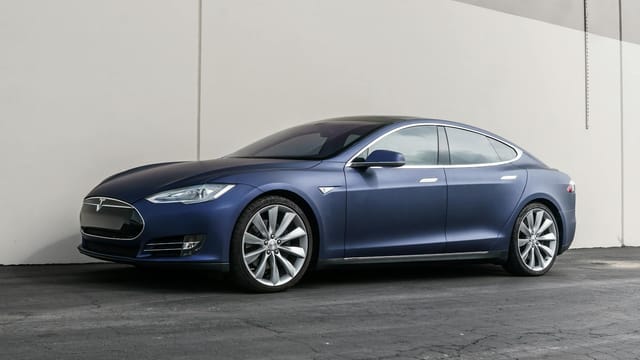
The $158 Billion Mirage: Elon Musk’s Record-Breaking Year of Zero Pay
Tesla disclosed a record $158.3 billion accounting valuation for Elon Musk's 2025 compensation, but the CEO received no actual pay as the company failed to meet aggressive performance targets. The disconnect highlights the gap between theoretical equity value and the reality of Tesla's recent market struggles.

China’s Regulatory Iron Fist: The CSRC’s New Crusade Against Corporate Malfeasance
The China Securities Regulatory Commission (CSRC) has launched an intensive campaign to reform corporate governance, targeting financial fraud through executive pay clawbacks and strengthened independent oversight. This move aims to align Chinese market practices with international standards and ensure long-term stability in the capital markets.

Philanthropy as a Pivot: Why Lenovo’s $22 Million CEO is Betting Big on AI
Lenovo CEO Yang Yuanqing has donated 200 million RMB to Shanghai Jiao Tong University to support AI research, coinciding with a massive corporate pivot to 'AI-native' operations. Despite his status as one of China's highest-paid executives, Yang faces the daunting task of reversing revenue declines and leading Lenovo through a difficult transition from legacy hardware to high-margin AI infrastructure.

The Billion-Dollar Disconnect: Meta’s AI Pivot Sacrifices the Rank-and-File for C-Suite Moonshots
Meta has initiated a new round of layoffs for 700 employees while simultaneously unveiling an aggressive multi-billion dollar executive incentive plan tied to AI growth. The move highlights a ruthless strategic shift where legacy departments are gutted to fund a massive pivot toward Artificial Superintelligence and high-level talent retention.