
# MiniMax
Latest news and articles about MiniMax
Total: 15 articles found

The Pricing Power Paradox: Why China’s Zhipu AI is Winning the Global Large Model Shakeout
Following the regulatory restriction of Anthropic’s Fable 5 model in the US, China’s Zhipu AI has emerged as a primary beneficiary, demonstrating significant pricing power and technical leadership. Market valuations are now pivoting toward companies that can offer high-level reasoning and maintain margins, creating a clear divide between 'AI infrastructure' leaders and general tool providers.
Domestic Ambitions: Zhipu AI Signals Strategic Shift with Shanghai STAR Market IPO Plan
Chinese AI heavyweight Zhipu AI has proposed a major IPO on Shanghai's STAR Market, aiming to issue up to 8% of its equity to raise an estimated 15 billion RMB. This move signals a broader trend of Chinese AI unicorns seeking domestic listings to secure the capital needed for the resource-heavy development of large language models.
The DeepSeek Deflation: How China’s AI Upstart is Gutting Industry Valuations
DeepSeek's valuation has surged to $51.5 billion amid a strategic shift toward commercialization and a potential IPO. This pivot is triggering a deflationary price war in China's AI sector, forcing rivals to reconsider their revenue models as AI tokens become a low-margin commodity.

Hong Kong Tech Lifted by AI Hype and Memory Chip Rally as MiniMax Surges Nearly 20%
Hong Kong stocks ticked up as AI large‑model developers and memory semiconductor makers led a concentrated rally, with MiniMax surging nearly 20% and GigaDevice advancing double digits. The move reflects investor optimism about AI monetisation and cloud pricing, though risks from valuation froth, chip cyclicality and geopolitical constraints persist.

From Baidu Intern to HKEX Giant: How MiniMax Overtook Its Mentor in Four Years
Yan Junjie, a former Baidu intern and veteran SenseTime researcher, founded MiniMax in 2021 and transformed it into an AI company that briefly surpassed Baidu’s market value on the Hong Kong exchange. Backed by major investors and a fast‑growing product suite, MiniMax’s rise highlights China’s rapid AI startup ecosystem growth and the geopolitical and governance challenges that accompany global expansion.
China’s OpenClaw Frenzy: Tech Giants Rush to ‘Raise the Crayfish’ as Token, Cloud and Security Battles Begin
OpenClaw, an open‑source AI agent, has triggered a rapid wave of product launches and cloud services in China as major tech firms jockey for control of agent entry points and model traffic. The rush is driving large token consumption and stock moves but has also exposed compute pressures, security risks and adoption challenges that could slow durable enterprise uptake.
‘Lobster’ Mania: Cloud and Model Firms Cash In as OpenClaw Sparks a Token Surge
OpenClaw, an open-source AI agent platform dubbed “Lobster,” has ignited widespread deployment in China, prompting cloud vendors and model providers to capitalise on surging token consumption. While the rush is boosting short-term revenues and stock prices, security vulnerabilities, high running costs and a shortage of mature use cases temper the enthusiasm.

ByteDance’s VolcEngine Debuts ArkClaw: A One‑Click Cloud SaaS for China’s OpenClaw Model Ecosystem
VolcEngine has launched ArkClaw, a cloud SaaS version of the OpenClaw ecosystem that gives subscribers managed access to a range of Chinese LLMs including Doubao‑Seed‑2.0, Kimi2.5 and MiniMax2.5. The service aims to lower operational barriers for enterprises by packaging model orchestration and curated pipelines into a turnkey product, accelerating adoption of domestic models while raising questions about vendor lock‑in and platform concentration.

MiniMax Grows Fast but Bleeds Cash: $79m Revenue, $1.87bn Loss in FY2025 as International Sales Dominate
MiniMax posted $79 million in revenue for fiscal 2025, up 158.9% year‑on‑year, but recorded a net loss of $1.87 billion. The company has scaled rapidly — serving 236 million users and 214,000 enterprise customers across 200+ countries — yet faces the challenge of turning global reach into profitable, repeatable revenue.

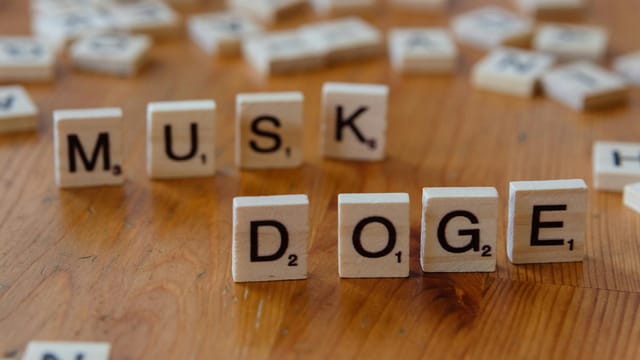
Musk’s Bold Claim Fuels China’s New Year Rush to Build AI That Writes Code
Elon Musk’s claim that AI may soon eliminate the need for human programmers has sharpened an already heated competition in China, where major firms have released coding‑focused models during the Spring Festival. The combined effect of domestic model improvements, falling tool prices and early commercial traction promises big productivity gains but also raises reliability, security and labour‑market challenges.
Moonbound AI and a Quantum Net: How Space, AI and Manufacturing Moves Are Rewriting the Market Map
Elon Musk outlined plans to build AI satellites and factories on the Moon, signalling a push to relocate compute and manufacturing off Earth. China concurrently demonstrated launch prowess, published breakthroughs in 3D printing and quantum networking, and saw strong commercial AI activity — developments that together tighten the links between technology, markets and strategic competition.

From the Moon to Microfabrication: A Week of Market‑Moving Tech — Musk’s Lunar Factory, China’s Satellite Launch and Breakthroughs at Home
A compact roundup of market‑moving technology and policy developments: Elon Musk outlined plans for lunar factories to build AI satellites, China launched seven satellites including Pakistan’s PRSC‑EO2, and Chinese researchers set a new speed record in millimetre‑scale 3D printing. Together with advances in embodied robotics models, quantum networking and targeted vocational reforms, these items illustrate accelerating commercialisation and strategic competition across space, AI and advanced manufacturing.