
# privacy
Latest news and articles about privacy
Total: 18 articles found

Tencent’s QClaw Turns WeChat into a Remote for Office PCs — a Quiet Grab for AI’s Distribution Layer
Tencent’s QClaw, launched into public testing on March 18, 2026, uses the open OpenClaw stack and WeChat to let users remotely control office PCs from their phones. The tool prioritises distribution and usability over proprietary modelling, creating strategic leverage for Tencent while raising security, privacy and labour‑market questions.

Alibaba’s Qianwen Unveils G1 Smart Glasses with Voice‑Cloning Translation and Hot‑Swap Battery at AWE 2026
Alibaba’s Qianwen introduced the G1 AI glasses at AWE 2026, featuring a dual‑chip dual‑system architecture, 64GB of local storage, a hot‑swap battery in the right temple, and forthcoming features including voice‑cloning translation and expanded life‑service AI functions. The launch signals a push to marry large‑model AI services with consumer hardware while navigating privacy, power and supply‑chain constraints.

Tencent Rolls Out Free Nationwide Installs of 'Longxia' AI Agent as Regulators Sound Security Alarms
Tencent has launched a free nationwide installation program for its new AI agent “Longxia,” seeing rapid consumer uptake and government-supported local rollouts. But the campaign has triggered regulatory warnings, privacy incident reports and an intellectual-property dispute, raising urgent questions about permissions, security and data governance.

How OpenClaw’s “Agent” Rush Is Rewiring AI Hardware — and the Race to Build Devices That Can Think
OpenClaw, an open self‑hosted agent framework, is driving a wave of Chinese hardware and software firms to embed autonomous, on‑device AI agents that can perform multi‑step workflows across apps and peripherals. The shift elevates on‑device models, local compute and hardware permissions to new strategic priorities while raising security and governance questions.

Microsoft Rolls Out Copilot Health — An AI Health Hub That Raises Privacy and Regulation Questions
Microsoft announced Copilot Health, a secure health workspace inside its Copilot assistant that aggregates health records, wearable data and medical history to produce personalised insights. The product deepens Microsoft’s push into health tech but raises practical questions about interoperability, clinical validation and regulatory compliance.

China Issues Security Red Flag on Open‑Source AI Agents as Domestic Firms Rush to Lock Them Down
China’s industry regulator has issued security guidance for OpenClaw, a popular open‑source AI agent framework, after monitoring showed many instances running with unsafe defaults. Domestic tech firms are racing to mitigate risks by offering cloud‑hosted, sandboxed and permissioned agent services, while legal and regulatory pressures—illustrated by a recent US court ruling against an autonomous agent—are starting to shape the market.

From Hobbyists to Hustles: How OpenClaw Agents Are Rewiring Workflows — and Raising New Risks
OpenClaw, an open‑source AI agent framework, has sparked a wave of adoption in China that ranges from schoolchildren building simple apps to entrepreneurs automating quant trading and firms packaging their own agent products. The technology promises large productivity gains but brings persistent technical, privacy and governance risks; its rapid diffusion highlights urgent choices about orchestration, regulation and workforce adaptation.

Meta’s AI Glasses Send Intimate Footage to Human Reviewers, Sparking Privacy Alarm
Human contractors in Kenya have reportedly viewed private videos captured by Meta’s AI smart glasses, including footage of non-users and sensitive personal data. Meta says its terms allow third-party review and that it uses filtering and redaction, but imperfect protections and policy changes that favour default camera activation have prompted regulatory scrutiny in the UK and wider concern about consumer trust.

Apple Eyes Google Cloud to Power Next‑Gen Siri, Deepening Dependence on Rival Infrastructure
Apple is reportedly discussing hosting the backend of a redesigned Siri on Google Cloud, a step that would give it access to advanced AI infrastructure while increasing commercial reliance on a competitor. The decision underscores the technical demands of modern voice AI and raises trade‑offs between speed of innovation, data privacy, and strategic control.

The 'Guess the Car' Challenge: What a Viral Doubao Game Reveals About Consumer AI in China
A viral NetEase challenge asking Doubao to identify a car from a few clues illustrates both the improving capabilities of Chinese conversational AI and the limits posed by ambiguity, data needs and privacy concerns. While useful for marketing and e-commerce, such features also spotlight questions about model confidence, data governance and user safety.
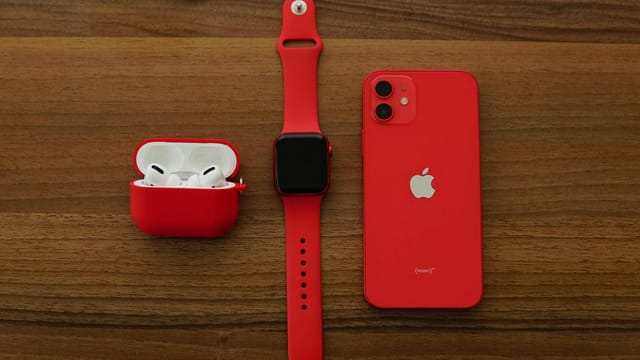
Apple Accelerates Push Into AI Wearables with Smart Glasses, Pendant and Smarter AirPods
Apple is rapidly developing three AI-focused wearables—a pair of smart glasses, a clip-or-necklace pendant and more capable AirPods—each built around a visually aware Siri and integrated tightly with the iPhone. The initiative signals Apple’s ambition to lead multimodal, AI-enabled consumer hardware while navigating technical, privacy and regulatory hurdles.

Apple’s Siri Upgrade Stumbles in Testing, Forcing Staggered AI Rollout and New Timetable
Apple has delayed and will stagger the rollout of major Siri AI features after internal tests exposed stability, accuracy and routing problems. Privacy constraints and underperforming in‑house models are slowing development, while some search and image features may still ship on schedule.