

China’s full set of provincial GDPs for 2025 has confirmed a subtly shifting geography of growth: rankings remained broadly stable, but the story beneath the surface is one of diverging regional trajectories. Tibet recorded the fastest growth rate among all provinces, driven by a fresh wave of state-backed infrastructure and energy projects, while Chongqing overtook Liaoning in total output — a symbolic milestone in the long-running rebalancing between north-east rust-belt provinces and the more dynamic south-west.
Tibet’s headline numbers are striking for a region so often written off as marginal to China’s industrial economy. The autonomous region posted GDP of about RMB 303.2 billion in 2025 and grew 7.0% year-on-year, its fourth consecutive quarter among the nation’s fastest. That performance was underpinned by a surge in fixed-asset investment — up 17.2% in 2025 after unusually large gains in prior years — as major projects such as the Sichuan–Tibet railway and large hydropower stations have moved into construction, attracting private capital and lifting industrial and construction activity.
Gansu, another western province among the top performers, exemplifies a resource-led pathway. Its large-scale industrial added value rose 9.5% in 2025, powered by a strong metals and power complex: lead, refined copper and gold all registered double-digit production gains, and the metals, electricity and petrochemical sectors together contributed a substantial share of industrial growth and revenues for the province’s larger firms.
Central plains provinces such as Henan and Hebei showed that labour, market scale and targeted industrial upgrades still matter. Henan’s above‑average expansion — with industrial value added up 8.4% and equipment manufacturing up 13.6% — was supported by new capacity and major projects reaching full production, including electric-vehicle and other advanced manufacturing lines that are reshaping its industrial profile.
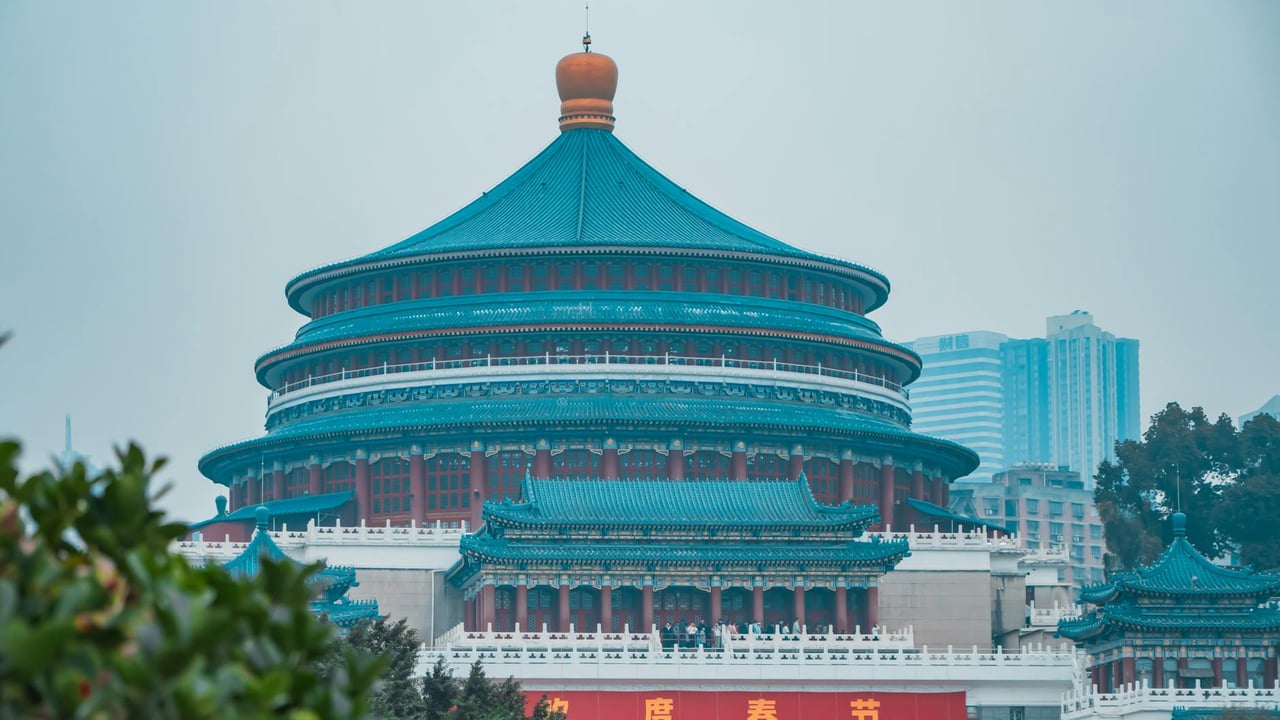
At the aggregate level the most attention-grabbing development is Chongqing’s leap past Liaoning. Chongqing’s GDP reached roughly RMB 3.376 trillion, nudging ahead of Liaoning’s RMB 3.318 trillion after a year in which Chongqing’s industrial growth accelerated around new-energy vehicles and smart-manufacturing clusters. Chongqing’s scale-up in intelligent, connected NEV production — with new-energy vehicle output values up nearly 29% — contrasts with Liaoning’s sluggish manufacturing base, where overall industrial output was essentially flat and several legacy sectors declined.
The broader pattern is familiar but accelerating: the south-west and interior provinces that benefited from decades of industrial migration and more recent infrastructure investment are consolidating gains, while parts of the north-east remain stuck in low-growth equilibrium. That divergence reflects long-run structural forces — demographic decline, decades of heavy industry in the north-east and a policy environment that has progressively shifted emphasis toward inland infrastructure and energy projects.
These results matter beyond headline rankings. They show how central government investment and industrial policy continue to shape regional fortunes, how resource endowments can create short-to-medium-term growth spurts, and how industrial upgrading — as in Chongqing and Henan — translates into faster output where firms and clusters can commercialise new products. At the same time, the reliance on large public projects and commodity cycles raises questions about sustainability: growth concentrated in construction and resource extraction can leave provinces exposed to fiscal strain and external demand shifts.
Looking ahead, the likely persistence of these trends means Beijing’s rebalancing challenge will be more about quality than geography: sustaining private-sector dynamism, preventing asset bubbles in construction, managing debt risks in project-financing, and reviving long-stagnant manufacturing bases in the north-east. For investors, multinationals and policymakers abroad, the provincial-level divergence signals where supply chains, investment opportunities and domestic demand growth are actually locating within China’s vast economy.