

This Lunar New Year the centerpiece of gift fruit in China is showing a surprising challenger. Strawberries — and in particular a newly fashionable “black” variety sold under names like Xuan Yu and Zhenhong Meiling — have surged in popularity, topping gift-box and best-seller lists at high-end retailers and provoking frenzied social-media attention.
Supply constraints and novelty are driving attention as much as taste. Black strawberries are darker in appearance because of high anthocyanin content, have firmer flesh and slightly higher sugar levels than ordinary red varieties, and are produced in limited acreage with lower yields. That scarcity has driven prices on some e-commerce listings as high as 300 yuan per jin and generated millions of views for related hashtags on platforms such as Xiaohongshu.
Retailers and growers describe rapid uptake. Hema and Sam’s Club report black and mixed-colour strawberry gift boxes at the top of their fruit-gift charts, and small orchard operators who planted the varieties recently say daily orders now reach into the hundreds. For consumers, the fruit’s novelty, colour variety and “shareability” on social media have become part of its appeal during a festival season when appearance and symbolism matter.
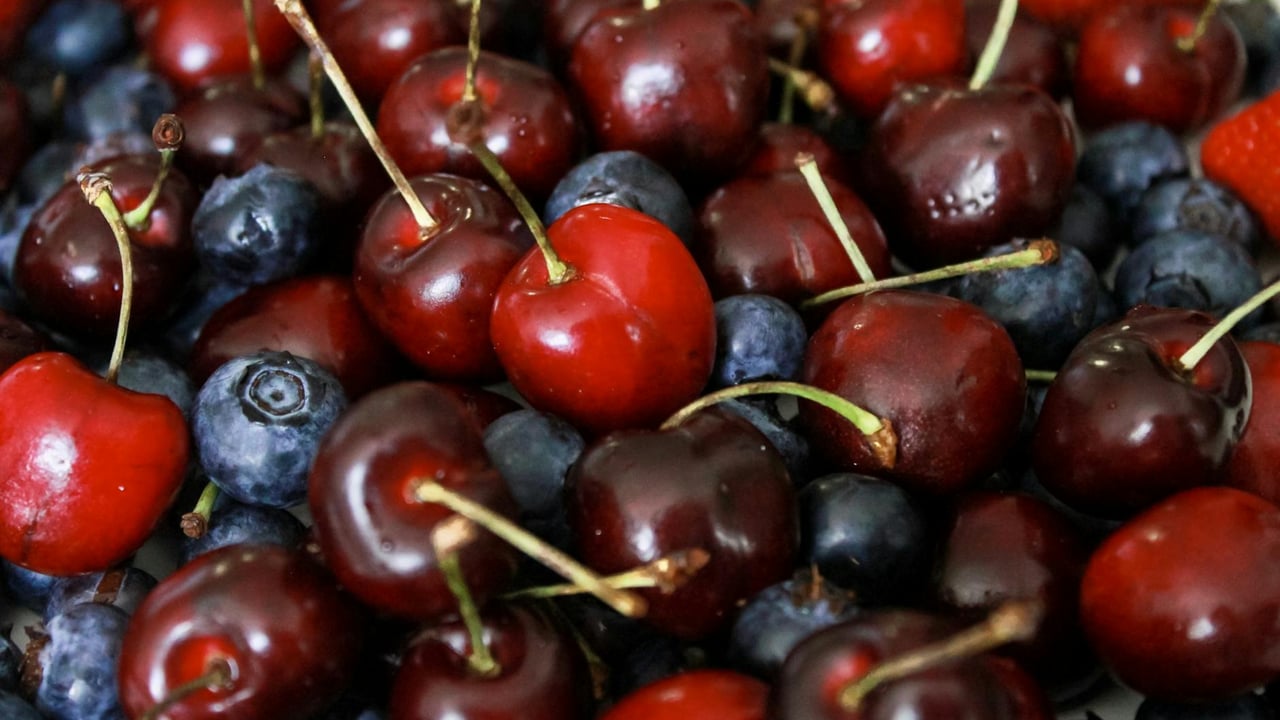
The strawberry’s rise comes at a moment of weakened prices and shifting demand for Chilean cherries, long the archetypal premium New Year gift. A record Chilean crop for 2025/26 — about 655,000 tonnes, with roughly 90% destined for China — and an earlier harvest window combined to increase short-term supply into the Chinese market. That glut, together with a late-February Lunar New Year this year, pushed some supermarket prices for mid-grade cherries down to roughly 30 yuan per jin, about half the highs of previous seasons.
Importers and exporters frame the cherry story differently. Lower prices have broadened cherry consumption from a gift-only item to everyday snacking for many households, and exporters say the category is evolving with varied packaging and price points. But for consumers and retailers accustomed to cherries’ symbolic status, the price fall has opened space for alternatives that satisfy both festive aesthetics and social-media driven novelty.
Technology and domestic production are important parts of the strawberry story. Advances in greenhouse cultivation and seedling varieties have extended strawberry supply into the winter months and improved sweetness, allowing domestic producers to meet festival demand with fresh, off-season fruit. Mixed-colour boxes — combining black, red, pink and white strawberries — exploit visual variety in a way that imported cherries cannot easily match.
For supermarkets and online platforms the shift illustrates how fast consumer tastes can move in China’s digitally connected marketplace. A previously niche cultivar can become a mass-market item through influencer attention, striking packaging and scarcity-driven prestige. For agricultural players, the moment highlights the commercial payoff of varietal experimentation, but also the vulnerability of premium categories to rapid supply-side disruption.
Longer term, the market is unlikely to crown a single victor. Cherries retain advantages in consistent year-to-year quality and nutritional reputation that make them a durable high-end gift, while strawberries — benefiting from local production, novelty and better fit with social-media culture — look set to become a co-equal festival fixture. Retailers, importers and growers will be watching subsequent seasons closely to see whether black strawberries convert short-term craze into sustained demand or recede once novelty fades.