
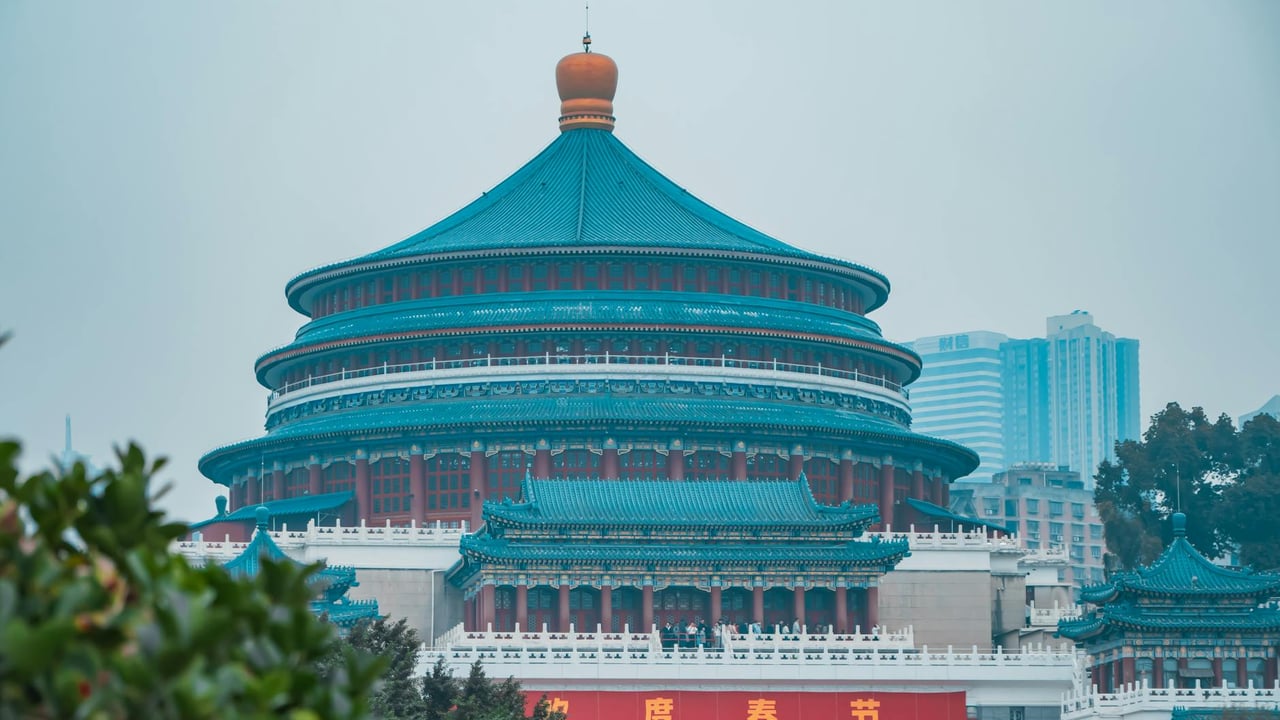

China’s 2025 provincial retail figures reveal a subtle but significant reordering of domestic consumption. For the first time Jiangsu edged past long-time leader Guangdong to register the highest social retail sales (shòulíng) at 4.64 trillion yuan, while Chongqing — a western municipality — overtook Shanghai to become the nation’s top city for retail spending, nudging past Shanghai by roughly 80 billion yuan.
The national top ten by retail sales reads like a map of both economic heft and population: Jiangsu, Guangdong, Shandong, Zhejiang, Sichuan, Henan, Hubei, Fujian, Anhui and Hunan. Growth rates tell a different story: provinces in the central and western belt are gaining momentum. Shaanxi led the pack with a 6.0% increase in retail sales, followed by Hebei and Henan at 5.6%; the national average was 3.7%.
Regional policy and local marketing strategies explain much of this momentum. Chongqing’s leap was not accidental: the city has aggressively monetised “internet-famous” tourist sites, deepened its night‑time economy — where over 60% of spending now occurs — and staged hundreds of themed events. Between April and June 2025 more than 700 consumption activities generated an estimated 70 billion yuan in direct sales, while a push around “first‑store” openings aims to lock in new retail brands and footfall.
Shaanxi’s performance illustrates how focused stimulus can lift consumption rates. The province extended vehicle and appliance trade‑in subsidies and experimented with “national subsidy loans” (guóbǔ‑dài), which the government estimates drove close to 68.3 billion yuan of additional spending in 2025. Shaanxi also prioritised a “culture‑tourism plus technology” approach, using VR, AI and immersive theatre to create new experience‑led spending.
By contrast, some of China’s traditional high‑consumption centres are under strain. Beijing’s retail sales declined 2.9% year‑on‑year, hit by a fall in communications equipment retailing (down 15.9%) and weaker car sales, which together depressed demand for related petrol and auto supplies. Analysts point to higher mandatory spending on housing, education and healthcare, slower income growth, rising household leverage and weaker population inflows as structural reasons why first‑tier cities are finding it harder to sustain discretionary consumption.
Jiangsu’s top slot combines event‑driven booms with broad policy support. The “Su‑Chao” phenomenon — a regional entertainment and sporting IP that exploded online in mid‑2025 — helped bring tourists into the province; the first six rounds of related events generated roughly 37.96 billion yuan in service revenue, up 42.7% year‑on‑year. More prosaically, Jiangsu ran thousands of seasonal promotions and issued hundreds of millions of yuan in coupons and digital‑RMB red envelopes, demonstrating how coordinated public‑private campaigns can translate supply‑side strength into measured consumption growth.
The headline shifts are important beyond bragging rights. They signal a partial rebalancing of China’s internal demand: central and western provinces, often lower in per‑capita income than the coast, are generating above‑average retail growth, buoyed by tourism, local subsidy programmes and new retail formats. That trend matters for investors, national policymakers and multinationals plotting distribution and marketing strategies because it points to growing purchasing power outside the old coastal centres even as structural constraints bite in first‑tier cities.
Yet the gains are not without caveats. Much of the inland uplift rests on events, subsidies and short‑term stimulus; sustaining higher consumption will require continued income gains, deeper service markets and improvements in mobility and urban amenities. Meanwhile, the weaker retail performance in cities such as Beijing and Tianjin — where households continue to save heavily — underscores persistent structural headwinds for China’s urban consumption recovery and suggests regional divergence rather than a simple, uniform national rebound.