
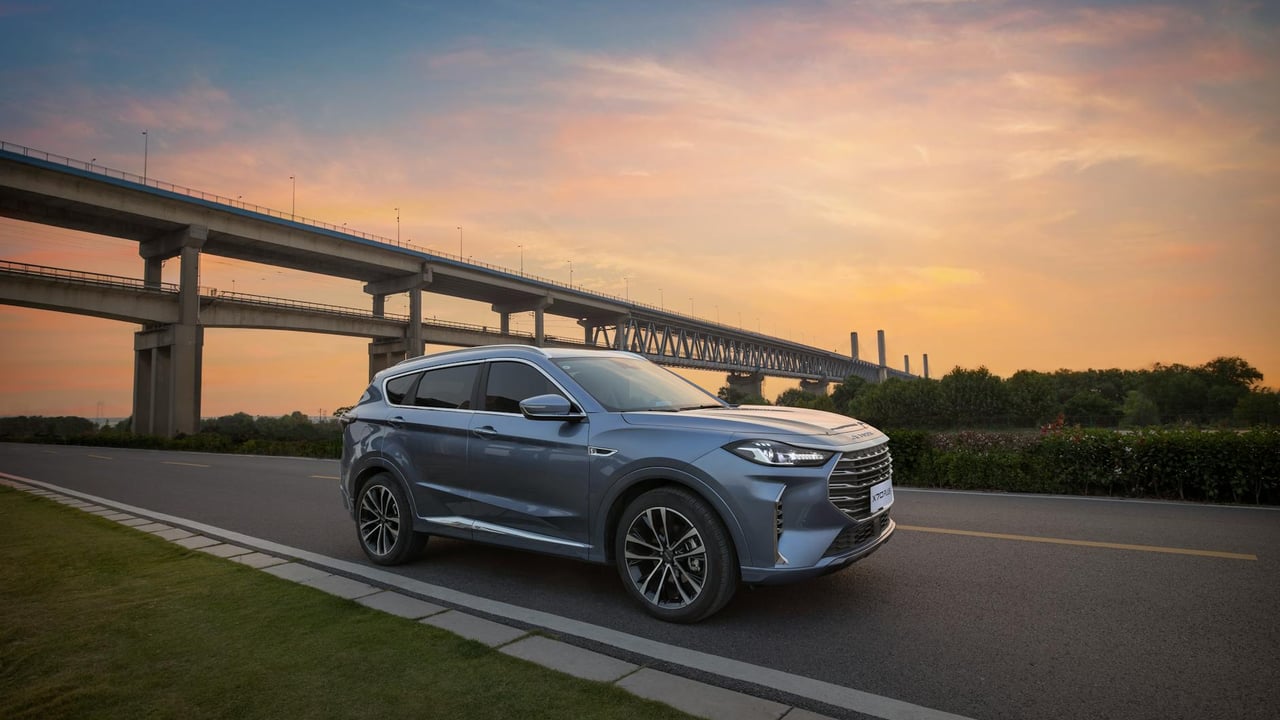

At the recent pre-sale launch of the Wey V9X, Great Wall Motor (GWM) Chairman Wei Jianjun did something rarely seen in corporate theater: he turned the spotlight on his own staff with blistering public criticism. Disappointed by the lukewarm marketing for his namesake premium brand, Wei accused his team of failing to translate high-end engineering into consumer desire, labeling the disconnect between R&D and marketing as nothing short of a 'crime.'
For Wei Jianjun, this is more than a business venture; it is a personal legacy project. Having put his own surname on the Wey brand, the Chairman’s outburst reflects the immense pressure of a founder who feels his reputation is being squandered by a lack of 'class' and 'tonality' in the brand's promotion. His frustration underscores a broader anxiety within GWM as it struggles to maintain its footing in China’s increasingly cutthroat luxury vehicle segment.
Central to this gamble is the 'Guiyuan S' platform, a native AI-driven architecture GWM claims will redefine modular manufacturing. By allowing for multiple power sources—including hydrogen, electric, and hybrid—within a single modular framework, Wei believes he has found a strategic edge over rivals who have bet exclusively on pure electric platforms. However, the market’s reception of this 'one-car, multiple-power' philosophy remains to be seen as traditional boundaries between segments blur.
The V9X enters a battlefield already crowded with '9-series' heavyweights from Li Auto, AITO, and Zeekr. Despite its competitive pricing and sophisticated chassis tech, the V9X faces immediate skepticism over its 400V architecture in an era where 800V fast-charging is becoming the industry standard for luxury. This technical gap, combined with aggressive pricing from competitors like Leapmotor, has left the V9X in a precarious position even before its official delivery.
Adding to the tension is the ideological war between the SUV and MPV categories. While Wey has recently found some stability in the MPV market with the 'Gaoshan' model, industry voices like Nio’s William Li are already calling for the end of the MPV era. This shift in consumer narrative forces GWM to fight a multi-front war, defending its traditional SUV dominance while trying to convince families that their flagship MPVs are still relevant in a tech-first world.