Beyond Competition: Beijing Proposes a New Framework for 'Strategic Stability' with Washington

China's Ministry of Foreign Affairs has introduced 'Constructive Strategic Stability' as a new guiding framework for its relations with the United States. This strategic positioning seeks to create predictable guardrails and move the bilateral relationship toward a more stable, managed competitive state.

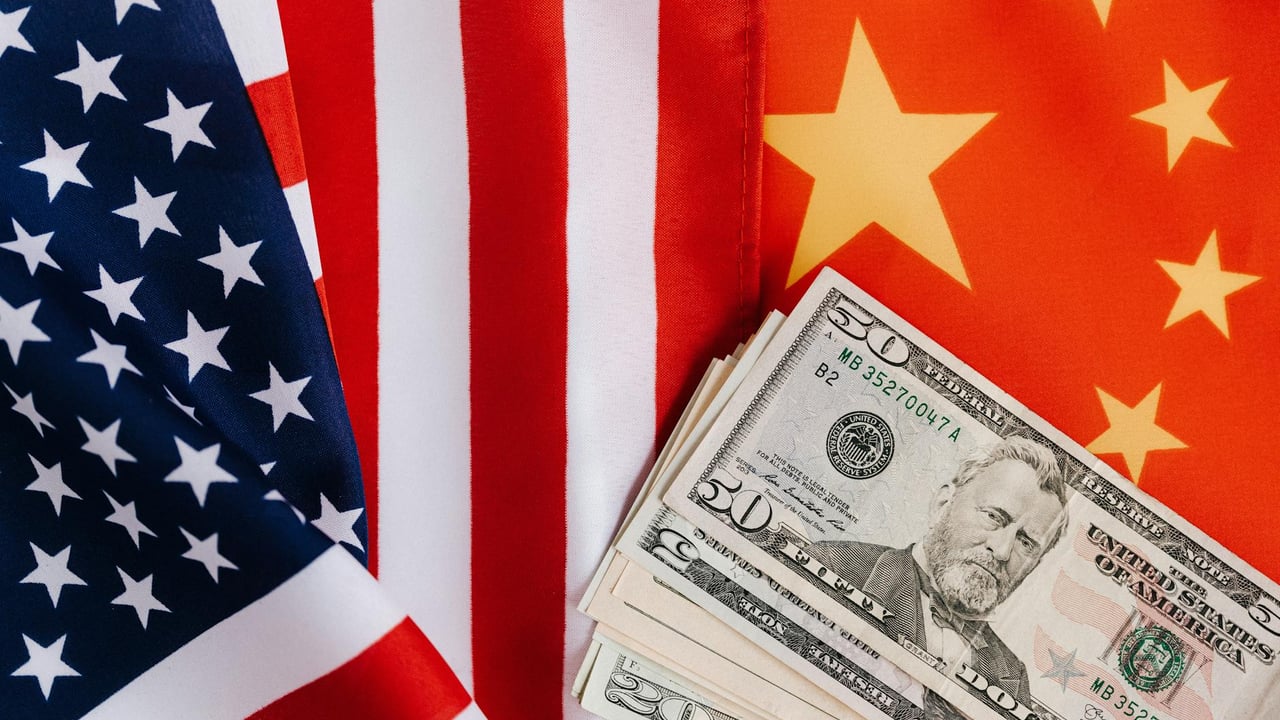
From above of United States banknotes placed on national flags of America and China illustrating international trade concept

Key Takeaways

  • 1The Chinese MFA has introduced 'Constructive Strategic Stability' as the new guiding principle for China-US relations.
  • 2The framework is intended to provide long-term 'strategic guidance' to prevent the bilateral relationship from deteriorating into conflict.
  • 3The announcement suggests a Chinese preference for institutionalized 'guardrails' over the ad-hoc crisis management utilized in recent years.
  • 4This diplomatic pivot seeks to counter the U.S. focus on 'strategic competition' by emphasizing shared responsibility for global stability.

Editor's
Desk

Strategic Analysis

The introduction of 'Constructive Strategic Stability' represents a sophisticated evolution in Beijing’s diplomatic lexicon, designed to seize the narrative high ground. While the United States has focused on 'de-risking' and 'managed competition,' China is proposing a framework that sounds more collaborative and less adversarial on the surface. However, the 'constructive' element is the pivot point; for Beijing, stability is often conditional on the respect of its 'core interests,' such as Taiwan and technological sovereignty. This move could be interpreted as an invitation to a grand bargain—or a strategic attempt to freeze the status quo while China builds further resilience against Western pressure. The true test will be whether this framework can survive the upcoming political cycles and the persistent friction in the South China Sea.

China Daily Brief Editorial
Strategic Insight
China Daily Brief

The Chinese Ministry of Foreign Affairs has unveiled a new diplomatic descriptor for its relationship with the United States: 'Constructive Strategic Stability.' This shift signals an effort to move the world’s most consequential bilateral tie away from the brink of unmanaged rivalry and toward a more predictable, albeit competitive, equilibrium. By positioning this as a 'strategic guide,' Beijing is attempting to set the terms for engagement through the end of the decade.

The move comes at a critical juncture as both nations grapple with deep-seated mistrust over trade, semiconductor sovereignty, and regional security in the Indo-Pacific. By framing the relationship through the lens of 'strategic stability,' Beijing is signaling a desire to establish a functional floor for the relationship. This is an attempt to ensure that the friction of competition does not veer into the catastrophe of direct conflict.

For China, this new terminology serves a dual purpose. Domestically, it projects a posture of responsible leadership and proactive diplomacy, suggesting that Beijing is the party offering solutions to global volatility. Internationally, it challenges the American narrative of 'strategic competition' by offering a framework that emphasizes stability and mutual restraint over the perceived zero-sum gains of Washington's foreign policy.

Whether this rhetorical shift translates into tangible policy changes remains to be seen. Historically, such 'strategic guidelines' are often the prelude to more structured diplomatic engagements and high-level summits. However, the success of this framework requires a willing partner in Washington, where the appetite for 'stability' is often tempered by a bipartisan consensus to maintain a competitive edge over a rising China.

Share Article

Related Articles

📰
No related articles found