
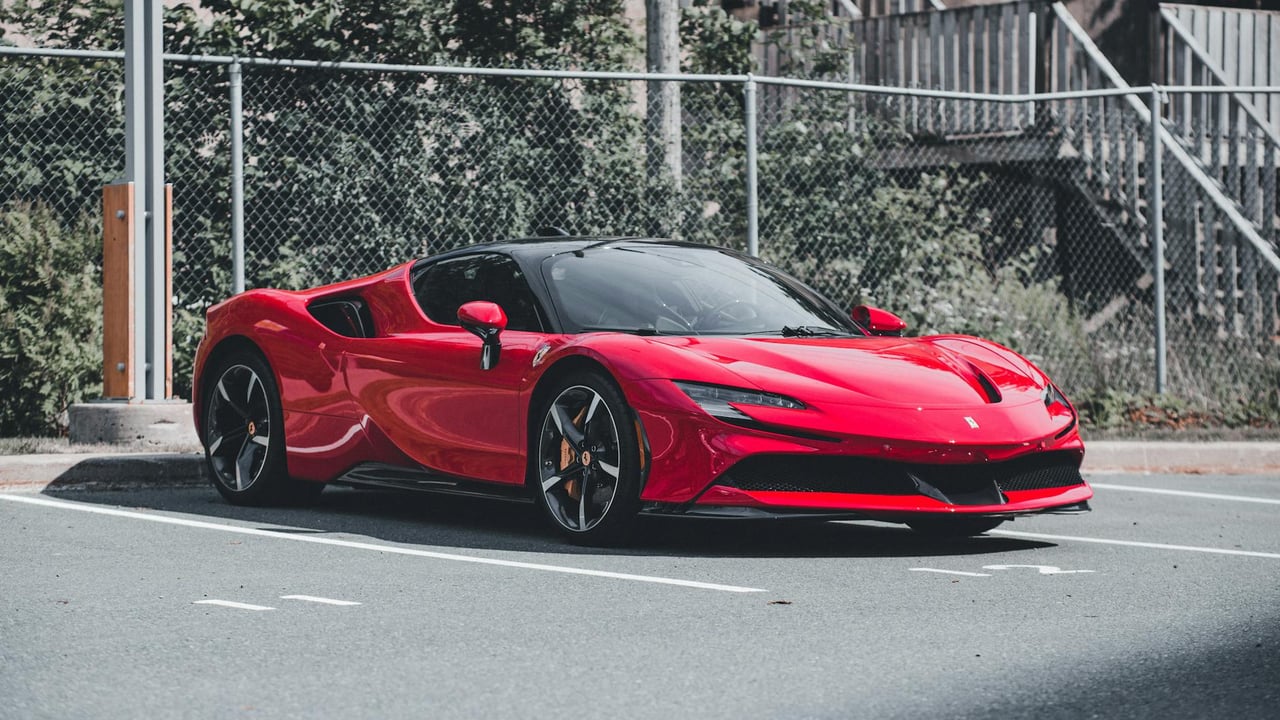

For decades, the Ferrari brand has been synonymous with the primal scream of a V12 engine and the tactile, mechanical aggression of an internal combustion masterpiece. However, the unveiling of the 'Luce'—Ferrari’s first-ever fully electric production model—has sent a tremor through the financial markets. Shares in the storied Italian marque plummeted as much as 8% in Milan trading as the faithful and the financiers alike grappled with a vehicle that looks less like a racing machine and more like a high-end consumer electronic.
Designed in collaboration with LoveFrom, the firm led by former Apple design chief Sir Jonathan Ive, the Luce is a radical departure from the low-slung, muscular silhouettes that defined the brand's 20th-century dominance. Featuring a four-door, five-seat layout and a 'Glass House' cabin concept dominated by expansive Corning glass panels, the vehicle prioritizes a minimalist, futuristic aesthetic. To the traditional 'Tifosi,' the Luce is a betrayal of the brand’s soul; to investors, it represents a risky pivot into a premium EV market where performance metrics are becoming increasingly commoditized.
While the technical specifications are undeniable—boasting a four-motor system delivering 1050 horsepower and a 0-100 km/h sprint of 2.5 seconds—the Luce enters a landscape where traditional luxury identifiers are being eroded. Ferrari has even resorted to 'motor sound design' that amplifies electrical vibrations to mimic an engine's roar, a move critics suggest is a hollow substitute for the visceral experience of a mechanical drivetrain. At a starting price of 550,000 euros, the car is a play for the 'ultra-high-net-worth family' segment, yet industry analysts fear this move toward domestic utility dilutes the brand’s core scarcity value.
This strategic pivot comes at a delicate time. While Ferrari’s overall profits remain robust, a rare 20% sales slump in the Greater China region has signaled that even the most prestigious luxury brands are not immune to shifting Asian consumer sentiments. As rivals like Lamborghini and Porsche dial back their electrification timelines in favor of preserving internal combustion flagship models, Ferrari is doubling down on its 2030 roadmap, where 20% of its fleet will be fully electric. The Luce is not just a car; it is a test of whether a brand built on sound and fury can survive in an era of silent, minimalist efficiency.