
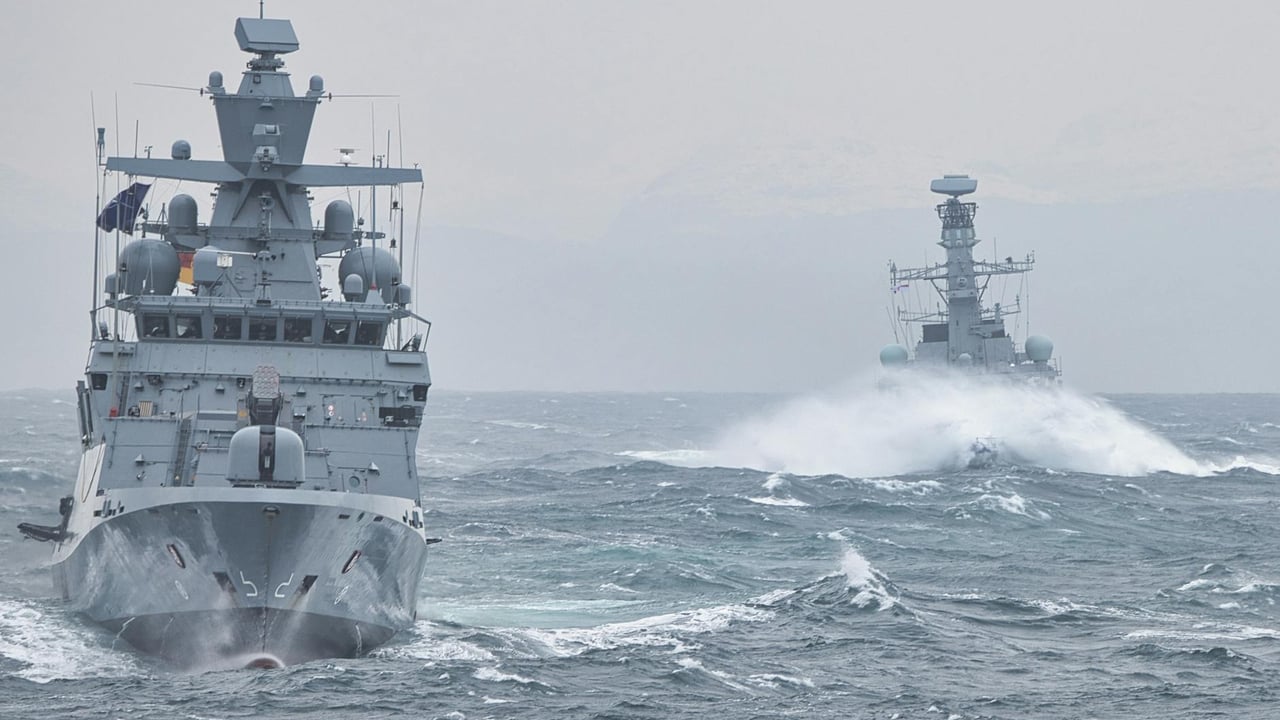

The People’s Liberation Army (PLA) Southern Theater Command has taken the unusual step of releasing high-definition footage documenting its encounter with Dutch naval vessels and aircraft. The video release, framed as a ‘rights protection’ operation, features Chinese fighter jets visibly equipped with live air-to-air missiles. This deliberate display of force marks a significant hardening of Beijing’s rhetoric toward European maritime involvement in the Indo-Pacific region.
The encounter occurs at a time when the Netherlands, following the lead of France and Germany, has increasingly deployed naval assets to the South China Sea to uphold the principle of freedom of navigation. By publicizing the presence of live ordnance on its interceptors, the PLA is sending a calibrated message to the North Atlantic Treaty Organization (NATO) members. Beijing is signaling that it no longer views these patrols as mere diplomatic gestures but as direct provocations requiring a combat-ready response.
While the exact coordinates of the encounter were not disclosed, the involvement of the Southern Theater Command suggests the incident took place within the contested 'nine-dash line' zone. The footage serves a dual purpose: reinforcing nationalist sentiment at home and testing the resolve of mid-tier Western powers. By singling out the Netherlands, a country with significant economic ties to China, Beijing is attempting to create a cost-benefit dilemma for European capitals participating in US-led maritime coalitions.
Technically, the use of live-armed aircraft for close-range intercepts significantly narrows the margin for error, raising the risk of accidental kinetic engagement. In previous years, such encounters were often handled with surveillance assets or unarmed fly-bys. The transition to 'hot' configurations in public-facing propaganda reflects a strategic shift toward 'active defense,' where the threat of force is used more overtly to deter non-regional actors from entering Beijing’s perceived sphere of influence.