

The sighting of the Liaoning aircraft carrier in the Western Pacific has long been a routine occurrence for regional maritime monitors. However, recent deployments have signaled a profound shift in the People’s Liberation Army Navy (PLAN) capabilities. Once dismissed by Western analysts as a refurbished Soviet-era relic with limited operational utility, the Liaoning is now serving as the testbed for China’s most sophisticated naval aviation technology.
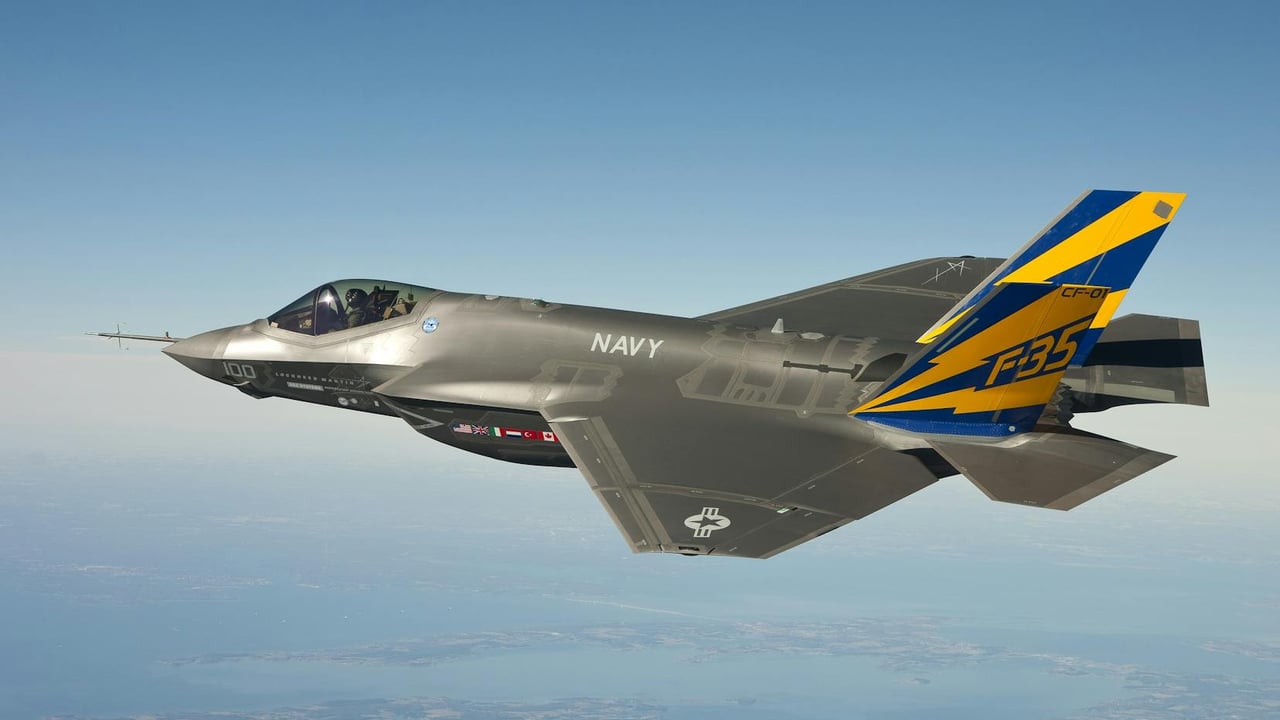
At the heart of this transformation is the J-35, China’s next-generation stealth fighter. Recent aerial surveillance by Japanese forces captured images of the Fifth-Generation aircraft on the Liaoning’s deck, confirming that the carrier has transitioned from a mere training vessel to a credible platform for high-end air superiority. This development challenges the long-held assumption that the Liaoning’s 'ski-jump' launch system would preclude the use of advanced, heavy-payload stealth fighters.
Only eight years ago, American defense commentators frequently listed the Liaoning among the world’s least effective carriers, citing its aging propulsion and inefficient launch cycle. The current reality in the West Pacific suggests those assessments may have been premature. By integrating the J-35 alongside the J-15, the PLAN has created a tiered aerial doctrine that mirrors the high-low mix utilized by the world’s most advanced navies.
The carrier does not operate in a vacuum but as the centerpiece of a sophisticated carrier strike group. This group typically includes Type 055 destroyers, which are widely considered some of the most capable surface combatants in the world. Equipped with hypersonic anti-ship missiles, these escorts provide a defensive and offensive umbrella that mitigates the Liaoning’s inherent structural disadvantages compared to the larger American Nimitz-class supercarriers.
This evolution reflects a broader Chinese strategy of iterative learning and rapid technological absorption. While the United States has faced well-documented teething issues with the electromagnetic catapults on the USS Gerald R. Ford, China has used the Liaoning and its sister ship, the Shandong, to perfect carrier operations before launching the catapult-equipped Fujian. This methodical approach is now yielding a blue-water force capable of contesting air and sea space far from Chinese shores.
Ultimately, the Liaoning’s recent 'sword-brandishing' in the Western Pacific is as much about psychological warfare as it is about hardware. It serves as a visual refutation of the 'Cold War' skepticism often found in Western military discourse. For Beijing, the message is clear: the era of dismissing Chinese naval power as a second-tier force has officially come to an end.