
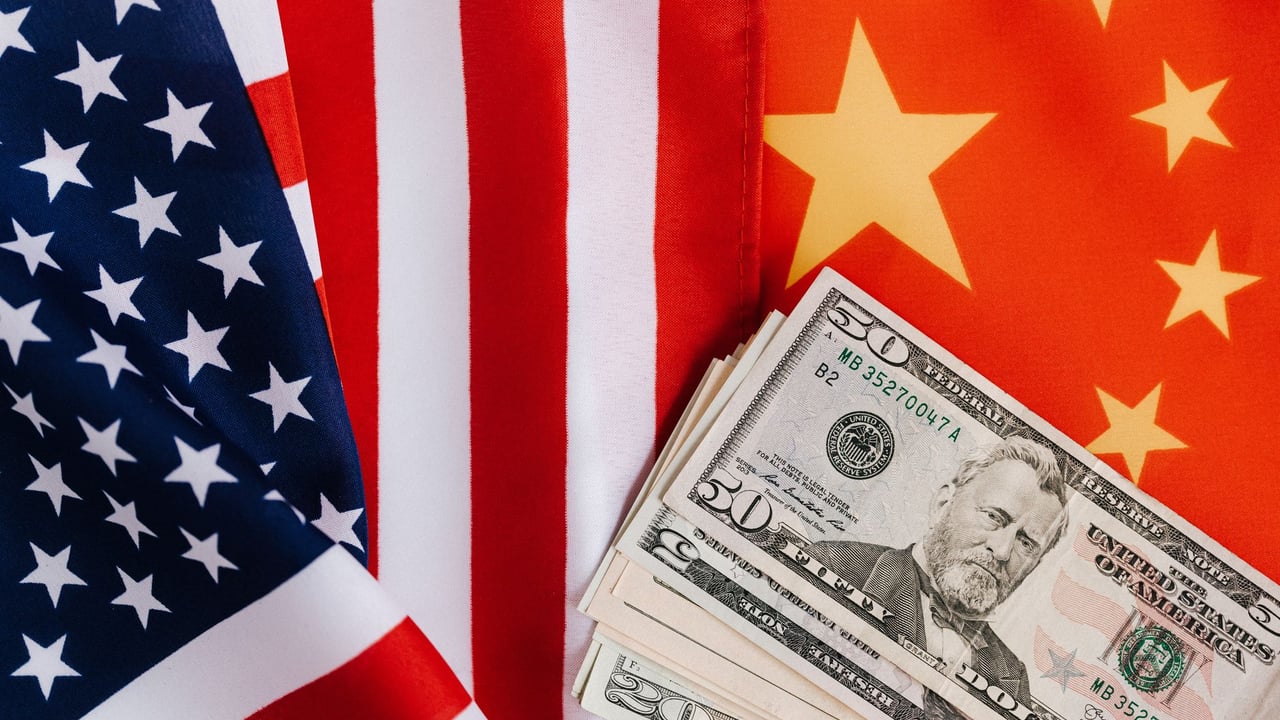

China’s Ministry of Finance has issued a sweeping directive to all central and local government departments, effectively blacklisting 46 American companies from the country's massive government procurement market. The notice, circulated to budget units from the provincial level down to the Xinjiang Production and Construction Corps, signals a calculated escalation in the ongoing trade and technology friction between the world’s two largest economies.
While the specific names of the 46 firms were not listed in the public summary, the directive carries a significant caveat: the ban applies strictly to products manufactured by these firms abroad, excluding their China-based subsidiaries or joint ventures. This nuance reveals a strategic 'carrot and stick' approach, aimed at punishing U.S.-based exporters while simultaneously incentivizing American corporations to deepen their industrial footprint within Chinese borders.
The move arrives as Beijing intensifies its 'dual circulation' strategy, which seeks to reduce reliance on foreign technology while keeping global capital tethered to the domestic market. By targeting procurement, the Ministry of Finance is leveraging the state’s immense purchasing power to accelerate the 'de-Americanization' of critical supply chains, particularly in sectors where domestic alternatives are now deemed viable.
Observers note that the timing and structure of this ban likely serve as a reciprocal measure for recent U.S. export controls and investment restrictions. Rather than a total decoupling, Beijing is practicing a surgical form of protectionism designed to erode the market share of foreign-made goods without completely alienating the American capital and technology that still flow through localized operations.