
Technology News
Latest technology news and updates
Total: 2542

Apple’s Last Dance: The End of the Cook Era and the Rise of John Ternus
Tim Cook announced his retirement as Apple CEO at WWDC 2026, with John Ternus set to take over in September. The leadership transition coincides with a massive AI pivot and significant regulatory challenges in the Chinese market.

China’s New Export: Hainan Pioneers the ‘Token Outbound’ Strategy for Global AI Dominance
Hainan province has unveiled a strategic plan to become a global hub for 'Token Outbound' services, aiming for a 400 billion RMB digital economy by 2030. The initiative focuses on exporting Chinese AI computing power through API-based model services, supported by new international data infrastructure and favorable free-trade regulations.
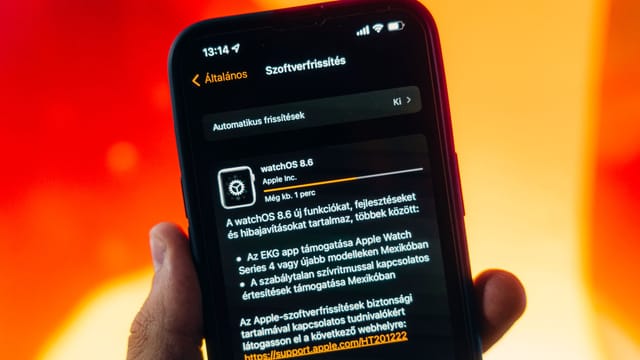
The Siri-AI Paradox: Apple Marries Google Intelligence while Courting China with Local Utility
Apple's WWDC 2026 highlights a shift toward cross-device AI integration with iOS 27, though regional regulatory barriers continue to delay its advanced 'Apple Intelligence' features in China. To compensate, Apple has introduced localized features like a holiday-synced alarm system, addressing unique Chinese work-life patterns while navigating the complexities of its partnership with Google.

The Dreame Dilemma: A Chinese Tech Unicorn’s Reckoning with State Capital and Supercar Ambitions
Dreame Technology, a leading Chinese appliance unicorn, is facing a crisis of confidence as founder Yu Hao is silenced on social media and local governments launch audits into their multi-billion-yuan investments in the firm. The controversy centers on unrealistic technical claims regarding a 'rocket-powered' supercar and a lack of corporate governance within the founder-dominated company.

Siri’s Silent Treatment: Why Apple’s AI Revolution is Stalling at the Chinese Border
Apple has announced that its new 'Apple Intelligence' and upgraded Siri features will not be available in Mainland China at launch due to regulatory hurdles. This delay underscores the difficulty of reconciling Western AI models with Beijing's strict content controls and data sovereignty laws.

The Mirror Effect: How Passive 'Meta-crystals' Could Solve 6G’s Coverage Conundrum
Researchers at Aalto University have developed 3D-printed 'meta-crystal' panels that reflect 6G signals around obstacles without requiring power. This innovation addresses the significant coverage challenges of high-frequency waves, offering a low-cost solution for eliminating dead zones in tunnels and buildings.

Shrinking the Future: Multi-Tasking Transistors Herald a New Era for Edge AI
South Korean researchers have developed a multi-tasking transistor that reduces the number of components required in a circuit by 75% while quadrupling processing speeds. This breakthrough is set to revolutionize the design of compact AI-driven devices and wearables by significantly increasing functional density.

The AI Giants Go Public: OpenAI and Anthropic Prepare for a High-Stakes Wall Street Debut
OpenAI and its rival Anthropic have both initiated confidential IPO filings, signaling a massive transition for the artificial intelligence industry toward public market financing. As the capital requirements for AI infrastructure reach unprecedented levels, these listings will test investor appetite for a sector currently undergoing significant leadership and valuation shifts.

Cook’s Final Bow: Apple Embraces the AI Frontier as a Decisve Era Ends at WWDC 2026
At WWDC 2026, Tim Cook announced his retirement alongside a massive AI overhaul for Siri powered by Google's Gemini. While the event showcased significant performance gains and a new macOS, Apple faces immediate challenges as regulatory barriers prevent its new AI features from launching in the EU and China.
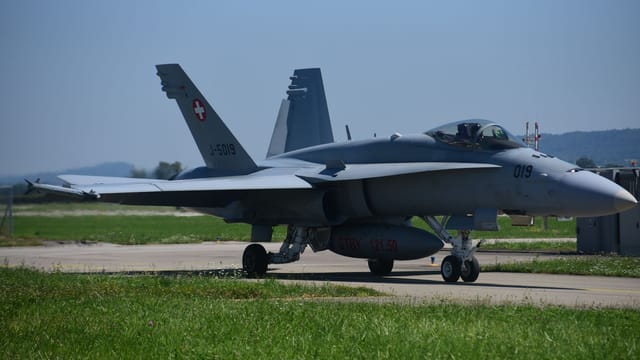
The Architect of China’s Wings: Gu Songfen and the Century-Long Quest for Aerospace Autonomy
Gu Songfen, the legendary designer of China's first indigenous supersonic fighters and a pioneer of domestic aerodynamics, has passed away at 96. His career was instrumental in shifting China's aerospace industry from Soviet-style imitation to independent innovation, laying the groundwork for modern projects like the J-20 and C919.
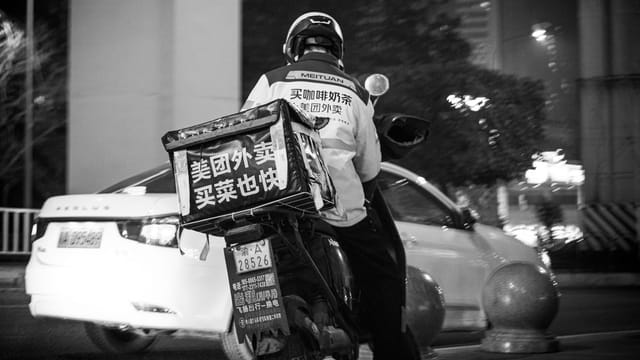
China’s AI Wars Enter the 'Agent' Era: Meituan and WeChat Forge a Local Services Alliance
Meituan has partnered with WeChat to integrate its local lifestyle services into the new WeChat AI Agent ecosystem, signaling the arrival of a 'To Agent' business model. Powered by the trillion-parameter LongCat model trained on domestic hardware, the move seeks to cement Meituan and Tencent's joint dominance over the next generation of Chinese digital consumer behavior.
WeChat’s AI Pivot: Tencent Mobilizes Meituan and JD to Battle Alibaba and ByteDance
Tencent has opened the WeChat AI ecosystem to major partners JD.com and Meituan, creating a unified AI Agent network to compete with Alibaba's integrated services and ByteDance's massive Doubao user base. This shift focuses on 'capability sharing' over traditional 'traffic sharing,' allowing AI assistants to handle complex tasks like e-commerce and food delivery through Agent-to-Agent (A2A) collaboration.