
Technology News
Latest technology news and updates
Total: 2542

Pocket-Sized Precision: How China’s QN-202 Mini-Missile Redefines Infantry Lethality
China’s new QN-202 micro-missile provides individual soldiers with fire-and-forget precision against light armor and fortifications. Developed by the private sector, it highlights China's ability to combine low-cost manufacturing with advanced infrared guidance to challenge Western technological dominance.

The DeepSeek Dilemma: Washington’s Strategic Pause in the AI Export War
U.S. authorities have temporarily halted the inclusion of Chinese AI firm DeepSeek on the trade blacklist, prompting a response from Beijing regarding fair competition. This pause reflects the growing complexity of sanctioning open-source software leaders whose innovations are deeply integrated into the global technology market.
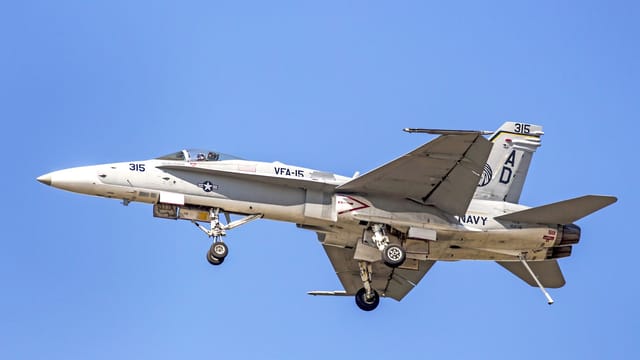
Catapulting to the Top: The Strategic Significance of China’s Electromagnetic Naval Leap
China's CNS Fujian carrier utilizes advanced electromagnetic catapults to surpass traditional steam systems, significantly enhancing its ability to launch heavy aircraft and increase operational sortie rates. This technological leap positions the PLAN as a formidable peer to the US Navy in carrier aviation.

China Deploys 'Technical Brain' to Master the Risks of the Smart Home Era
China’s market regulator has launched an AI-driven safety knowledge base to monitor and manage the complex risks of smart products. By leveraging Large Language Models and a new 'four-in-one' safety framework, the system aims to transform reactive regulation into proactive risk management for the IoT sector.

SpaceX’s Trillion-Dollar Turbulence: What the Latest 5% Slide Reveals About the Future of Frontier Tech
SpaceX shares dropped 5% in a volatile trading session on June 17, 2026, reversing earlier gains. The fluctuation occurs as the company maintains a $2.5 trillion valuation, reflecting broader instability in high-stakes frontier technology markets.
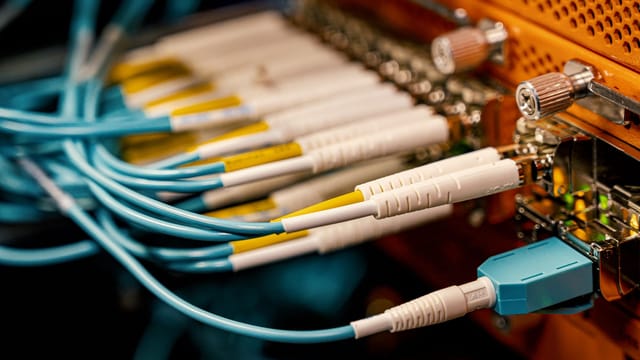
Silicon Salesmen and Cyber Galas: How AI is Rewriting China’s Retail Playbook
China's 2026 '618' shopping festival signals a pivot from price-centric competition to technical efficiency. By integrating AI into marketing, hardware, and physical store operations, major retailers like JD.com and Tmall are moving toward a fully automated commerce ecosystem.

Strategic Pause: Why Washington is Hesitating on New AI Sanctions Against China
The U.S. Commerce Department has reportedly delayed adding AI startup DeepSeek and a major chipmaker to its Entity List to avoid escalating tensions with Beijing. China has responded by urging Washington to stop the political weaponization of trade and technology controls.

Shanghai’s Bourse Lowers the Drawbridge for China’s AI and Quantum Pioneers
The Shanghai Stock Exchange has released draft guidelines for the STAR Market to support the listing of pre-profit AI, quantum, and robotics firms. This policy shift prioritizes 'Hard Tech' and 'New Quality Productive Forces' as part of China’s 15th Five-Year Plan, offering a strategic funding route for companies critical to national self-reliance.
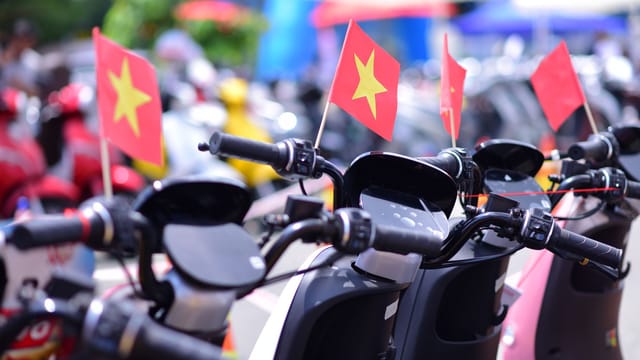
China’s AI Vanguard: Zhipu AI Clears Key Regulatory Hurdle for Landmark STAR Market IPO
Zhipu AI, a leading Chinese LLM developer, has successfully completed its pre-IPO mentorship phase, moving one step closer to a high-profile listing on Shanghai’s STAR Market. As the first major generative AI startup to reach this stage, its performance will serve as a critical barometer for China’s domestic AI industry and the health of its tech-focused capital markets.

China’s AI National Team: GLM-5.2 Goes Open-Source via State Supercomputing Hub
Zhipu AI has open-sourced its flagship GLM-5.2 model, immediately integrating it with China's National Supercomputing Internet to provide developers with turnkey AI deployment and fine-tuning capabilities.

Gstarsoft Signals Caution as China’s ‘Physical AI’ Frenzy Faces a Reality Check
Chinese CAD leader Gstarsoft has officially distanced itself from the 'Physical AI' and simulation hype, clarifying to investors that it has no current projects in these high-tech domains. The announcement highlights the gap between speculative market interest in industrial AI and the current R&D capabilities of domestic software firms.

The Emirates’ Digital Architect: UAE Centralizes Power Over the Future with New AI and Data Authority
The UAE has established a new Federal Authority for AI and Data, reporting directly to the Cabinet under the leadership of Minister Omar Sultan Al Olama. This move aims to centralize technological governance and accelerate the nation's transition into a global digital powerhouse.