
World News
Latest world news and updates
Total: 3423

Missiles Over Riyadh Signal Escalation as Saudi Defences Intercept Strike
Saudi air defences intercepted four ballistic missiles over Riyadh on March 18, triggering the city's first wide-scale mobile air-raid alerts since a joint US–Israeli strike on Iran on February 28. No casualties were reported initially, but the incident raises the risk of regional escalation and will prompt scrutiny of attribution, defence readiness and international responses.

Beyond Oil: How a Protracted Iran Conflict Could Fracture Global Commodity Supply Chains
Bank of America’s analysis finds that a protracted Iran‑related conflict would ripple well beyond crude markets, hitting refined fuels, aluminium, fertilizers, copper and gas flows. The duration of disruption—especially to traffic through the Strait of Hormuz—determines whether price shocks remain manageable or trigger stagflation and deep commodity divergence.

From Hormuz to the Harvest: How a War in Iran Could Squeeze China’s Food Supply
The Iran conflict threatens to disrupt fertilizer supplies—especially urea, sulfur and potash—by interrupting exports and shipping through the Strait of Hormuz. China’s partial self-sufficiency masks critical import dependencies, making food prices and livestock sectors vulnerable to fertilizer-driven cost shocks.

Strike on South Pars Prompts Iranian Threat to Gulf Energy Sites as Oil Surges
An Israeli strike on the South Pars gas field has led Iran to declare key Gulf energy facilities in Qatar, Saudi Arabia and the UAE as legitimate targets, prompting warnings of imminent attacks. The development sent oil and gas prices sharply higher and heightened the risk of sustained disruptions to global energy supplies and maritime security in the Strait of Hormuz.

A New Deterrent: Pakistan’s Shaheen‑3 in Saudi Arabia and the Remaking of Middle‑East Strategy
A Chinese analysis argues that Pakistan could deploy Shaheen‑3 missiles to Saudi Arabia under a Russia‑Belarus style arrangement, providing Riyadh with credible long‑range conventional and nuclear‑capable deterrence. The move would reshape regional calculations—deterring Iranian expansion, complicating Israeli strategy and reducing U.S. security burdens—while risking erosion of non‑proliferation norms and increased crisis instability.
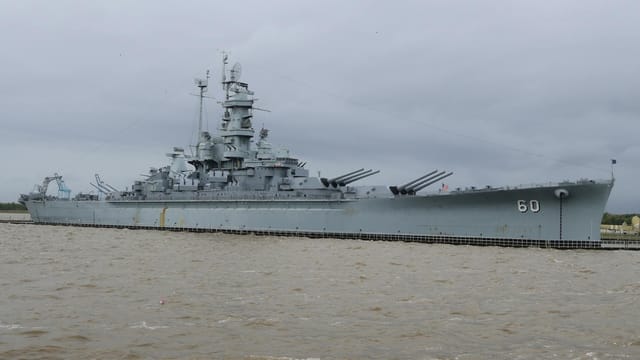
US Supercarrier Ford Heads to Crete for Repairs After Red Sea Fire, Underscoring Strain on Naval Presence
A fire aboard the U.S. aircraft carrier Gerald R. Ford on March 12 has forced the ship to dock at Souda Bay, Crete, for more than a week of repairs. The blaze injured three sailors, affected hundreds with smoke inhalation, and damaged dozens of compartments and sleeping berths, highlighting strains on carrier readiness after an extended 266-day deployment amid heightened regional tensions.
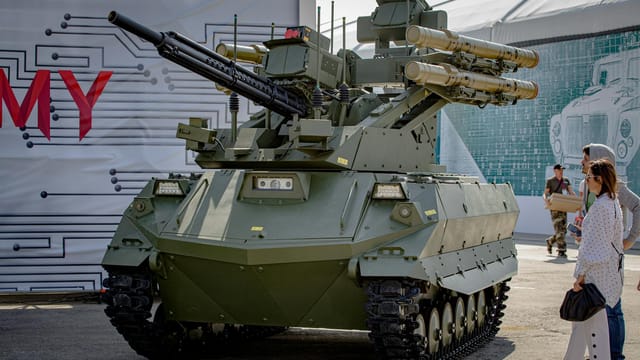
Cheap Strike, Costly Defense: Iran Exposes Gaps in US-Led Middle East Missile Shield
A U.S.-backed missile‑defence network in the Middle East has been undercut by Iranian strikes that damaged key sensors and overwhelmed interceptors. The crisis reveals a growing strategic and economic mismatch: cheap Iranian missiles and drones are eroding the effectiveness and stockpiles of expensive Western interceptors.

Between Exit and Escalation: Washington’s Dilemma in the Iran Confrontation
The Trump administration is trapped between escalating military action against Iran and withdrawing before strategic goals are secured. U.S. forces have been repositioned to the Gulf and planners have prepared exit options, but analysts warn that seizing key Iranian islands would risk a costly, protracted ground conflict and further damage U.S. credibility and regional stability.

Middle East Pulls U.S. Forces, Tests Alliances in Asia — and Hands Beijing a Talking Point
The diversion of U.S. military assets from East Asia to the Middle East has intensified doubts among allies about American reliability and highlighted the strategic risks of host‑nation basing. Seoul and Tokyo face renewed domestic pressure to diversify defence options, while Beijing is leveraging the episode to promote regional security alternatives that reduce dependence on the United States.

U.S. Forces Take Increasing Toll in Middle East: CENTCOM Confirms 200+ Troops Injured Across Seven Countries
CENTCOM says more than 200 U.S. service members have been injured across seven Middle Eastern countries amid recent U.S. and Israeli operations targeting Iran, with many cases exhibiting traumatic brain injury and ten reported as seriously wounded. The spread of casualties highlights the vulnerability of dispersed U.S. forces, strains medical and political resources, and raises pressure on policymakers to curb further escalation.

Trump’s Rebuke: NATO’s Refusal to Guard the Strait of Hormuz Exposes Alliance Strains
President Trump expressed disappointment and criticized NATO allies for declining to join a U.S.-led escort mission through the Strait of Hormuz, arguing their refusal reveals alliance dependency on American military spending. European leaders have resisted involvement, calling the conflict outside their remit, a stance that highlights widening gaps on burden-sharing and the potential rise of ad hoc coalitions or greater European strategic autonomy.

Seoul Says No Formal U.S. Request to Send Warships to Strait of Hormuz; Parliamentary Approval Needed
South Korea's defence minister said no formal U.S. request has been received to send warships to the Strait of Hormuz and that any troop deployment requires parliamentary approval. Seoul's response reflects legal constraints, operational limits and a cautious approach to burden-sharing amid wider geopolitical tensions.