
Technology & AIAnalysis
Chinese Academy of Sciences Launches Frontier Research Initiative
A newly unveiled program funds 10 high-risk projects across extreme frontiers while overhauling research evaluation to tolerate failure.
Share
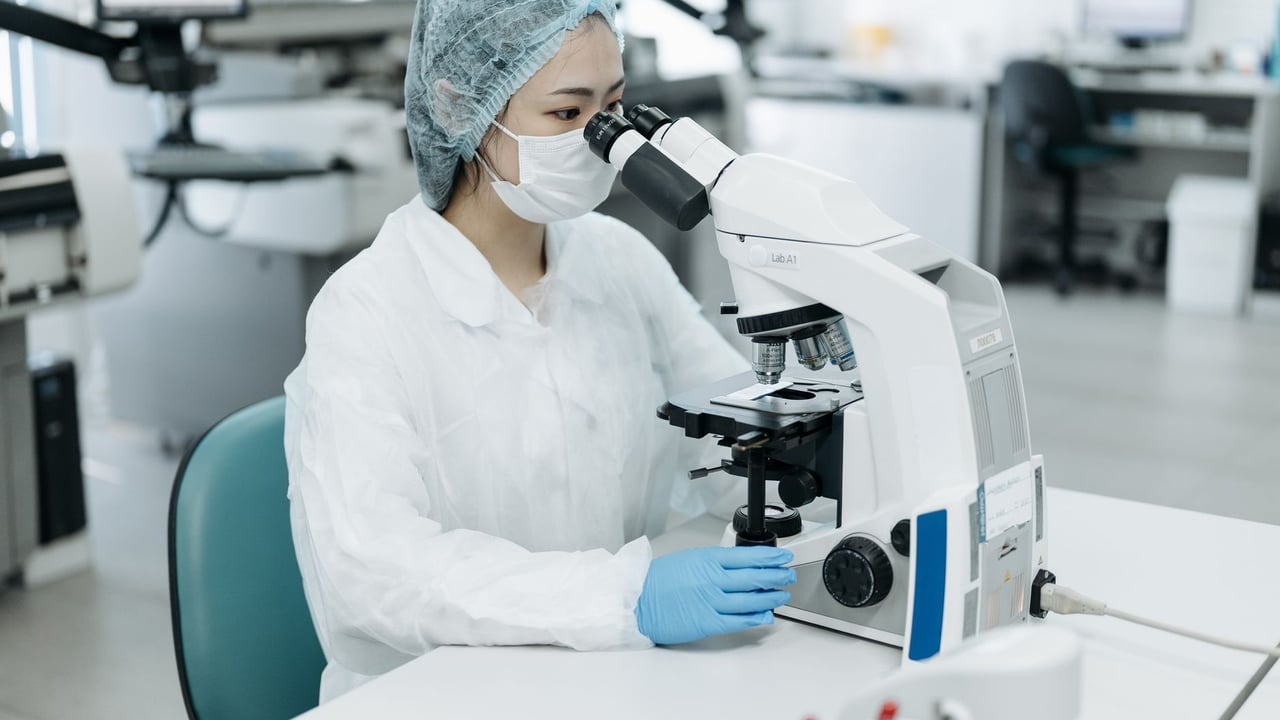
Photo by Pavel Danilyuk on Pexels
The Brief
The Chinese Academy of Sciences (CAS) has formally launched an initiative targeting extreme frontiers in basic scientific research. Announcing its first batch of 10 projects, the program focuses on challenging domains such as the synthesis of new elements, the nature of dark matter and dark energy, microscopic measurements of chemical bonds, and artificial synthetic cells. Accompanied by policy reforms, CAS plans to reduce interim process interventions and eliminate reliance solely on papers and short-term metrics, institutionalizing tolerance for research setbacks while leveraging large-scale scientific infrastructure and artificial intelligence.
Why it matters
The program represents an operational shift within China's premier scientific institution to move away from rigid evaluation systems that prioritize fast publishing over foundational discovery. By committing to institutionalized tolerance for failure and coupling high-risk frontier questions with state computing and shared laboratory infrastructure, CAS seeks to foster groundbreaking original research rather than incremental advancements.
China context
Faced with intensifying geopolitical tech competition and persistent vulnerabilities in foundational science, Beijing has increasingly prioritized zero-to-one original innovation over catching-up strategies. CAS serves as China's flagship institutionalized research apparatus. Aligning its leading facilities, pilot funding mechanisms, and young scientific teams behind high-risk exploration reflects a state-level push to establish globally dominant original discovery hubs.
Editor's View
EDITOR'S VIEW — Analysis and inference, not factual reporting.
The most noteworthy element of this announcement is the explicit pledge to institutionalize tolerance for failure. Chinese research institutions have long grappled with rigid assessment frameworks that inadvertently encourage safe, publishable incrementalism at the expense of high-uncertainty exploration. If CAS successfully insulates researchers from punitive reviews when ambitious projects fail to produce papers, it could establish a meaningful model for broader institutional reform across China's scientific ecosystem.
What to watch
- Publication of the complete operational list and leading investigators for all 10 inaugural projects.
- The implementation of institutional mechanisms that protect researchers from funding clawbacks or career penalties during negative research cycles.
- Call-for-proposals and candidate selection for the next priority clusters across physical, life, Earth system, and space sciences.
Key Takeaways
- 1CAS unveiled its Scientific Frontier Limit Breakthrough Plan alongside an initial batch of 10 deep-frontier projects.
- 2Core focus areas include new element synthesis, dark matter and dark energy, microscopic chemical bond measurement, and artificial cells.
- 3The program establishes reformed evaluation guidelines aimed at reducing preset targets, de-emphasizing papers, and tolerating research failure.
- 4Research teams will access linked national major scientific facilities and artificial intelligence platforms.
- 5Upcoming phases will target physical sciences, life sciences, Earth system science, and space science.
The Chinese Academy of Sciences announced the launch of its "Scientific Frontier Limit Breakthrough Plan" during a press conference in Beijing, initiating its first batch of 10 long-term research projects. According to coverage by Xinhua and People's Daily, the program focuses on high-risk, boundary-pushing research across four extreme scientific domains.
The initial slate of 10 projects targets deep foundational problems, including the synthesis of new chemical elements, probing the nature of dark matter and dark energy, the microscopic measurement of chemical bonds, and the engineering of artificial synthetic cells. Alongside these projects, CAS released a shortlist of future priority areas, spanning physical sciences, life sciences, Earth system science, and space science, aimed at producing original discoveries in fields critical to national development.
Zhou Qi, Vice President of CAS, stated at the briefing that the initiative aims to drive changes in research paradigms and open up new scientific directions. Zhou emphasized that the academy will organize structured scientific攻关 (breakthrough efforts) by opening and linking national major science and technology infrastructure facilities and leveraging artificial intelligence platforms to enable fundamental discoveries.
Critically, the plan introduces structural reforms to how scientific research is evaluated and managed. Officials from the CAS Bureau of Basic Research noted that the initiative will pilot an evaluation model tailored to high-uncertainty research. This framework intends to reduce preset targets, minimize mid-course process interference, and move away from assessing work solely by publication volume or short-term results, putting genuine tolerance for failure into practice.
CAS also plans to invite participation from top researchers both within China and internationally. Scientists are encouraged to use platforms such as the Xiangshan Science Conferences to identify core scientific problems. Selected teams will receive backing through strategic priority research programs and funding schemes for young research teams, allowing them to draw on national major scientific instruments and shared AI networks.
Sources
- 中国科学院启动实施科学前沿极限突破计划--经济·科技--人民网 — People's Daily · 9/29/2026
- 中国科学院启动“科学前沿极限突破计划”--经济·科技--人民网 — People's Daily · 9/29/2026