
Policy & RegulationAnalysis
China Drafts New Air Quality and Digital Ecological Supervision Plans
Beijing prepares tightened pollutant limits, regional strategies, and AI-driven monitoring as it enters the 15th Five-Year Plan period.
Share
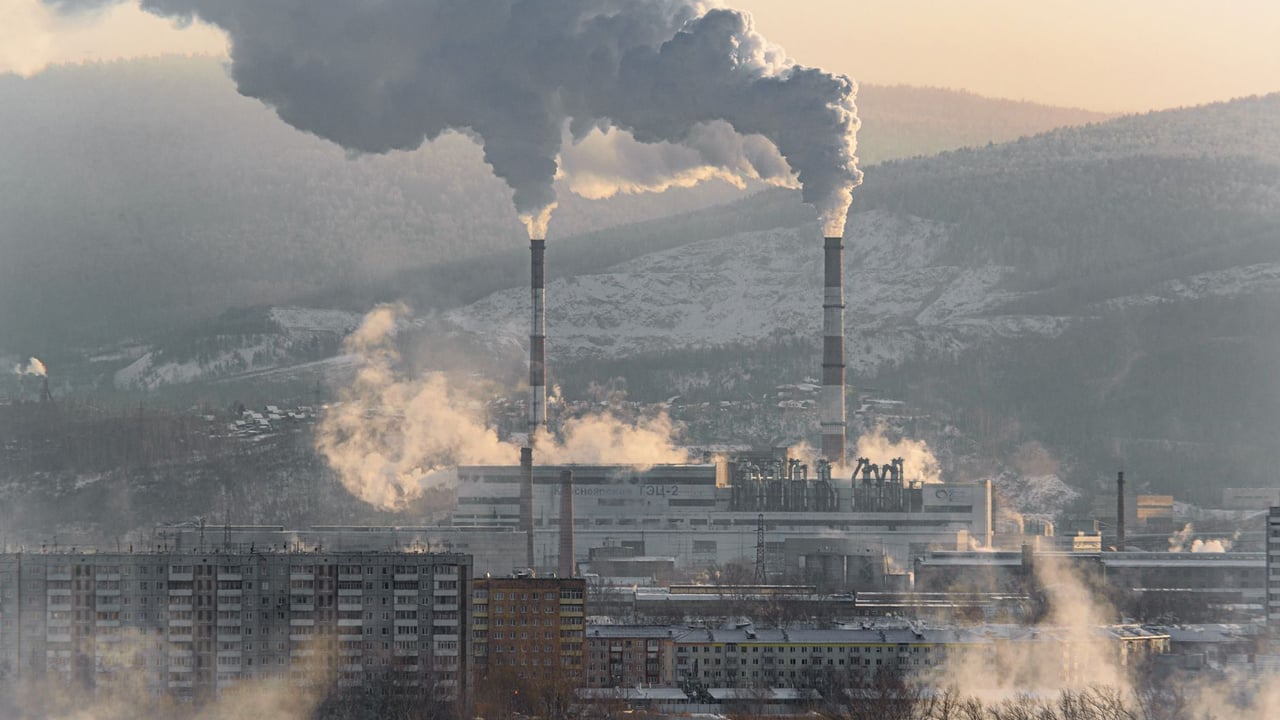
Photo by Radik 2707 on Pexels
The Brief
During a State Council Information Office press briefing on August 13, 2026, Chinese environmental officials announced that a new round of air quality action plans is being formulated for the 15th Five-Year Plan period (2026–2030). Building on reductions that brought national PM2.5 levels down to 28 micrograms per cubic meter in 2025, the upcoming framework will introduce stricter pollutant concentration limits and tailored regional enforcement targets. Concurrently, environmental authorities plan to deploy advanced technologies, including satellite remote sensing, AI image interpretation, and environmental DNA, to construct a modernized ecological supervision network.
Why it matters
As China enters its 15th Five-Year Plan cycle, environmental regulation is shifting from basic pollution control to high-standard, tech-driven oversight. The forthcoming air standards and regional mandates will directly impact industrial planning, energy structures, and regional coordination across key manufacturing hubs.
China context
Ecological protection remains a central pillar of China's high-quality development strategy. By hosting briefings focused on the 15th Five-Year Plan's kickoff, central authorities are signaling an intent to sustain momentum in green transition while embedding digital tools like AI and big data into national regulatory frameworks.
Editor's View
EDITOR'S VIEW — Analysis and inference, not factual reporting.
China's environmental policies demonstrate a structured effort to decouple economic growth from severe air pollution, supported by expanding satellite and digital monitoring networks. However, the next phase will present tougher compliance demands for local governments as focus extends beyond major metropolitan areas into secondary industrial corridors. The integration of cutting-edge tech like environmental DNA and AI tools marks a transition toward automated regulatory oversight, though regional execution capabilities may vary.
What to watch
- Formal release and specific numerical targets of the revised Ambient Air Quality Standards.
- Official publication of the '15th Five-Year Plan for Beautiful China Construction'.
- Expansion of 'Green Shield' inspection campaigns and AI-driven monitoring across ecological protection redlines.
Key Takeaways
- 1China is actively formulating a new air quality action plan for the 15th Five-Year Plan period (2026–2030).
- 2National PM2.5 levels dropped 59% from 2013 to reach 28 μg/m³ in 2025, with heavy pollution days falling to 0.9%.
- 3The upcoming plan divides regions into key areas, enhancement areas, and pioneer areas to apply differentiated pollution controls.
- 4Ecological supervision in nature reserves saw major violation areas fall from 190.10 hectares in 2021 to 8.22 hectares in 2025 using satellite monitoring.
- 5Future regulatory efforts will integrate AI image interpretation, environmental DNA, soundscape recognition, and large language models.
China is drafting a new action plan to continuously improve air quality during its 15th Five-Year Plan period (2026–2030), officials announced at a State Council Information Office press briefing reported by CCTV News on August 13, 2026. The plan will set stricter standards and refined regional strategies to transition national air quality from noticeable improvement to long-term stability.
Since 2013, China has implemented three consecutive national air action plans. Official figures show that national average PM2.5 concentrations dropped to 28 micrograms per cubic meter in 2025—a 59 percent decline compared to 2013 levels—while the proportion of heavy pollution days fell to 0.9 percent, marking the best monitoring record to date. Furthermore, research cited at the conference noted that between 2019 and 2024, 719 out of 1,974 global cities with populations over 100,000 achieved simultaneous GDP growth and reductions in nitrogen dioxide intensity, with Chinese cities accounting for more than one-third of that total.
Despite these gains, officials emphasized that structural pressure on industrial, energy, and transportation transitions remains high. The upcoming air quality plan will focus on tighter pollution limits tied to the revised Ambient Air Quality Standards and the 15th Five-Year Plan framework. Governance will follow a three-tiered regional approach: maintaining intensity in key traditional areas like the Beijing-Tianjin-Hebei region, Yangtze River Delta, and Fenwei Plain; enhancing efforts in secondary target zones including the middle reaches of the Yangtze River, Sichuan-Chongqing region, and Xinjiang's Urumqi-Changji-Shihezi area; and supporting pioneer zones such as the Guangdong-Hong Kong-Macao Greater Bay Area, Fujian, and Hainan.
In addition to air quality measures, the Ministry of Ecology and Environment announced plans to build a modern, high-precision ecological supervision system. Satellite monitoring during the 14th Five-Year Plan period reduced newly detected major ecological violation cases in national nature reserves from 131 in 2021 (covering 190.10 hectares) to 6 in 2025 (covering 8.22 hectares). Over the next five years, authorities plan to deepen the use of AI image interpretation, environmental DNA (eDNA), soundscape recognition, and large language models to automate threat detection and streamline regulatory responses.
Sources
- 直播海报:国新办就全面推进美丽中国建设有关情况举行新闻发布会 — China News Service · 8/12/2026
- 我国新一轮空气质量持续改善行动方案正在制定 — National Business Daily · 8/13/2026
- “十五五”时期我国将构建更加精准、高效的现代化生态监管体系 — National Business Daily · 8/13/2026