
Policy & RegulationAnalysis
China Identifies Major Scientific and Engineering Challenges for 2026
The annual list highlights strategic priorities including the Hodge Conjecture and 6G agent networks to guide national research.
Share
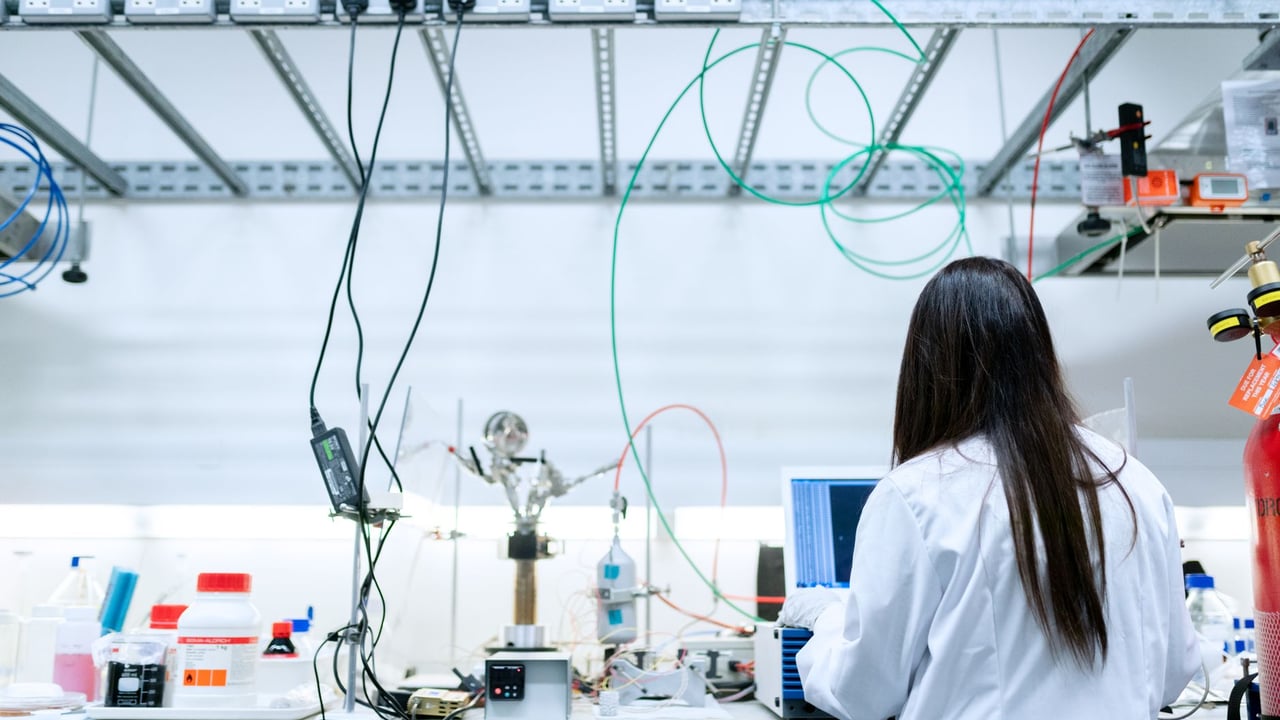
Photo by ThisIsEngineering on Pexels
The Brief
On July 15, 2026, a new set of major scientific, engineering, and industrial challenges was released, signaling China's strategic research priorities for the year. The list covers foundational theoretical gaps and future-critical infrastructure, specifically mentioning the Hodge Conjecture in mathematics and the development of "agent networks" within 6G technology. This initiative aims to align intellectual and financial resources with the state's long-term goal of technological self-reliance.
Why it matters
The release of these problems acts as a strategic compass for China's scientific community, signaling where the state intends to direct intellectual capital and financial resources. By highlighting issues like the Hodge Conjecture and 6G, China is positioning itself to tackle both foundational theoretical gaps and future-critical infrastructure.
China context
This initiative is part of China's broader 'Innovation-Driven Development Strategy,' aiming to achieve self-reliance in science and technology and to lead in emerging fields that will define the next decade of global competition.
Editor's View
EDITOR'S VIEW — Analysis and inference, not factual reporting.
This annual exercise is more than a wishlist; it is a mechanism for resource allocation. By elevating specific problems like the Hodge Conjecture alongside industrial 6G applications, Beijing is attempting to bridge the gap between "blue sky" research and immediate industrial competitiveness. The inclusion of "agent networks" suggests a shift in 6G discourse toward autonomous, AI-driven connectivity that could redefine global standards.
What to watch
- Follow-up announcements from the Ministry of Science and Technology regarding grant allocations for these specific problems.
- Academic responses and symposiums dedicated to the newly identified 2026 challenges.
- Progress updates on 6G standardization and how it incorporates the 'agent network' concept mentioned in the list.
Key Takeaways
- 1China released its 2026 list of major scientific, engineering, and industrial challenges on July 15.
- 2The list includes foundational mathematical problems like the Hodge Conjecture.
- 36G development is a primary industrial focus, specifically the implementation of agent networks.
- 4The initiative is designed to guide national research funding and strategic intellectual investment.
On July 15, 2026, Chinese authorities released the annual list of major scientific problems, engineering challenges, and industrial technology issues. This publication serves as a roadmap for the nation's research institutions and industrial sectors, identifying the specific hurdles the state deems critical for national development and technological sovereignty.
The 2026 list emphasizes a dual focus on foundational science and applied technology. Among the theoretical challenges highlighted is the Hodge Conjecture, a major unsolved problem in algebraic geometry. Addressing such fundamental questions is seen as essential for long-term innovation, providing the mathematical and physical basis for future breakthroughs in computing and materials science.
In the realm of engineering and industry, the focus has shifted toward the next generation of telecommunications. The list specifically identifies challenges related to 6G technology, with a particular emphasis on the concept of "agent networks". This suggests a strategic move toward integrating artificial intelligence more deeply into network architecture, allowing for more autonomous and efficient data handling as China seeks to lead global 6G standardization.
The release of these problems is a key component of China’s broader Innovation-Driven Development Strategy. By centralizing the identification of these challenges, the government aims to streamline the allocation of grants and focus the efforts of the country's vast academic and corporate research base. This top-down approach is intended to ensure that scientific progress directly supports the country's economic and security objectives.
Sources
- 2026重大科学问题、工程技术难题和产业技术问题发布 — NetEase · 7/15/2026