
Business & IndustryAnalysis
China Biopharma Advances Pipelines and Global Out-Licensing Transactions
National data and policy support highlight the sector's transition from follower-drug development to novel therapies, including ADCs.
Share
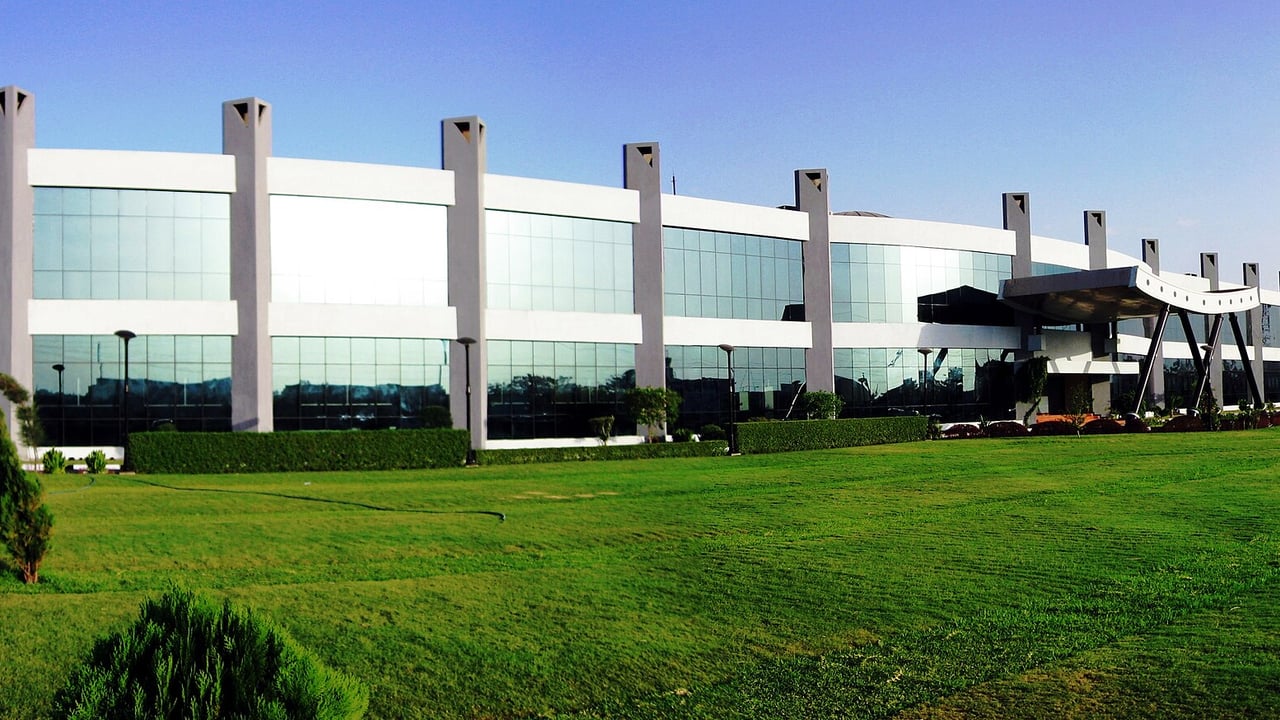
Intas biopharmaceuticals via Wikimedia Commons, CC BY-SA 3.0
The Brief
China's biopharmaceutical sector is accelerating its transition from follower to innovator, driven by expanding drug pipelines, international licensing deals, and high-level policy backing under the 15th Five-Year Plan framework. Official statistics reported by People's Daily show that in 2025, China accounted for 33.7% of global innovative drugs under development, approved 76 innovative drugs, and saw total out-licensing deal values top $130 billion. Local firms are increasingly developing first-in-class and best-in-class therapies in complex modalities such as antibody-drug conjugates.
Why it matters
China’s biopharmaceutical industry has reached critical scale, accounting for over a third of global novel drug pipelines and generating record out-licensing activity. This shift demonstrates that domestic drugmakers are moving beyond local market needs to become prominent contributors to the global pharmaceutical innovation chain.
China context
As China's 15th Five-Year Plan outline incorporates biomanufacturing into its prospective industry cultivation system, supportive regulation, talent repatriation, and maturing supply chains are reinforcing the ecosystem. Regulatory support from the National Medical Products Administration alongside global commercialization strategies is aiding domestic biotechs in expanding abroad.
Editor's View
EDITOR'S VIEW — Analysis and inference, not factual reporting.
The surge in out-licensing deal volume and global pipeline share underlines China's evolving role in drug discovery, particularly in fast-moving modalities like antibody-drug conjugates. However, sustaining this momentum will depend on how effectively Chinese developers navigate late-stage global clinical trials, cross-border regulatory harmonization, and long-term commercialization structures beyond upfront licensing fees.
What to watch
- Implementation details of full-chain support policies for biomanufacturing and novel drugs during the 15th Five-Year Plan period.
- Results from international multi-center clinical trials for domestic ADC candidates such as HS-20093.
- Sustainability and transaction structure trends in out-licensing deals between Chinese biotechs and multinational pharma.
Key Takeaways
- 1In 2025, Chinese innovative drugs accounted for 33.7% of all global drug pipelines under development.
- 2China approved 76 innovative drugs in 2025, with out-licensing deals exceeding $130 billion in total value.
- 3Biomanufacturing is prioritized under the 15th Five-Year Plan alongside quantum tech, 6G, and embodied AI.
- 4Domestic drugmakers are expanding from small molecules to advanced modalities like antibody-drug conjugates (ADCs).
China's biopharmaceutical industry is executing a strategic transition from generic manufacturing and follower-drug development toward original drug discovery and international collaboration, according to state media reports highlighting key national benchmarks.
Figures published by People's Daily indicate that Chinese innovative drugs under development accounted for 33.7 percent of the global total in 2025. Over the course of that year, regulatory authorities approved 76 innovative drugs within the country, while the cumulative transaction value of out-licensing deals for Chinese innovative drugs surpassed $130 billion.
The technical development of Chinese drugmakers has expanded from breaking import monopolies in small-molecule drugs to rapidly establishing positions in large molecules and antibody-drug conjugates (ADCs). Industry participants are increasingly focusing on candidates with first-in-class (FIC) and best-in-class (BIC) potential to target diseases with limited existing options.
A primary example cited in official coverage is HS-20093, an antibody-drug conjugate designed to treat challenging conditions including small cell lung cancer and osteosarcoma. Because no mature overseas experience existed during the drug's initial research and development phase, domestic research teams had to navigate molecular design, clinical trial design, and registration pathways independently.
This shift toward original innovation is aligned with high-level economic planning. China's 15th Five-Year Plan outline includes biomanufacturing within its strategic framework to build a full-chain cultivation system for future industries. The plan positions biomanufacturing alongside other emerging growth drivers such as quantum technology, hydrogen and nuclear fusion energy, brain-computer interfaces, embodied artificial intelligence, and sixth-generation (6G) mobile communications.
Industry insiders note that the maturation of the biopharmaceutical ecosystem relies on sustained corporate commitment alongside comprehensive policy and infrastructural backing. Recent years have seen enhanced policy support, improved industrial supply chain maturity, and an accelerating return of overseas high-end talent. Together with support across process scaling, clinical verification, registration, and large-scale manufacturing supported by the National Medical Products Administration, these factors are supporting the transition of domestic biotechs from 'follow-on innovation' to 'source innovation' on the global stage.
Sources
- 高质量发展故事汇|生物制药从“跟随”到“引领”--经济·科技--人民网 — People's Daily · 7/29/2026