
Policy & RegulationAnalysis
China Concludes Party Campaign on Leadership Performance and Cadre Conduct
Beijing shifts toward permanent oversight and differentiated evaluations ahead of local leadership reshuffles and the 15th Five-Year Plan.
Share
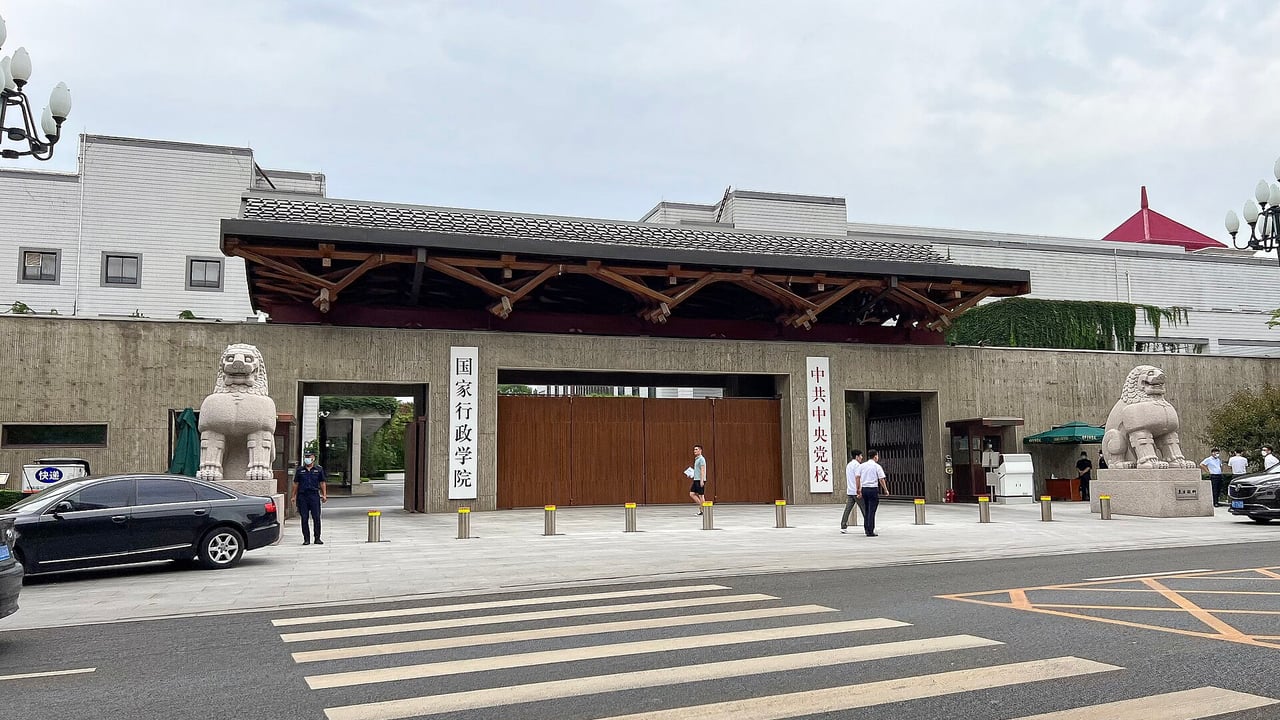
N509FZ via Wikimedia Commons, CC BY-SA 4.0
The Brief
The Communist Party of China has concluded a centralized education campaign aimed at correcting cadre performance metrics and curbing superficial governance. Chaired by Politburo Standing Committee member Cai Qi, with anti-corruption chief Li Xi in attendance, the Central Party Building Work Leading Group reviewed instructions from Xi Jinping calling for regularized training, enhanced audit and statistical supervision, and differentiated assessment systems. The initiative directly targets local governance behaviors such as vanity projects and the neglect of inherited debts ahead of nationwide local leadership transitions.
Why it matters
As China enters the 15th Five-Year Plan period, central authorities are tightening how local officials are evaluated and promoted. Reorienting cadre incentives toward long-term deliverables rather than short-term prestige projects is critical for managing hidden local debt, sustaining policy continuity, and curbing bureaucratic formalism during upcoming leadership rotations.
China context
Rectifying official performance standards ('view of political achievements') is an ongoing focus of Party discipline and governance reform. Under economic transition pressures, central leadership has repeatedly warned against 'new officials ignoring inherited commitments' and superficial data fabrication, using inspections, audits, and disciplinary reviews to align local execution with central policy priorities.
Editor's View
EDITOR'S VIEW — Analysis and inference, not factual reporting.
The campaign underscores Beijing's continuous reliance on structured intra-party education to discipline local leadership cohorts. By explicitly instructing supervisory organs to target root administrative evasions—such as disowning predecessor liabilities—the leadership aims to institutionalize accountability mechanisms into routine cadre vetting rather than relying solely on periodic political drives.
What to watch
- Implementation of differentiated evaluation criteria during upcoming local party committee reshuffles
- Disciplinary disclosures from纪检 and audit bodies detailing rectified cases of performance distortions and statistical irregularities
- Specific institutional safeguards introduced to hold newly appointed officials accountable for predecessor debt and project commitments
Key Takeaways
- 1Central Party authorities concluded a nationwide education drive addressing cadre performance metrics and governance priorities.
- 2Xi Jinping called for permanent oversight mechanisms, targeting local chief executives, newly appointed officials, and key post holders.
- 3Corrective measures emphasize tackling inherited debt evasion ('new officials ignoring old debts') and aligning inspections with audits.
- 4The initiative establishes operational evaluation standards ahead of widespread local government leadership transitions.
The Communist Party of China (CPC) has concluded a centralized intra-party education campaign focused on establishing a 'correct view of political achievements,' signaling a transition toward permanent oversight mechanisms, state media reported on August 24.
The Central Party Building Work Leading Group convened a meeting in Beijing to summarize the campaign and plan long-term mechanisms. The session was presided over by Politburo Standing Committee member and group head Cai Qi, with Central Commission for Discipline Inspection Secretary Li Xi delivering remarks.
According to official reports, the campaign, initiated earlier in the year to coincide with the beginning of the 15th Five-Year Plan, targeted leadership bodies at the county and division level and above, with a particular focus on primary Party secretaries ('一把手'). Xi Jinping issued instructions emphasizing that cultivating sound governance values remains a long-term task requiring continuous institutional consolidation.
Xi instructed that regular performance-view training should prioritize municipal and county chief executives, newly promoted officials, younger cadres, and those in key operational posts. He stressed the need to address persistent governance distortions, calling for targeted rectification of the practice where 'new officials ignore old debts'—a common bureaucratic tendency to abandon predecessor commitments or liabilities in favor of new initiatives.
Central guidance outlined integrating performance oversight with disciplinary inspections, audit supervision, and statistical verification to enhance problem detection. Leadership assessments are slated to rely on refined, differentiated evaluation systems that favor officials demonstrating practical outcomes and accountability over superficial metrics.
The meeting noted that while the centralized campaign phase has basically concluded, Party organizations must maintain strict execution of democratic centralism, regular cautionary talks, and continuous problem-rectification to provide a solid organizational foundation for upcoming local leadership reshuffles.
Sources
- 创造经得起实践、人民、历史检验的实绩 ——习近平总书记引领全党深入开展树立和践行正确政绩观学习教育--时政--人民网 — People's Daily · 8/24/2026
- 创造经得起实践、人民、历史检验的实绩——习近平总书记引领全党深入开展树立和践行正确政绩观学习教育 — State Council of China · 8/24/2026
- 习近平作出重要指示强调 巩固拓展树立和践行正确政绩观学习教育成果 努力创造经得起实践人民历史检验的实绩 — State Council of China · 8/24/2026
- 习近平作出重要指示强调 巩固拓展树立和践行正确政绩观学习教育成果 努力创造经得起实践人民历史检验的实绩 - 中国军网 — China Military Online · 8/24/2026
- 创造经得起实践、人民、历史检验的实绩——习近平总书记引领全党深入开展树立和践行正确政绩观学习教育 - 中国军网 — China Military Online · 8/24/2026
- 创造经得起实践、人民、历史检验的实绩——习近平总书记引领全党深入开展树立和践行正确政绩观学习教育 — Ministry of National Defense · 8/24/2026