
Policy & RegulationAnalysis
China Expands Cross-Border Ecological Restoration with Targeted Subsidies
Central authorities are backing joint inter-provincial conservation projects and tech-enabled reforestation across key river basins and national ecological zones.
Share
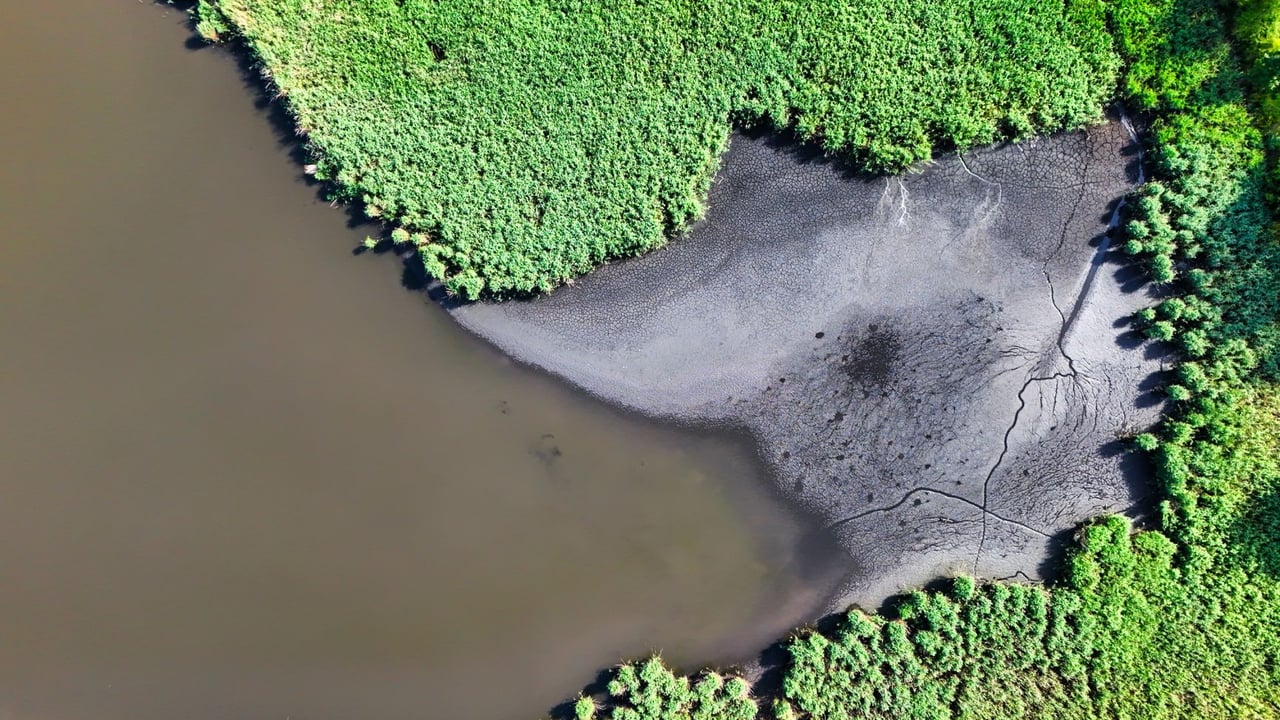
Photo by Volker Braun on Pexels
The Brief
China is intensifying its integrated ecological conservation framework by introducing central fiscal support for joint cross-provincial restoration projects for the first time. The policy shift accompanies a new batch of large-scale conservation initiatives across key ecological zones, including the Qinghai-Tibet Plateau, the Yellow River, and the Yangtze River. Alongside funding changes, local authorities are deploying targeted technologies—such as specialized root-guiding devices in northern sandlands and rainforest ecological corridors in Hainan—to improve restoration survival rates and reconnect fragmented ecosystems.
Why it matters
Ecological governance in China is shifting from fragmented, single-jurisdiction efforts toward cross-regional coordination backed by targeted fiscal incentives. Allowing multiple provinces to jointly apply for central 'shanshui' (integrated mountain-river-forest-farmland-lake-grass-sand) project funding addresses historical coordination bottlenecks across shared river basins and critical ecological barrier zones.
China context
Integrated protection and systematic restoration of mountains, waters, forests, farmlands, lakes, grasslands, and sands have formed the core doctrine of China's ecological civilization strategy over the past decade. By aligning central reward subsidies with cross-provincial project bids, Beijing aims to solidify national ecological security barriers and streamline environmental accountability across upstream and downstream jurisdictions.
Editor's View
EDITOR'S VIEW — Analysis and inference, not factual reporting.
The central government's decision to support joint cross-provincial project proposals marks an important administrative evolution in Chinese environmental governance. Historically, local governments competed individually for central conservation funds, often leading to uneven execution along shared watersheds. If cross-provincial project management can successfully align regional interests, it will set a significant precedent for collaborative basin-wide governance across the Yangtze and Yellow River systems.
What to watch
- Application guidelines and initial approval lists for the first batch of joint cross-provincial 'shanshui' projects
- Expansion and survival metrics of root-guidance afforestation methods across northern desertification control zones
- Biodiversity monitoring and habitat connectivity data from Hainan's tropical rainforest ecological corridors
Key Takeaways
- 1Central finance will explicitly support joint, cross-provincial project applications for major ecological restoration initiatives for the first time.
- 2A new batch of 'shanshui' integrated conservation projects will roll out in the Qinghai-Tibet Plateau, Yellow River, and Yangtze River regions.
- 3Root-guiding cultivation techniques in Zhangjiakou, Hebei, raised seedling survival rates to 92% across nearly 10,000 mu of arid land.
- 4In Hainan, native tree planting on idle land is building ecological corridors to reconnect fragmented tropical rainforest areas.
China is adjusting its national ecological restoration framework to prioritize cross-regional coordination and technical innovation, according to state media reports on recent policy directives.
Under the national policy for the integrated protection of mountains, rivers, forests, farmlands, lakes, grasslands, and sandlands—collectively referred to as "shanshui" projects—the central government will launch a new round of major ecological initiatives. These projects are scheduled across key ecological security zones, including the Qinghai-Tibet Plateau ecological barrier area as well as the Yellow River and Yangtze River basins.
To support the initiative, the central finance ministry is updating its subsidy and incentive mechanisms. For the first time, central guidelines explicitly permit and support inter-provincial joint project applications, encouraging local authorities to establish coordinated cross-boundary ecological management mechanisms across administrative borders.
Alongside policy coordination, technical methods are being applied to improve outcomes in regional projects. In Zhangjiakou, Hebei province, forestry teams have used specialized root-guiding tubes during seedling cultivation to encourage root systems to grow deeper into the soil and access groundwater naturally. The technique departs from traditional flood irrigation methods common in arid sandy terrain. According to reported figures, seedling survival rates across nearly 10,000 mu of sandy land have reached 92 percent.
In southern China, ecological initiatives are focusing on habitat connectivity. In Hainan, conservation workers are developing tropical rainforest ecological corridors by planting native tree species—including Aquilaria sinensis and Vatica mangachapoi—on idle land parcels to bridge fragmented forest habitats.
These combined fiscal and technical efforts reflect Beijing's ongoing push to shift environmental work from isolated, single-municipality interventions to systematic, multi-region ecological security programs.
Sources
- 我国生态修复治理取得新成效 — State Council of China · 8/9/2026