
Technology & AIAnalysis
China Plans Global Mars Geological Map by 2028 for Tianwen-3 Mission
The project will introduce a Chinese Martian geological timescale and integrate findings from the Zhurong rover.
Share
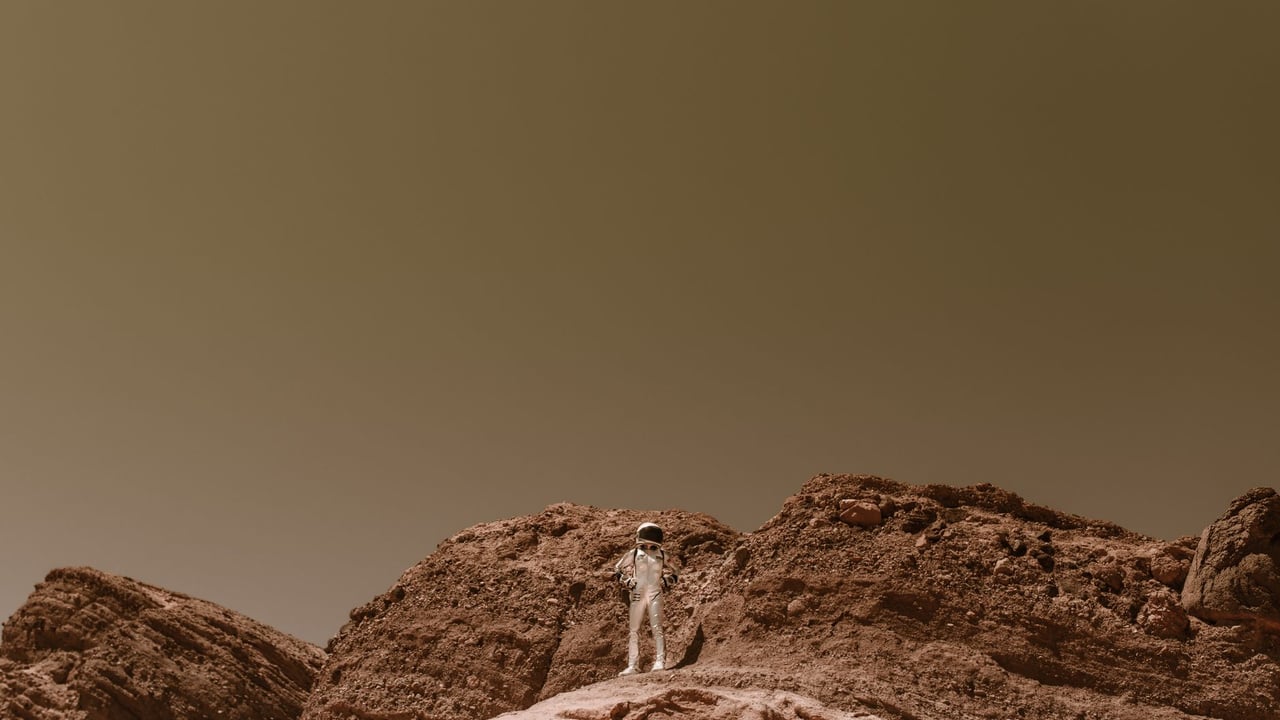
Photo by RDNE Stock project on Pexels
The Brief
China plans to complete a new-generation global geological map of Mars by the end of 2028, according to Hou Zengqian, an academician at the Chinese Academy of Sciences and chief scientist for the Tianwen-3 sample-return mission. Announced at the Chinese Academy of Geological Sciences, the initiative aims to establish a Chinese framework for Martian geological chronology and promote it as an international standard. The project will incorporate recent discoveries from China's Zhurong rover, including evidence of an ancient ocean and episodic floods, while providing a 1:50,000-scale landing site map for Tianwen-3.
Why it matters
Establishing an internationally accepted geological timescale for Mars would mark a major shift in planetary science, where standards have historically been defined by Western space agencies. Beyond scientific prestige, the mapping initiative provides direct operational support for the Tianwen-3 sample-return mission and creates a methodological template for future Chinese exploration missions to the Moon, Venus, and near-Earth asteroids.
China context
The mapping project is led by Hou Zengqian and relies on research teams at institutions including the Institute of Geology under the Chinese Academy of Geological Sciences. It represents an effort to translate raw exploratory data—specifically from the Zhurong rover's deployment in Utopia Planitia—into foundational scientific infrastructure that directly anchors China's major national deep-space exploration milestones.
Editor's View
EDITOR'S VIEW — Analysis and inference, not factual reporting.
By branding the output as the world's first 'intelligent' Martian geological map, Chinese researchers are signaling an intent to compete not merely in rocketry and sample collection, but in the analytical and epistemic standards of planetary geology. The primary hurdle will be whether international planetary bodies and peer-review communities adopt China's chronological division scheme over established crater-density and stratigraphic frameworks.
What to watch
- Completion and release of the global Martian geological map and the 1:50,000-scale landing site map by late 2028.
- International peer-review reactions and academic discussions regarding China's proposed Martian geological timescale.
- Announcements of candidate landing sites and schedule milestones for the Tianwen-3 Mars sample-return mission.
Key Takeaways
- 1China plans to complete a new global geological map of Mars by the end of 2028, led by Tianwen-3 chief scientist Hou Zengqian.
- 2The initiative will propose a Chinese Martian geological timescale to seek global academic consensus.
- 3Discoveries from the Zhurong rover, including evidence of an ancient ocean and episodic floods, will be integrated into the map.
- 4Core deliverables include a 1:50,000-scale landing zone map to directly support the Tianwen-3 sample-return mission.
- 5The project is intended to serve as a methodological template for future mapping missions to the Moon, Venus, and asteroids.
China aims to finish compiling a new-generation global geological map of Mars by the end of 2028, setting the stage for the country's upcoming Tianwen-3 Mars sample-return mission. The timeline and scope of the initiative were disclosed on September 28 by Hou Zengqian, an academician of the Chinese Academy of Sciences and chief scientist of the Tianwen-3 mission, during a symposium at the Institute of Geology of the Chinese Academy of Geological Sciences.
According to state media reports, the project will propose an independently developed Chinese framework for Martian geological chronology, with the goal of establishing China's chronological division standards as an international scientific consensus. Mars is currently categorized primarily under chronological systems established through decades of international orbital and rover data, and introducing a distinct classification scheme represents a significant step in planetary geology for China.
The mapping effort will integrate recent findings made by China's Zhurong rover. These include evidence suggesting the presence of an intercontinental ancient ocean on Mars roughly 3.5 billion years ago, as well as indications of episodic flooding that may have occurred approximately 1.6 billion years ago. These discoveries will be directly charted onto the new global map to provide updated geological context.
In addition to the global map, core deliverables will include a high-resolution 1:50,000-scale geological map targeting the selected landing zone for the Tianwen-3 mission, accompanied by a series of specialized thematic atlases. Chinese scientists intend to publish the work as the world's first 'intelligent' Martian geological map series.
The resulting datasets and mapping methodologies are intended to support scientific preparations and landing-site selection for the Tianwen-3 mission. Chinese planners also expect the project to serve as a research paradigm and operational template for future Chinese geological mapping endeavors covering the Moon, Venus, and small celestial bodies.
Sources
- 我国将绘制完成新一代全火星地质图--经济·科技--人民网 — People's Daily · 9/28/2026
- 新华社权威快报|我国将绘制完成新一代全火星地质图 — China News Service · 9/28/2026