
Business & IndustryAnalysis
China's Industrial Output Increased 5.4% in First Half of 2026
Smart manufacturing, AI adoption, and high-tech exports supported industrial expansion as Beijing prepares for its 15th Five-Year Plan.
Share
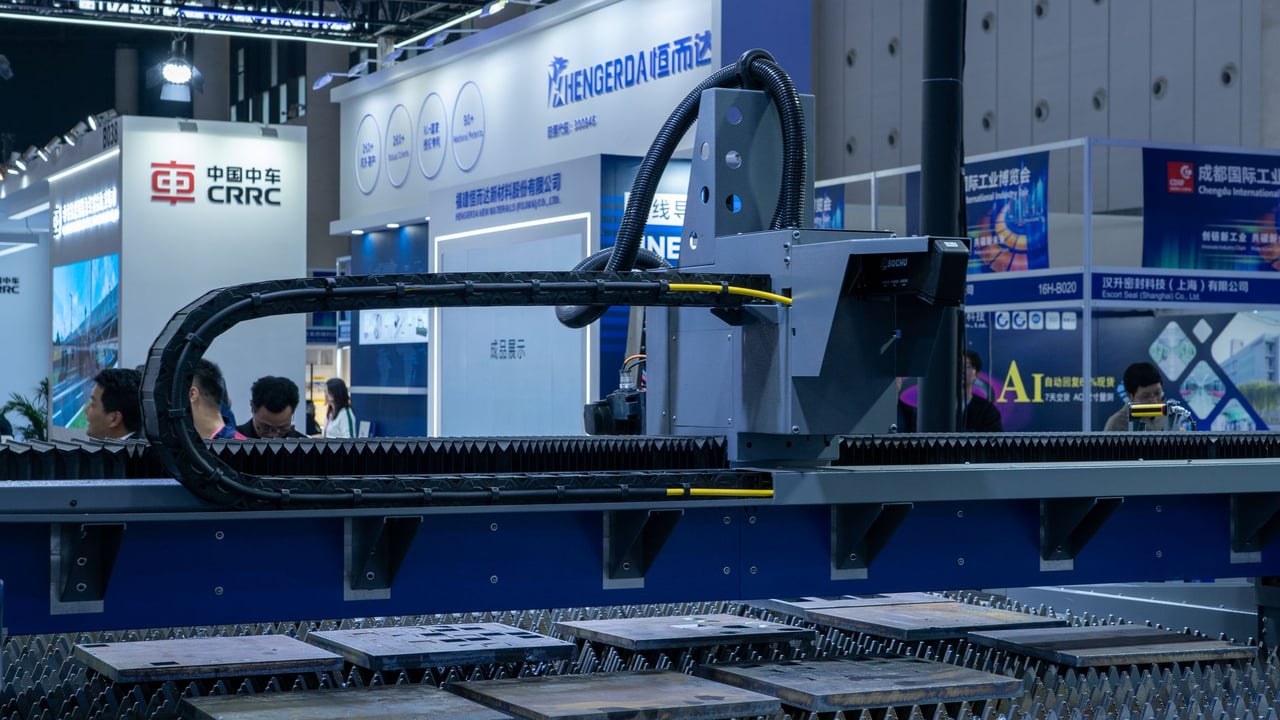
Photo by Peter Xie on Pexels
The Brief
China's value-added industrial output above designated size grew 5.4% year-on-year in the first half of 2026, contributing over 35% to national economic growth. According to the Ministry of Industry and Information Technology (MIIT), key growth drivers included high-tech manufacturing, AI integration, and robust exports of integrated circuits and green technology products. As Beijing prepares sectoral plans for its upcoming 15th Five-Year Plan, officials are emphasizing core technical bottlenecks, strategic emerging industries, and specialized monitoring mechanisms for future tech sectors.
Why it matters
The H1 2026 industrial statistics demonstrate that China's manufacturing sector is accelerating its transition toward automation, artificial intelligence, and green technology. With industrial activity generating over 35% of economic growth, the industrial sector remains the central engine stabilizing the macroeconomy while serving as a primary driver for high-value export expansion.
China context
Ahead of the 15th Five-Year Plan drafting phase, MIIT is accelerating the deployment of strategic emerging and future industries. By tackling core technologies and developing demonstration bases, China aims to move traditional manufacturing capacity up the value chain toward high-value, intelligent production, mitigating risks from global supply chain restructuring and shifting external demand.
Editor's View
EDITOR'S VIEW — Analysis and inference, not factual reporting.
The 5.4% industrial growth figure highlights an ongoing structural shift within Chinese manufacturing toward high-tech hardware and green exports. Notably, key traditional export categories are being augmented by surging shipments of integrated circuits, electronic components, and wind turbines, alongside global gains in shipbuilding and robotics. However, sustained long-term momentum will depend on how effectively policy support and domestic consumption measures convert technical advances into broader domestic demand during the upcoming 15th Five-Year Plan period.
What to watch
- Release of MIIT's sector-specific guidelines for the 15th Five-Year Plan.
- Commercial adoption rates of humanoid robotics, embodied AI, and invasive brain-computer interface devices.
- Impact of second-half domestic demand and investment policies on manufacturing consumption recovery.
Key Takeaways
- 1Industrial output above designated size grew 5.4% YoY in H1 2026, contributing >35% to GDP growth.
- 232 out of 41 major industrial sectors expanded, led by electronics, auto, machinery, and equipment.
- 3High-tech exports saw surging growth: integrated circuits (+88.7%), electronic components (+62.6%), and wind turbines (+35.6%).
- 4Over 30% of major industrial firms adopted AI; Chinese vendors held nearly 70% global market share in quadruped robots.
- 5MIIT is preparing 15th Five-Year Plan sectoral roadmaps and establishing monitoring frameworks for future industries.
China's industrial economy maintained stable growth in the first half of 2026, with value-added industrial output above designated size increasing 5.4% year-on-year, according to a Ministry of Industry and Information Technology (MIIT) press conference. The industrial sector contributed over 35% to national economic growth during the period, with 32 of 41 major industrial sectors recording positive growth. Ten major industrial provinces registered an average growth rate of approximately 7%, while five key sectors—electronics, special equipment, general equipment, automobiles, and electrical machinery—together accounted for more than 50% of total industrial expansion.
Technological upgrade and high-tech manufacturing remained central drivers of performance. Over 30% of industrial enterprises above designated size have adopted artificial intelligence technologies, while global cumulative downloads of Chinese open-source AI large language models topped 10 billion. China also recorded notable scientific milestones, including the "Jiuzhang 4" quantum computing prototype setting a global optical quantum record, and the market approval of the world’s first invasive brain-computer interface medical device. In advanced equipment, Chinese four-legged robots accounted for nearly 70% of global sales, and domestic companies introduced more than 400 humanoid robot models, representing over half of the global total. In shipbuilding, China secured 81.2% of new global orders between January and May.
External demand for high-tech and green products significantly bolstered export figures. In RMB terms, H1 exports of integrated circuits rose 88.7% year-on-year, electronic components increased 62.6%, and wind turbine generators grew 35.6%. Meanwhile, emerging domains like bio-manufacturing reached an output value of approximately 1.1 trillion yuan, with domestic fermentation products making up over 70% of global production. In embodied AI, over 230 enterprises launched more than 400 complete machines, with total annual production expected to exceed 100,000 units.
Looking ahead, MIIT Chief Engineer Wang Weiming stated that the ministry will formulate and issue sector-specific guidelines for the upcoming 15th Five-Year Plan. Officials plan to strengthen core technology development, expand real-world application scenarios, and establish national demonstration bases for emerging industries. In addition, MIIT is developing statistical monitoring systems and new policy measures for strategic future industries to guide their structured development.
Sources
- 2026年中经济观察丨上半年规上工业增加值同比增5.4% — Xinhua News Agency · 7/22/2026
- Cgtn — Cgtn
- Bastillepost — Bastillepost
- South China Morning Post — South China Morning Post