
Policy & RegulationAnalysis
China's Healthcare Visits Top 10.6 Billion as Outpatient Costs Fall
Official health data for 2025 shows rising life expectancy, expanded staffing, and modest decreases in per-visit hospital and outpatient expenses.
Share
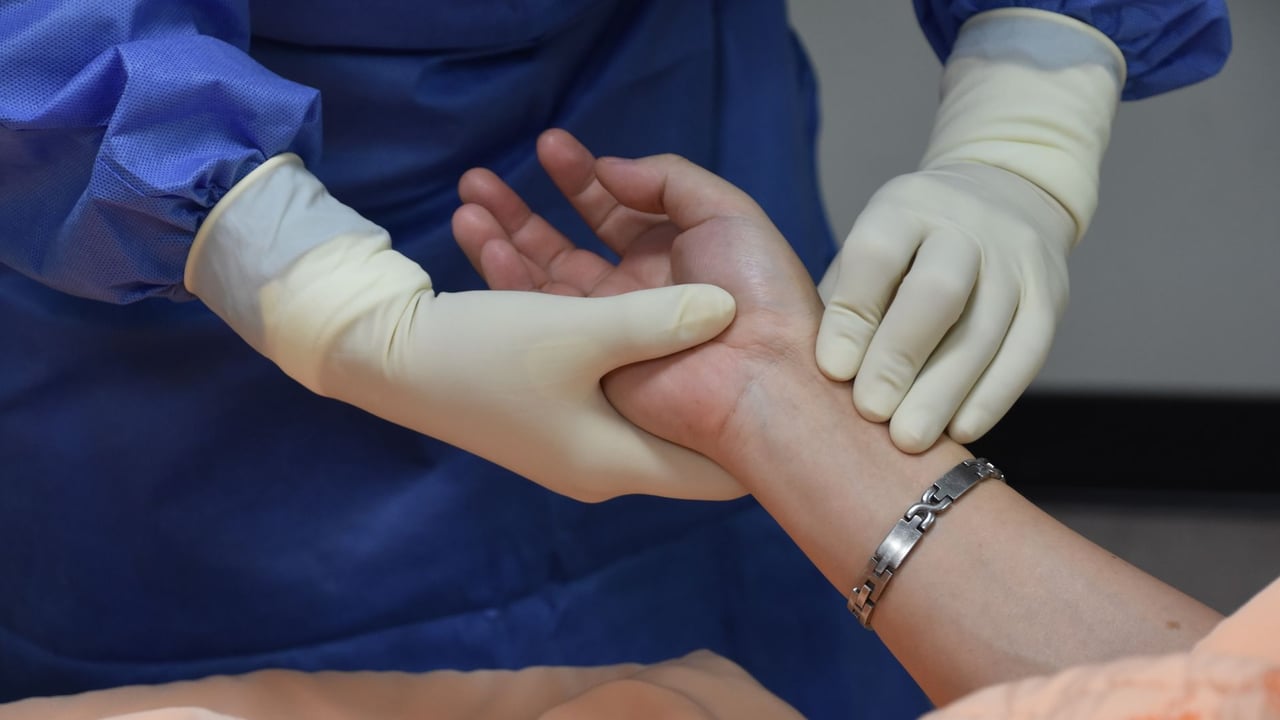
Photo by Jeff Yen on Pexels
The Brief
China recorded 10.65 billion patient visits across its healthcare institutions in 2025, up 510 million from the prior year, according to annual figures published by the National Health Commission. The official statistical communiqué reported that average life expectancy reached 79.25 years, while maternal and infant mortality rates continued to decline. Total healthcare spending accounted for 6.7 percent of gross domestic product, with out-of-pocket spending standing at 27.1 percent. Concurrently, average per-visit outpatient costs and inpatient expenses both declined by roughly one percent in comparable terms.
Why it matters
The annual statistical bulletin serves as a critical benchmark for evaluating China's healthcare reforms, resource allocation, and systemic cost-containment measures. A rise in total patient visits coupled with slight declines in per-case medical expenses indicates sustained high utilization alongside ongoing state-directed pressure to curb treatment costs and hospital markups.
China context
Faced with an aging population and rising chronic disease burdens, Chinese health authorities have prioritized primary care capacity building, increasing general practitioner density, and expanding early childcare support networks. The modest shift in expenditure composition aligns with broader healthcare reform goals aimed at limiting personal out-of-pocket burdens while managing overall national health expenditures.
Editor's View
EDITOR'S VIEW — Analysis and inference, not factual reporting.
The 2025 statistical communiqué highlights a healthcare system operating at immense operational volume, absorbing more than 10.6 billion patient encounters annually. While the National Health Commission emphasizes that average costs per inpatient admission and outpatient visit fell around one percent in comparable prices, the overall national health bill climbed to over 9.3 trillion yuan. With out-of-pocket payments still accounting for more than a quarter of total spending, policymakers face the dual imperative of sustaining hospital revenues amid cost controls while shielding households from medical inflation.
What to watch
- Future shifts in the share of out-of-pocket payments relative to national insurance fund disbursements.
- Actual enrollment rates in newly expanded infant childcare centers across county-level jurisdictions.
- Policy steps to enhance the clinical workload capacity of primary healthcare clinics and general practitioners.
Key Takeaways
- 1Total patient visits to medical and health institutions reached 10.65 billion in 2025, up 510 million from 2024.
- 2National life expectancy reached 79.25 years, while infant mortality fell to 3.8 per 1,000.
- 3Average hospital admission costs dropped 1.0 percent to 9,768.9 yuan, and outpatient expenses fell 0.9 percent to 357.7 yuan.
- 4Total healthcare expenditure preliminarily reached 9.34 trillion yuan (6.7 percent of GDP), with out-of-pocket spending at 27.1 percent.
- 5Nursery slots for children under three reached 4.73 per 1,000 people across 126,000 institutions.
China logged 10.65 billion patient visits across its healthcare institutions in 2025, an increase of 510 million visits compared to the prior year, according to the annual statistical communiqué released by the National Health Commission.
The official report, carried by state media Xinhua, revealed that average life expectancy in the country reached 79.25 years. Key public health markers improved further, with the maternal mortality rate dropping to 13.4 per 100,000 and the infant mortality rate falling to 3.8 per 1,000.
Total healthcare infrastructure and human resources continued to expand. By the end of 2025, China had 1,108,335 medical and healthcare institutions nationwide, employing 16.121 million personnel. The health workforce included 13.455 million technical health staff, 5.306 million licensed and licensed assistant physicians, and 6.062 million registered nurses. On a per capita basis, China had 3.78 licensed or assistant doctors, 4.32 registered nurses, and 4.91 general practitioners per 10,000 people.
The commission noted progress in curbing per-case medical expenditures. In 2025, the average cost per hospital admission stood at 9,768.9 yuan, representing a 1.0 percent year-on-year decline in both nominal and comparable price terms. The average outpatient expense per visit was 357.7 yuan, falling 0.9 percent on both a nominal and comparable price basis.
Preliminary estimates placed China's total national healthcare expenditure for 2025 at 9.33672 trillion yuan, which represented 6.7 percent of national gross domestic product. Per capita healthcare expenditure was estimated at 6,637.9 yuan. Of the total health expenditure, government spending accounted for 25.2 percent, social health expenditure comprised 47.7 percent, and personal out-of-pocket spending accounted for 27.1 percent.
The communiqué also detailed ongoing progress in early childhood services, a priority under national demographic policies. By late 2025, the number of nursery slots for children under three reached 4.73 per 1,000 residents, with childcare services achieving a 98.8 percent coverage rate at the county level. The sector comprised 126,000 childcare service institutions offering 6.657 million slots and employing 1.431 million staff members.
Sources
- 全国医疗卫生机构总诊疗人次超106亿 — Xinhua News Agency · 8/28/2026