
Business & IndustryAnalysis
China Industrial Raw Material Prices Show Moderate Gains in Mid-July 2026
National Bureau of Statistics data shows 26 of 50 monitored production materials posted price increases compared to early July.
Share
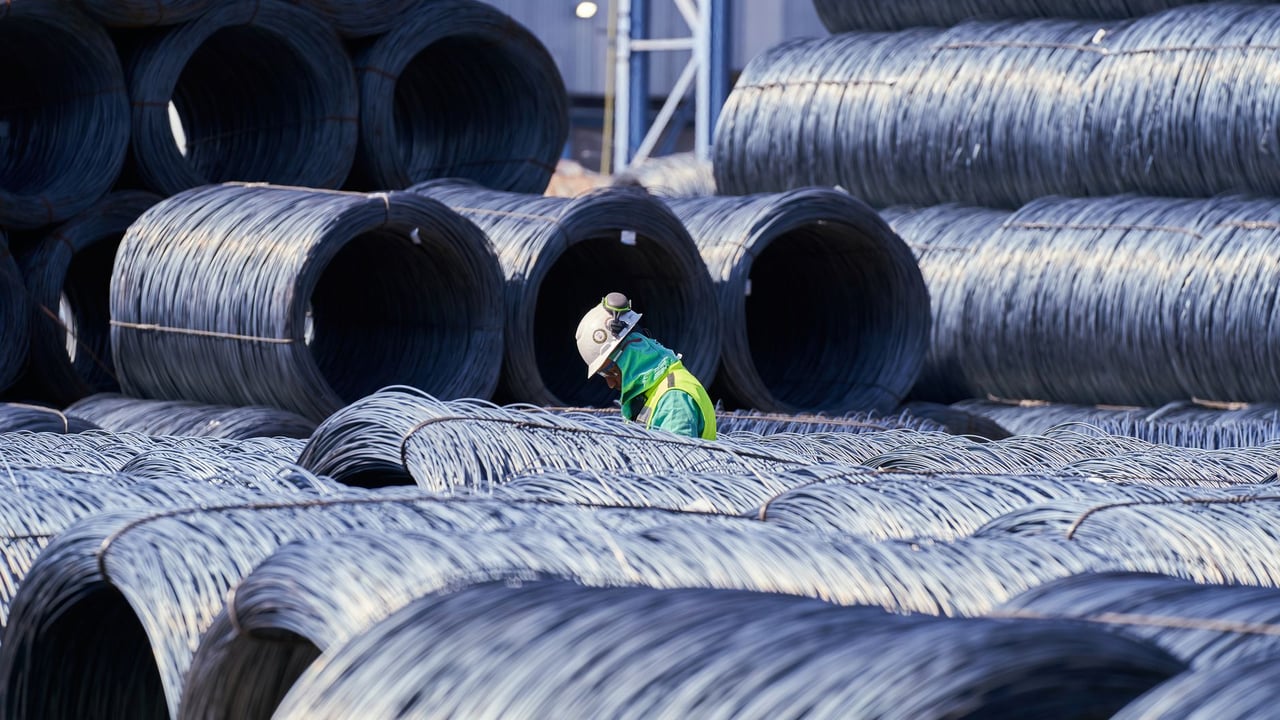
Photo by Willians Huerta on Pexels
The Brief
Data released by China's National Bureau of Statistics reveals that during mid-July 2026, prices for key industrial means of production in the circulation sphere showed moderate stabilization. Out of 50 major commodities across nine categories monitored by official statistical institutions, 26 products recorded price gains compared to the first ten days of July, while 19 declined and five remained unchanged. Non-ferrous metals led the increases, with aluminum and copper posting notable gains, whereas steel prices experienced flat to minimal upward adjustments.
Why it matters
Upstream commodity prices serve as a key leading indicator for manufacturing costs, industrial supply-demand balance, and overall economic activity in China.
China context
As the world's primary manufacturing hub, China tracks circulation-sphere commodity prices to monitor upstream inflation pressures and support economic policy evaluation.
Editor's View
EDITOR'S VIEW — Analysis and inference, not factual reporting.
The mid-July price data reflects a mild firming in upstream commodity markets, driven primarily by non-ferrous metals. The muted movement in steel prices highlights steady but subdued demand in construction and heavy manufacturing.
What to watch
- Price movement momentum in late July and early August 2026 across industrial commodities.
- Whether rising non-ferrous metal prices impact downstream manufacturing margins.
- Government policy measures concerning raw material supply stability and price management.
Key Takeaways
- 1Out of 50 key industrial means of production monitored in mid-July 2026, 26 increased in price, 19 declined, and 5 remained flat.
- 2Non-ferrous metals showed gains, led by aluminum (+1.8%) and electrolytic copper (+1.4%), while lead declined (-0.8%).
- 3Ferrous metal prices remained largely steady, with rebar, wire rod, and hot-rolled coil recording slight 0.1% increases.
In mid-July 2026, prices for major industrial means of production in China's circulation sphere experienced modest price adjustments, with over half of monitored commodities recording gains compared to the first ten days of the month. According to data monitored jointly by the China Statistical Information Service Center and Subsea/Sci9, and published by the National Bureau of Statistics (NBS), 26 out of 50 key industrial products posted price increases, 19 saw declines, and five remained unchanged.
Non-ferrous metals demonstrated notable strength during the ten-day period. Electrolytic copper rose by 1,490.0 yuan per ton, or 1.4%, reaching 104,355.0 yuan per ton. Aluminum ingots saw a 1.8% increase, climbing 411.7 yuan to 23,171.7 yuan per ton. Zinc ingots also edged up by 0.6% (137.4 yuan) to reach 24,591.7 yuan per ton. Conversely, lead ingots recorded a decline, falling 0.8% or 125.0 yuan per ton to 15,700.0 yuan per ton.
In contrast to non-ferrous metals, ferrous metal prices remained largely flat with minimal upward movement. Rebar recorded a marginal gain of 0.1% (3.9 yuan per ton) to 3,149.8 yuan per ton, while wire rod similarly increased by 0.1% (3.7 yuan per ton) to 3,315.0 yuan per ton. Hot-rolled coil moved up by 0.1% (4.2 yuan per ton) to 3,305.6 yuan per ton, and angle steel rose 0.1% (4.0 yuan per ton) to 3,445.3 yuan per ton. Seamless steel pipe prices remained completely unchanged at 4,045.6 yuan per ton, while ordinary medium plate saw a slight drop of 0.3 yuan per ton, staying essentially flat at 3,480.9 yuan per ton.
The regular monitoring of key production materials across nine core categories provides insight into upstream demand and cost dynamics across China's manufacturing and infrastructure sectors. The stabilization across multiple categories reflects shifting industrial supply-demand balances as market participants navigate macroeconomic conditions in mid-2026.
Sources
- var title1 = '2026年7月中旬流通领域重要生产资料市场价格变动情况'; var title2 = ''; var title3 = ''; if (title1.length > 0 && title2.length > 0 && title3.length > 0) { document.write( '2026年7月中旬流通领域重要生产资料市场价格变动情况</br></br>' ); } else if (title1.length > 0 && title2.length > 0) { document.write( '2026年7月中旬流通领域重要生产资料市场价格变动情况</br>' ); } else { document.write('2026年7月中旬流通领域重要生产资料市场价格变动情况'); } — National Bureau of Statistics · 7/28/2026