
Policy & RegulationAnalysis
China Initiates 10 Major Supply Chain Quality Projects for 2026
State media reports the rollout of 166 technical tackling tasks designed to bolster industrial resilience and standards.
Share
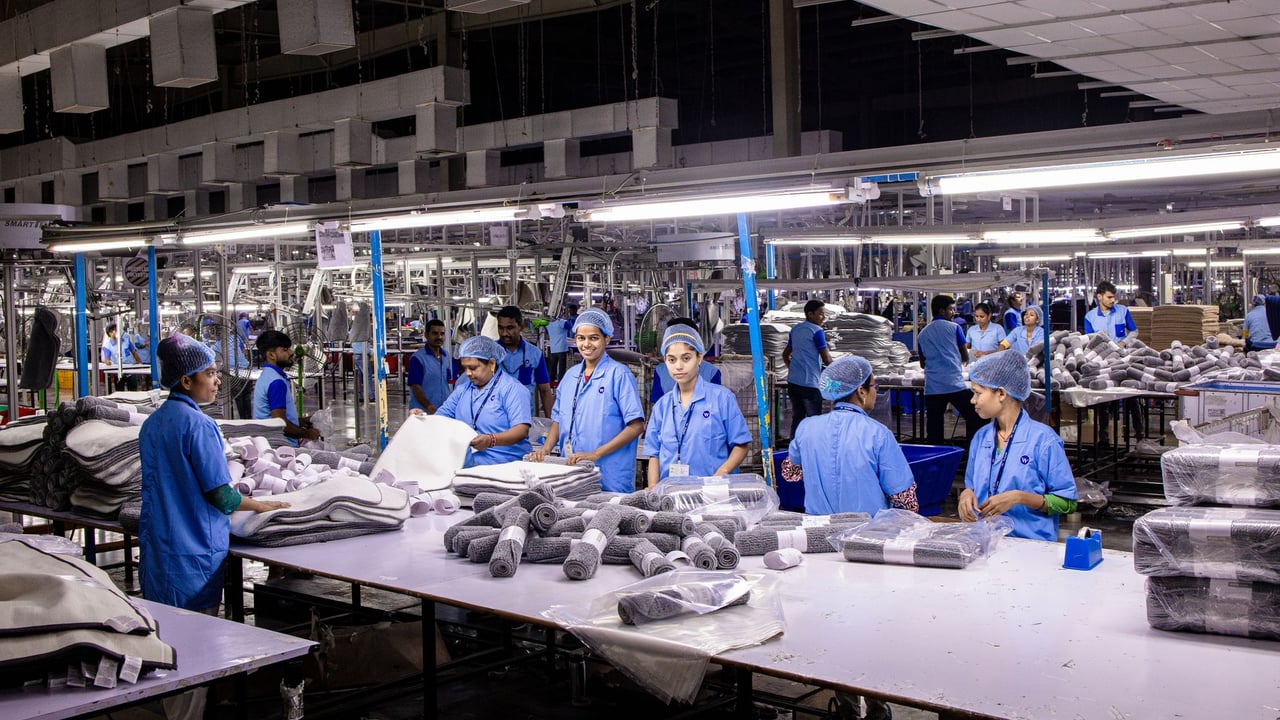
Photo by EqualStock IN on Pexels
The Brief
China has initiated ten flagship projects under its supply chain quality enhancement initiative for 2026, deploying 166 targeted technical tasks, according to state media reports originating from CCTV News. The national initiative focuses on elevating quality infrastructure—encompassing measurement, testing, and standard-setting—across strategic industrial chains. While comprehensive details on the designated sectors and technical benchmarks remain limited in initial dispatches, the drive reflects Beijing's ongoing shift from purely volume-driven manufacturing toward higher quality standards and supply chain self-reliance.
Why it matters
The deployment of 166 key technical tasks across ten landmark projects signals Beijing's deepening focus on quality infrastructure as an industrial policy tool. In priority sectors ranging from high-end instrumentation to robotics and new energy storage, systemic bottlenecks often stem not merely from product design but from testing, verification, and precision quality control. Strengthening these links is seen by Chinese planners as essential for domestic supply chain resilience.
China context
Under broader blueprints for building a 'quality powerhouse,' China's State Administration for Market Regulation and related agencies have increasingly deployed metrology, standardization, certification, and inspection capabilities to support key industries. Known as 'quality-strengthening supply chain' initiatives, these programs aim to eliminate technical weaknesses, upgrade domestic manufacturing standards, and cultivate 'new quality productive forces' amidst external supply chain pressures.
Editor's View
EDITOR'S VIEW — Analysis and inference, not factual reporting.
Rather than relying exclusively on industrial subsidies or capacity targets, Beijing is intensifying its focus on the foundational layer of modern manufacturing: measurement, testing, and standardization. The announcement of 166 specific tasks across ten projects highlights an effort to align regulatory quality infrastructure with high-tech supply chain bottlenecks. Observers should track which state bodies and industry consortia lead the execution of these tasks to gauge where administrative pressure for standardization is most acute.
What to watch
- Whether market regulators release specific technical guidelines or implementation roadmaps detailing the 166 tasks.
- The rollout of testing, evaluation, and quality standard frameworks in emerging sectors such as advanced robotics and energy storage.
- Participation by leading private enterprises and research institutes in the collaborative tackling projects.
Key Takeaways
- 1Ten flagship 'quality-strengthening supply chain' projects have been officially initiated for 2026.
- 2A total of 166 targeted tackling tasks have been deployed to address industrial quality and standard-setting bottlenecks.
- 3The program aligns with national strategies aimed at upgrading technical standards, testing, and measurement across domestic manufacturing.
China has launched ten major projects under its national quality-strengthening supply chain drive for 2026, assigning 166 technical tackling tasks across critical industrial sectors, according to state media reports published by CCTV News and China News Network.
The initiative forms part of Beijing's broader campaign to transition industrial policy from sheer output volume toward technical reliability, metrological precision, and supply chain security. By mobilizing resources across testing, inspection, and standardization, the projects aim to systematically resolve quality bottlenecks that hinder domestic production.
While initial state media announcements did not release the full roster of the ten flagship projects, national quality enhancement campaigns typically prioritize key industrial sectors where standard-setting and domestic verification capabilities are viewed as vulnerable. These include high-end machinery, advanced instrumentation, robotics, and energy storage systems.
Under China's 'quality powerhouse' strategy, the State Administration for Market Regulation and partner agencies coordinate with industry leaders, testing institutes, and universities to carry out targeted technical improvements. These initiatives focus on improving baseline industrial benchmarks, establishing standardized measurement systems, and verifying performance under rigorous operational conditions.
The deployment of 166 targeted tasks reflects an effort to institutionalize industrial upgrading through regulatory and testing frameworks. Market observers will watch for the publication of detailed task lists and sector-specific roadmaps to assess how the quality initiatives align with broader technology self-reliance targets.
Sources
- 部署166项攻关任务 2026年质量强链十大项目启动 — China News Service · 8/21/2026