
Policy & RegulationAnalysis
China's NDRC Outlines Strategy Behind Power Grid Stability and Energy Security
Economic planners highlight coal baseloads, green energy expansion, and fuel price controls behind reliable power supply.
Share
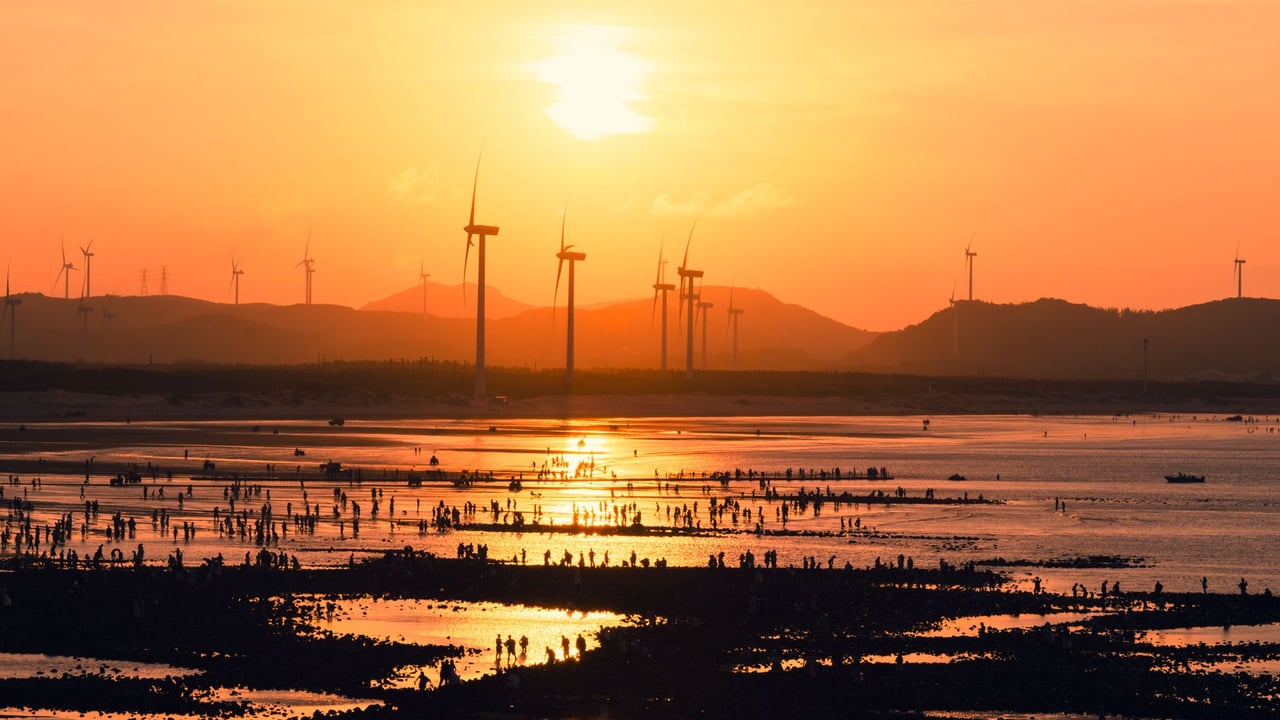
Photo by yong zhu on Pexels
The Brief
In a press conference on July 31, 2026, China's National Development and Reform Commission (NDRC) detailed the structural policy pillars supporting domestic electricity stability amid global energy market volatility. NDRC spokesperson Jiang Yi cited four main factors: baseline thermal power paired with rapid green energy adoption, structural energy efficiency gains, a nation-spanning ultra-high voltage grid and pipeline network, and diversified foreign supply corridors. The agency also highlighted targeted consumer price interventions implemented during global oil price surges.
Why it matters
Amid global energy volatility driven by geopolitical tensions, China's ability to maintain power stability during peak summer demand illustrates its dual-track strategy: relying on domestic coal reserves to prevent blackouts while rapidly scaling renewables to reduce long-term exposure to imported fossil fuels.
China context
Energy safety forms a primary element of China's overall national security strategy. As domestic new energy vehicle adoption reached 48% and non-fossil energy consumption surpassed petroleum, economic planners have prioritized dual carbon controls without compromising industrial productivity or residential cooling needs during extreme weather events.
Editor's View
EDITOR'S VIEW — Analysis and inference, not factual reporting.
The NDRC's briefing reflects Beijing's pragmatic energy posture: leveraging conventional coal baseloads and state-managed price buffers while continuing structural investments in renewables and high-voltage transmission. By capping domestic fuel price hikes at roughly half of formulaic adjustments during external market surges, policy planners are willing to intervene directly to protect macroeconomic stability and consumer sentiment.
What to watch
- Implementation details of energy system policies within the upcoming 15th Five-Year Plan framework
- Progress of the transition toward dual carbon emission controls across energy-intensive industries
- Performance of the unified national electricity market during peak summer power loads
Key Takeaways
- 1NDRC spokesperson Jiang Yi outlined four structural pillars supporting China's energy security: resilient supply, reduced demand intensity, grid infrastructure, and import corridor diversification.
- 2Green electricity now accounts for nearly 40% of China's total electricity consumption, while domestic crude output held above 200 million tons.
- 3NEV penetration reached 48% by the end of the 14th Five-Year Plan, and non-fossil energy consumption surpassed petroleum for the first time last year.
- 4Targeted price controls limited domestic refined oil price hikes to around 50% of standard formulaic increases during global oil price volatility in March.
At a press conference on July 31, 2026, National Development and Reform Commission (NDRC) spokesperson Jiang Yi detailed how China maintained grid stability and residential energy access—termed locally as "air-conditioning freedom"—despite ongoing geopolitical volatility in international oil and gas supply chains, according to People's Daily.
Jiang attributed the country's energy resilience to four key structural pillars spanning supply, demand, infrastructure, and international trade. On the supply side, China built the world's largest clean coal power supply system while expanding renewable capacity, with green electricity now accounting for nearly 4 out of every 10 kilowatt-hours of total power consumed. Domestic crude oil production remained above 200 million metric tons, and natural gas output grew by more than 10 billion cubic meters annually for nine consecutive years, state media reported.
On the demand side, energy intensity declined as energy efficiency initiatives took effect. Since the 18th National Congress, China supported average annual economic growth of approximately 6% with an average annual energy consumption growth rate of roughly 3.3%. New energy vehicle market penetration rose from 5% at the end of the 13th Five-Year Plan to 48% by the end of the 14th Five-Year Plan, while non-fossil energy consumption surpassed petroleum for the first time last year, according to the NDRC.
Infrastructure and market mechanisms provided physical and operational support. China constructed the world's largest hybrid AC/DC power grid and expanded long-distance oil and gas pipelines to a combined length equivalent to five times the equator's circumference. Internationally, four major energy import corridors across over 100 countries and regions helped diversify supply risks. Furthermore, during sharp spikes in global oil prices in March, domestic price stabilization mechanisms capped refined oil price increases at roughly 50% of formulaic adjustments over two consecutive rounds to cushion impacts on businesses and households.
Looking ahead, the NDRC plans to roll out implementation details for the 15th Five-Year Plan for a new energy system, prioritizing coal as a baseline guarantor alongside expanded non-fossil capacity.
Sources
- 国家发改委详解中国“空调自由”:系统构筑“四道保险” — China News Service · 7/31/2026
- 中国为何能实现“空调自由”“用电自由”?国家发展改革委详解--经济·科技--人民网 — People's Daily · 7/31/2026