
Policy & RegulationAnalysis
China Issues 50 New National Food Safety Standards and Amendments
The National Health Commission released updated regulatory benchmarks to strengthen technical compliance across the food supply chain.
Share
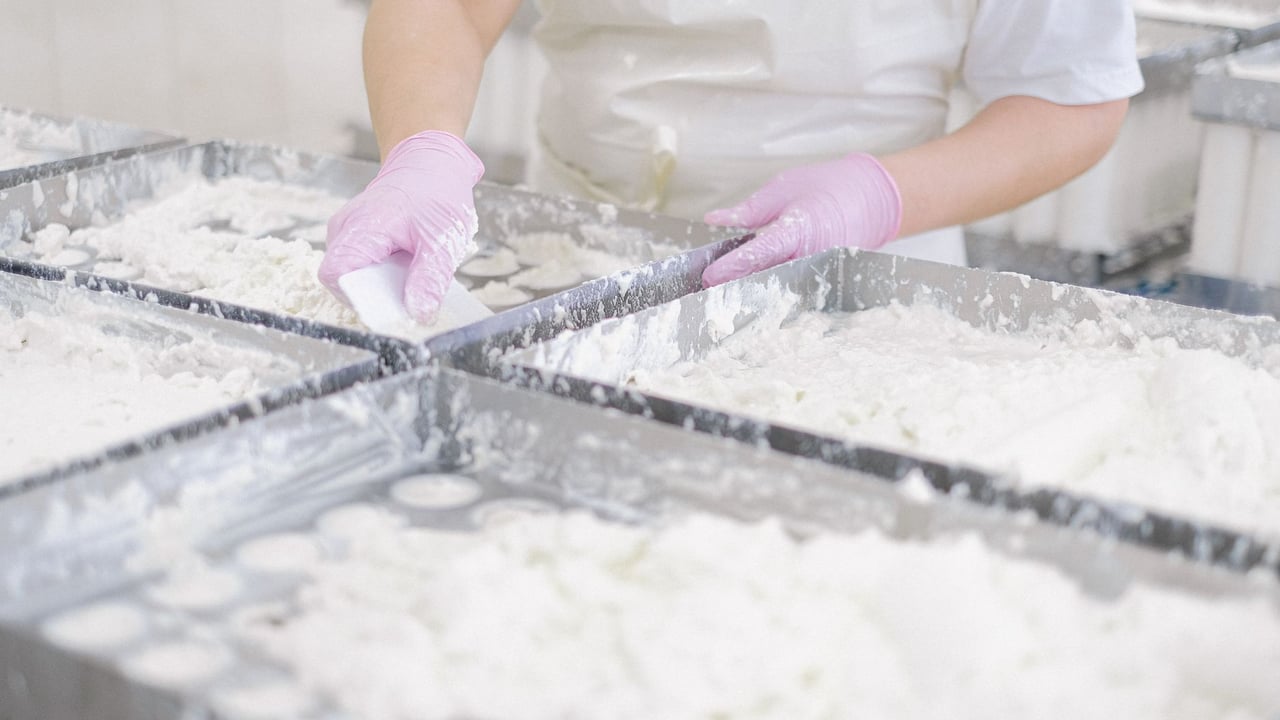
Photo by Anna Shvets on Pexels
The Brief
China's National Health Commission has released 50 new national food safety standards and amendment sheets, according to reports by Xinhua and CCTV News. The newly published measures establish binding technical baselines for food production and regulatory enforcement. Aimed at closing systemic oversights across the food chain, the update reflects an ongoing official effort to strengthen public health protections and refine China's food safety standards framework.
Why it matters
National food safety standards function as the legal foundation for regulatory enforcement and the minimum technical baseline for food production and business operations in China. The issuance of 50 new standards and amendment sheets is intended to eliminate blind spots in the regulatory chain and reinforce health protections for consumers.
China context
China's regulatory apparatus has steadily updated and refined its national food safety standard system in recent years. Guided by a regulatory doctrine focused on risk prevention, health preservation, and industrial development, authorities use standardized benchmarks to enforce end-to-end chain oversight while upgrading domestic manufacturing quality and supervision efficiency.
Editor's View
EDITOR'S VIEW — Analysis and inference, not factual reporting.
The rollout of 50 national standards underscores Beijing's continuous reliance on codified technical parameters to drive compliance rather than ad hoc enforcement campaigns alone. While state media frames the standards as definitive benchmarks for consumer safety, their ultimate impact will depend on the clarity of transition periods, technical adaptation costs for smaller manufacturers, and the rigor of local market supervision bodies in policing non-compliance.
What to watch
- Full publication of the regulatory catalogs and detailed rule texts by the National Health Commission and the State Administration for Market Regulation.
- Implementation timelines and transition periods granted to food manufacturers for adjusting formulations and production processes.
Key Takeaways
- 1The National Health Commission issued 50 new national food safety standards and official amendment sheets, reported by Xinhua and CCTV News.
- 2The standards establish mandatory technical thresholds for manufacturers and the legal benchmark for market supervision authorities.
- 3The policy initiative is intended to close regulatory loopholes and maintain end-to-end oversight across food supply chains.
China's National Health Commission has formally released 50 new national food safety standards and official amendment sheets, according to reports published by Xinhua and CCTV News. State media characterized the newly announced measures as an essential regulatory baseline designed to tighten oversight across the nation's food supply.
Food safety national standards serve as the core statutory basis for market surveillance and regulatory enforcement in China, while also defining mandatory compliance baselines for food enterprises, processors, and handlers. By introducing this new batch of standards and amendments, authorities aim to address potential technical gaps and inconsistencies that have persisted across legacy regulatory frameworks.
The update aligns with a wider official effort to modernize China's food safety governance model. Chinese health and market oversight authorities have increasingly emphasized comprehensive chain-wide supervision—spanning agricultural sourcing, industrial processing, logistics, and retail distribution. The broader policy framework prioritizes risk prevention and public health safeguards while seeking to encourage higher technical competence across domestic food supply chains.
While the headline announcement covers 50 distinct standards and revision documents, the specific technical requirements, targeted food categories, and grace periods will become clearer as detailed documentation is circulated by relevant departments. Market participants will be observing how regulatory agencies, including the State Administration for Market Regulation, coordinate enforcement rollouts and inspect compliance.
For domestic and multinational food companies operating in China, the standards will require careful assessment of technical compliance, potentially demanding adjustments to product formulations, testing protocols, and operational workflows during designated implementation windows.
Sources
- 国家卫生健康委发布50项新食品安全国家标准和修改单 — China News Service · 9/22/2026
- 50项食品安全国标发布 “舌尖安全防线”有了“硬标尺” — China News Service · 9/22/2026